
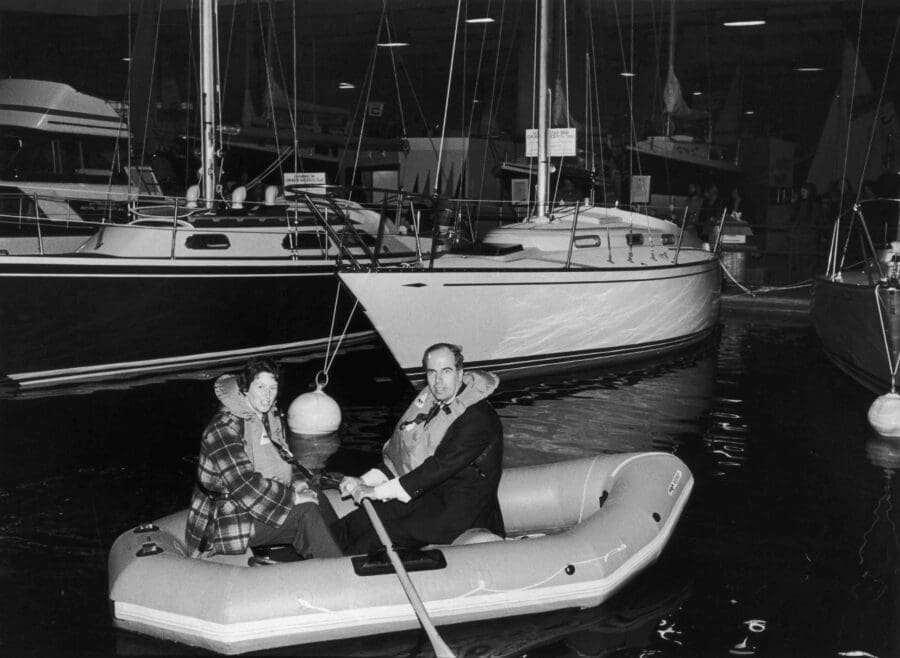
Maralyn and Maurice Bailey were sailing from Britain to start a new life in New Zealand when a whale struck their yacht off the Galapagos Islands. Left with a tiny dinghy, a makeshift raft and dwindling supplies, the couple endured 117 extraordinary days at sea before being rescued by a Korean fishing boat. Their story is one of remarkable ingenuity, resilience and devotion
PICS: Getty Images
Picture the scene. An inflatable dinghy, a tiny life raft towed behind. Two emaciated people. A set of crudely fashioned fishing hooks. The haunting vastness of the world’s largest ocean. This is how two of the 20th Century’s most inspiring shipwrecks were finally rescued. But first, let’s start at the beginning.
The idea of circumnavigating the globe by boat is a dream come true for some. Especially if you get to do it with the person you love the most. Others could be daunted by the mere prospect. And the thought of sharing a small vessel for so long with their partner, alone out there, potentially makes the idea worse.
For Maralyn and Maurice Bailey, it was the adventure of a lifetime. A trip that would carry them to a new life on the other side of the world. But their trip came with a huge cost, and in the end they were lucky to survive.
The journey begins
The story starts in Derby, England. A husband and wife growing tired of their jobs, he’s a printer’s typesetter, she’s a tax officer. No longer content to clock-in every day and then return to their suburban home, in 1966 Maralyn proposed an idea. Why not give up the house, quit the graft, and go live on a boat?
A growing trend at the time, canal barges were seeing a resurgence in popularity. Meanwhile, new technologies were making it cheaper for the middle classes to buy or even build their own seaworthy yachts. Six years later, the pair had constructed a 31ft Golden Hind sailboat, Auralyn, an amalgam of their names, and honed the skills to take on the high seas.
Maurice had learned to navigate using only a sextant and the stars. Although Maralyn still couldn’t swim, she had gone to great lengths preparing for the journey, and would be in charge of maintaining the galley. Even though the couple had no electrical equipment onboard, they remained un-phased by the challenge they’d set themselves.
Setting a course for New Zealand, where they intended to stay permanently, their route would first take them down to Spain and Portugal. From there, it was out into the open Atlantic, making landfall in Madeira and the Canary Islands. Then on to South America, and the Panama Canal.
Needless to say, adventure and excitement filled that first stage of the odyssey, not to mention a little romance. As Maralyn recounted in regular postcards sent to her sister, Pat Brewin, back in the UK.
Now it was time for the second and most challenging leg: crossing the enormous Pacific. First, though, the intrepid sailors set their sights on the Galapagos Islands, hoping to see first hand their world famous biodiversity.
“I remember saying to her ‘what are you going to do if you got into difficulties or into the sea? She said ‘I’ll be fine’,” Brewin told the BBC in a 2025 interview. “On one of [the postcards] she said ‘don’t worry – you won’t hear from me for a bit because we’re crossing the Galapagos’, so we never gave it another thought.”
Maralyn and Maurice (and the whale)
It was the last anyone would hear from them for several months, and in reality Maralyn and Maurice were anything but fine. On 4th March 1973, somewhere off the Galapagos coast, a surfacing whale struck their boat, which began to take on water at a rapid rate.
The boat sank within an hour, giving them just enough time to gather some basic food and water supplies, deploy a 9ft emergency dinghy and attach a 4ft raft to the back.
Climbing aboard the emergency craft as their yacht vanished beneath the waves, the two tiny lifeboats would become the husband and wife’s home for a third of a year. After the chaos, they spent the first night trying not to panic. Then they formed a plan.
Using the night sky alone, Maurice gauged they were floating around 300 miles from the nearest shore. So they paddled for several days, to no avail. They would drift 1,500 miles before being found.
Survival skills
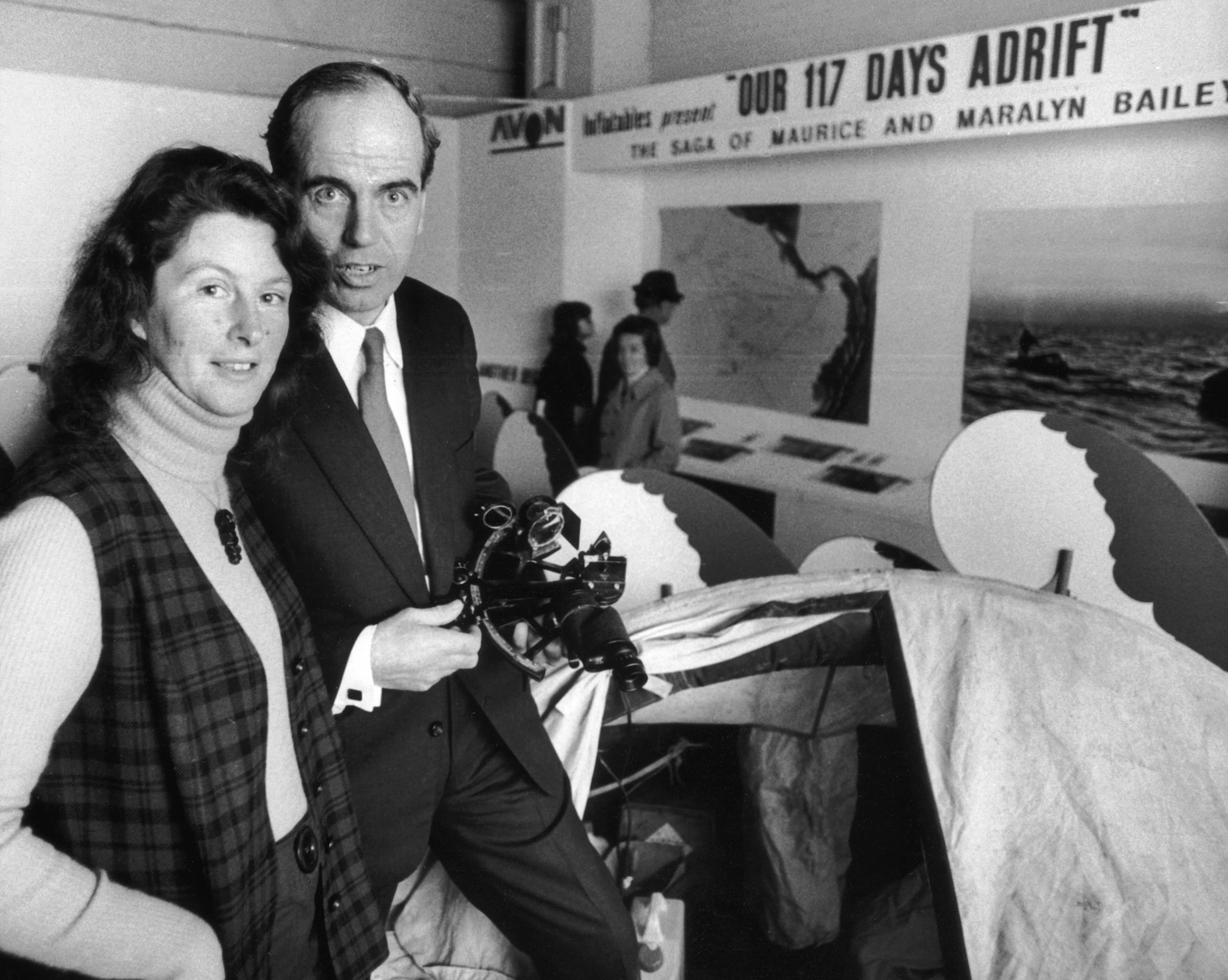
The fact they clinged onto life for so long is testament to their resilience. They salvaged water from rain storms and turned safety pins into hooks. Tools to catch fruits of the sea. They grabbed other meals by hand, saving any fish eyes in a tin.
A major source of vitamins, the pair nicknamed these unusual treats ‘smarties’. As often as possible, they would eat one in the evening. Then, as the baking sun disappeared, they would secure themselves to the dinghy so unforgiving waves didn’t throw them overboard in their sleep. Once, when looking through the peepholes after dark, the couple came face-to-face with another whale.
“It’s such a treat to see a docile whale alongside you. It did nothing. It just stared at us for half an hour. I got to know it very well. It eventually went off very slowly, just dived without a splash. It was marvellous,” Maurice explained.
Schools of fish, sharks, and birds grew familiar with the tiny makeshift flotilla. Many species would regularly swarm around the dinghy. As they later recounted in their book, 117 Days Adrift, the raft was now an artificial reef.
“We found ourselves so close to the sea that we became part of the sea, living just like sea creatures ourselves. In our need to survive we had to compete with other animals of the sea for our sustenance,” Maralyn told another interviewer.
Lasting love
After failing to get the attention of seven passing ships, Weolmi 306, a Korean fishing boat captained by Suh Chong-il, caught sight of Maralyn and Maurice. After just over 117 days adrift, with dwindling chances of being saved, the boat found them suffering malnutrition, dehydration, starvation and anaemia.
Their atrophied muscles made movement incredibly painful. Unable to eat properly, it would be weeks before a milk-only diet expanded to include eggs. Then soup and butter. And eventually solid food.
Despite the difficult recovery, the story is one of the 20th Century’s most astounding and inspiring tales of survival at sea. More so, it has had a profound impact on perceptions of what it takes to make it through such an ordeal. Later, Maurice would credit his life to Maralyn, who, he said, took on the critical survival leadership role as his mental stamina declined.
In her 2025 book about the couple, author Sophie Elmhirst chronicles the extraordinary willpower involved. She also frames the saga as a testament to the strength of true love. How determination to keep another person alive can be our own saving grace. An idea emphasised by how much Maurice struggled after Maralyn’s death from cancer in 2002, aged just 61. He then passed away in 2018, at 85.