

Coastal structures built to detect enemy attacks used sound, sight, and unusual engineering to warn of approaching aircraft and warships before radar became widely available
The modern radar as we know it today was discovered in 1935 when Sir Robert Watson-Watt successfully demonstrated radio detection in Great Britain. It was first put to use in coastal regions starting in 1937 through a pioneering early warning system. Before this radar, there were other technologies that tried to help nations detect incoming trouble. Here is a set of seven structures in that category.
Coastal Fire Control Towers, Fort Miles, Delaware and New Jersey, USA
The coastal fire control towers — 15 total in the Fort Miles system — are concrete towers built to spot enemy ships from kilometres (km) away. During their operational days, they relied on sight rather than sound. The structures, built from 1939 to 1942, were called “the eyes for the guns.”
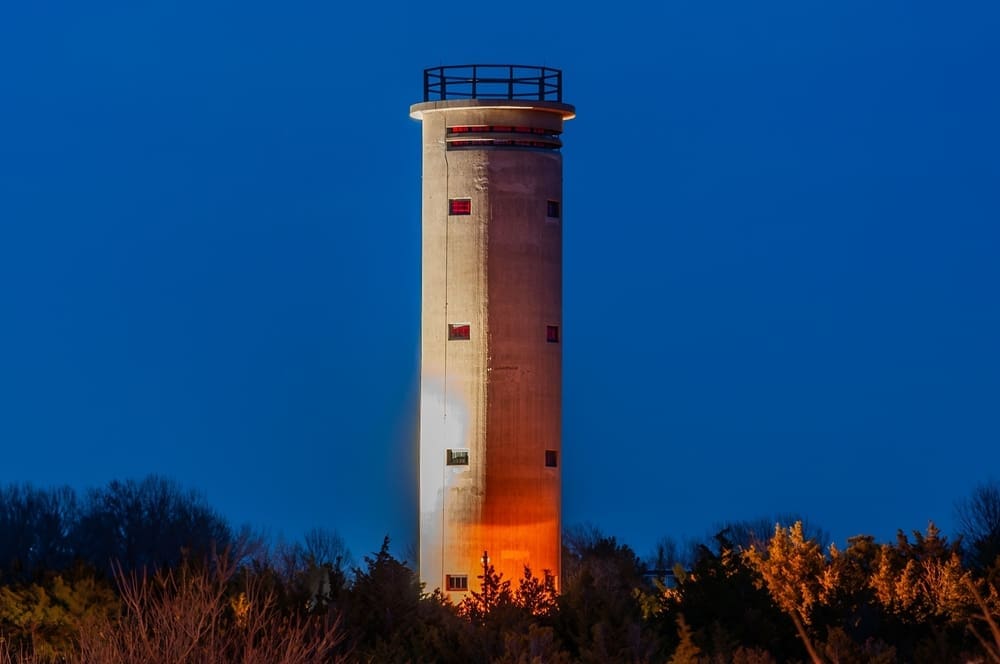
These towers’ heights range from about 12 m to 23 m, spanning from Fenwick Island up to Cape Henlopen. Each tower has one or more observation rooms at the top with an octagonal concrete pad that once held an azimuth telescope and a depression position finder, a telescope that measures the angle down to the oncoming ship’s waterline.
Fan Bay Sound Mirrors, Dover, Kent, UK
These British structures are two dish-shaped mirrors cut straight into the white chalk of the Dover cliffs. They were both designed and installed by Major Mather and Lieutenant Rogers. Starting in 1916-17, these mirrors were meant to hear enemy aircraft crossing the Channel before anyone could see them.
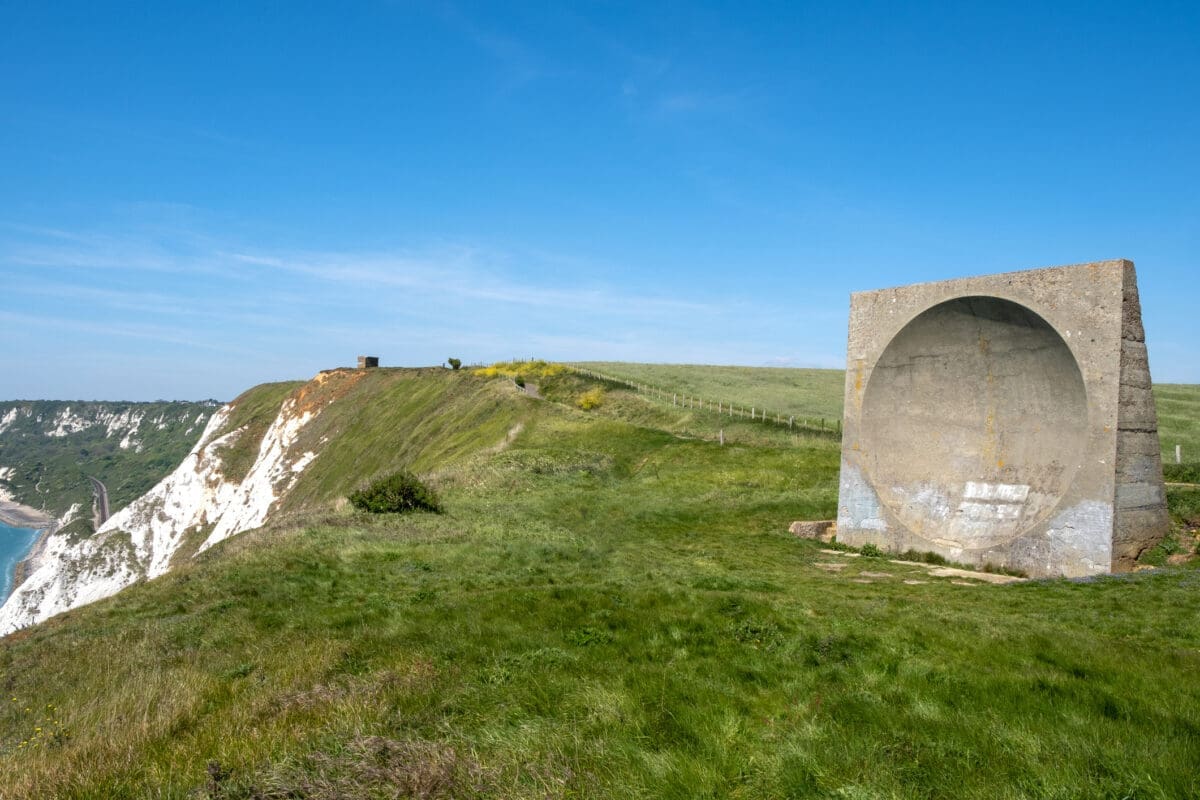
The earlier dish is 4.5 m across, while the second, added later, is larger at approximately 6 m across, and they both face a concrete wall about 10 cm thick. When they were still in operation, engine noise hit the curved face of either dish, reflecting to one focal point in front. The listener moved a collector until the sound was the loudest, which gave the direction. The two mirrors at Fan Bay worked together to cross-fix the aircraft’s position.
Joss Gap Acoustic Station, Kingsgate, Kent, UK
The Joss Gap acoustic station was a secret research station set up in 1918 under Major William Sansome Tucker. Tucker was a physics lecturer who had invented a hot-wire microphone for locating enemy guns by sound. The station had an experimental movable acoustic disc on a gantry on the cliff top, alongside a 4.5 m static sound mirror cut into the chalk. The disc sound locator was camouflaged to mimic the cliff face.
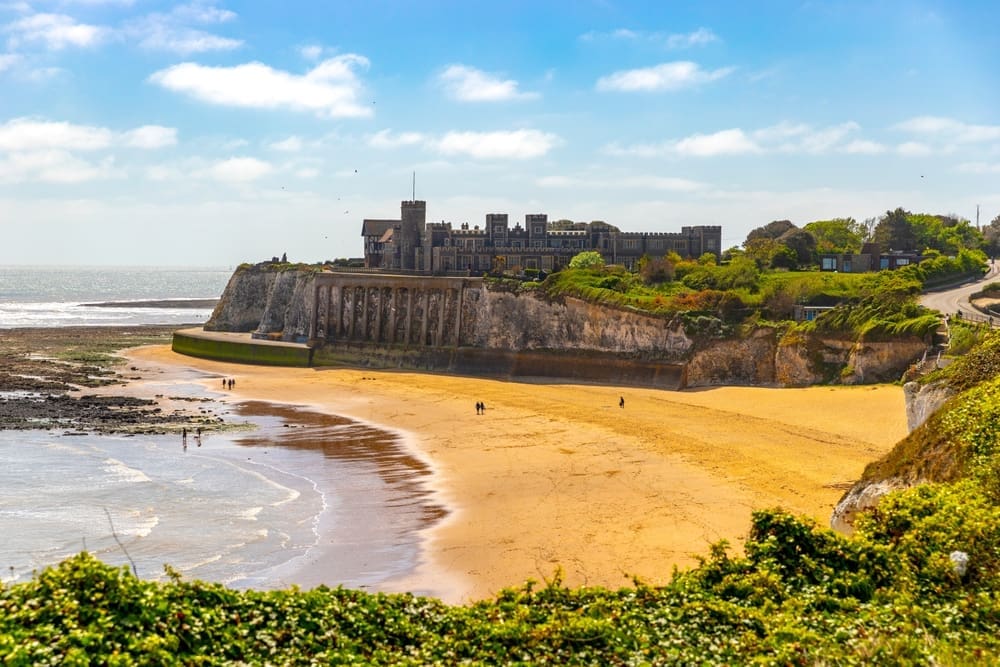
Whenever sound from aircraft reached the cliffs, a mirror gathered it for a listener with a stethoscope, or a disc that isolated that sound from everyday noise. The pivoted soundproof disc created an acoustic shadow that formed a quiet spot where a microphone picked up the focused sound.
Romney Marsh Listening Discs and Masts, Kent, UK
In 1924, 32 concrete discs were laid across the flat marsh in two parallel lines 4.8 km apart. The project was also part of Tucker’s experiments in hearing aircraft by sound. Within these lines, each disc was spaced exactly 800 m apart. The discs were about 6 m across, made of concrete segments with a microphone in the centre.
Once noise reached the discs, the cables carried power out, and the microphone sent signals back to the Newchurch Hut. Scientists on duty read the signals from the whole lines of the discs. These signals told of an aircraft’s speed as it passed over the discs. From about 1930, microphones on masts replaced the discs.
The Listening Post, Selsey, West Sussex, UK
This reinforced concrete mirror was built for the navy’s governing body in March 1916. During operation, these dishes reflected the sound of an intruder, ship, or aircraft, and a duty observer with a stethoscope listened at the focus. The sound got into the microphone, and the listeners were able to make sure the intruder’s course was plotted.
Its design matches the mirrors at Boulby, Sunderland, and Redcar, but with a roof, extensions, and a window at the back. A later residential conversion featured a slate-clad stud wall and a corrugated asbestos roof. While that structure was recently redeveloped, the curved profile of the mirror wall survives today.
Denge Sound Mirrors, Dungeness, Kent, UK
These mirrors, opened in Kent, are a complete set of sound mirrors built by the Air Ministry. Tucker led this research with a 6 m bowl and a 9 m bowl at Denge. Next to them was a concave wall about 61 m long and 7.9 m high, with a sloping concrete apron and buttresses behind.
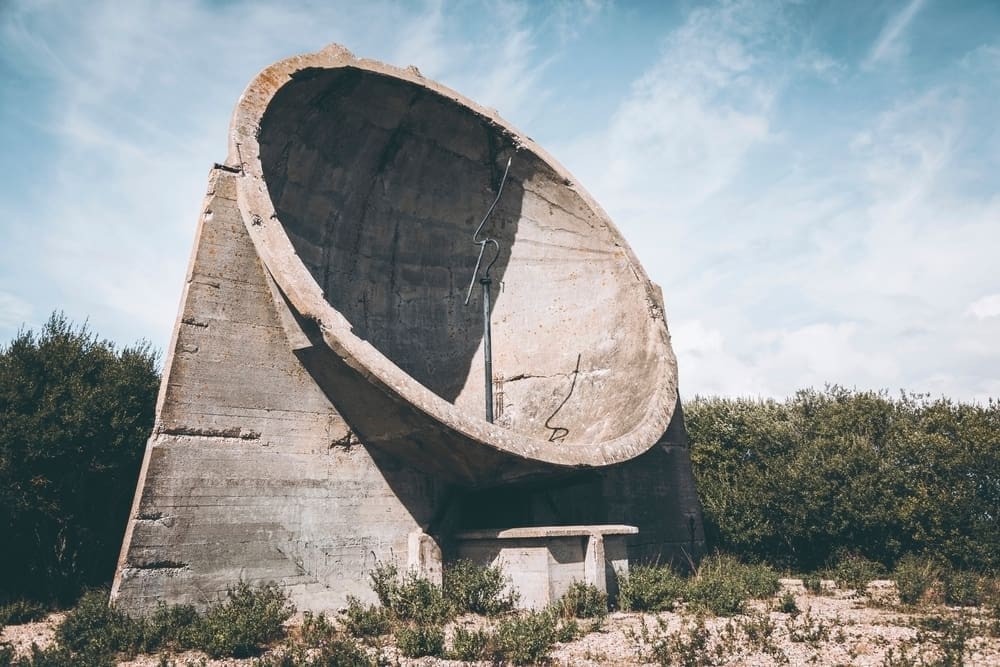
To get to the listening chamber, people used steps under the 9 m bowl. In this design, Tucker went with a stationary bowl with a constant curve, and a microphone placed at its centre. For the wall, a movable microphone collection arm scanned its surface. The arm’s final position gave the observer the aircraft’s bearing and height. In the bowls, a trumpet fed a stethoscope worn by a listener, and they used data from the mirrors wired to an operations centre.
Il-Widna (“The Ear”), Magħtab, Malta
This structure is a 61 m long and 8 m high wall known as a strip mirror, built in 1934 to 1935 when Italy’s Abyssinian campaign made Malta a likely target. A sloping 17 m apron leads to a 0.6 m deep listening trench. Then, a semicircular end wall and side walls hold the earth, and an equipment cabin at the back housed the operators.

Aircraft noise reflected off the wall across the trench; then 20 microphones there, tuned to 30–100 Hz, caught it and fed it to an amplifier and a loudspeaker. A relay lit a lamp showing which section of the wall heard it. The normal trial range was 32 to 40 km, and this gave operators roughly a 6- to 15-minute warning.