


Traditional coastal industries that are disappearing around the world reveal how changing markets, declining marine resources, and modern technology threaten centuries-old livelihoods.
Certain trades and industries only thrive in coastal regions due to proximity to water bodies. Salt harvesting, for example, is most affordable when it is set up near an ocean or sea because the supply is right there. Sadly, such trades only survive a few lifetimes, and this piece highlights six that are slowly disappearing around the world as time goes by, starting with salt hand-harvesting.
Salt hand-harvesting: Salt Pans, Slovenia
For more than 700 years, Slovenians have raked salt by hand with a rare technique that cultivates a bio-sediment layer on the pool’s bottom before they flood it. Petola, an algae, gypsum, and mineral layer, up to 1 cm thick, on the pond’s bottom, stops the sea mud from mixing with the salt; the water evaporates, and the salt is raked and harvested by hand. This all started in 1358, long after the Piran salt pans were first built in 804.
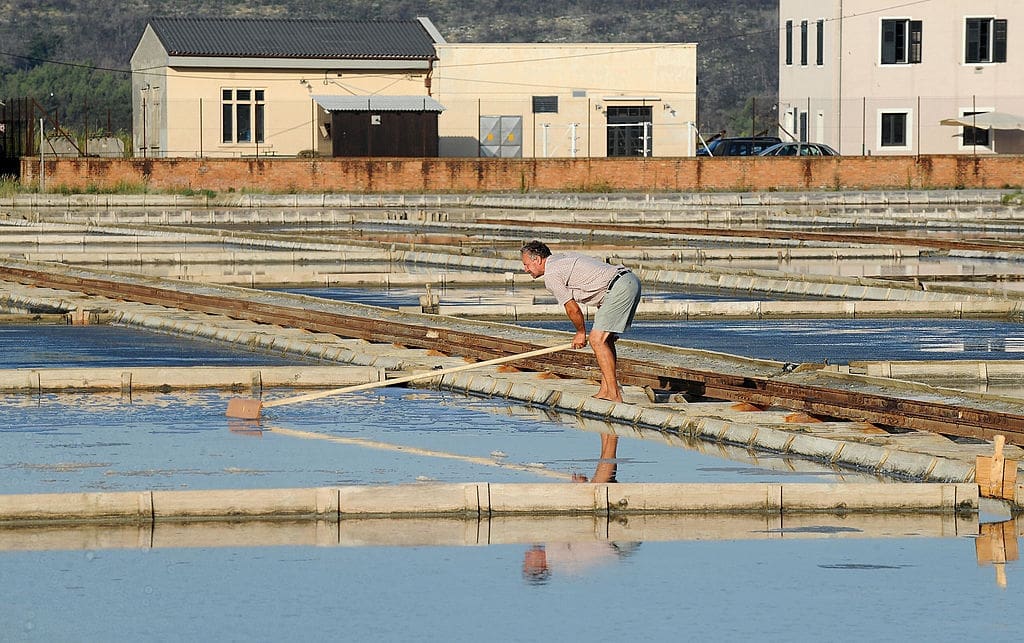
For the Piran families, salt was essential. It preserved meat and fish. The trade was so lucrative that at its peak, the Piran pans once made up a third of eastern Adriatic salt production, and the first half of the 20th century saw around 440 salt-makers’ houses in use. The decline originally began in the early 18th century when regional instability hit. Over time, cheap imported salt from Tunisia and Algeria flooded the market, making the traditional pans unprofitable. Production was permanently abandoned in the Fontanigge sector in 1968.
Seaweed harvesting: Plouguerneau, Brittany
In the 14th century, people living along the Plouguerneau coast started seaweed harvesting to use it as fertiliser. Then, in the late 17th century, seaweed demand increased because people burned it for soda used for glassmaking. Another pivotal point that also made this trade lucrative followed Bernard Courtois’ discovery in 1811 that seaweed ash was rich in iodine. The region’s first iodine factory opened at Le Conquet in 1829.
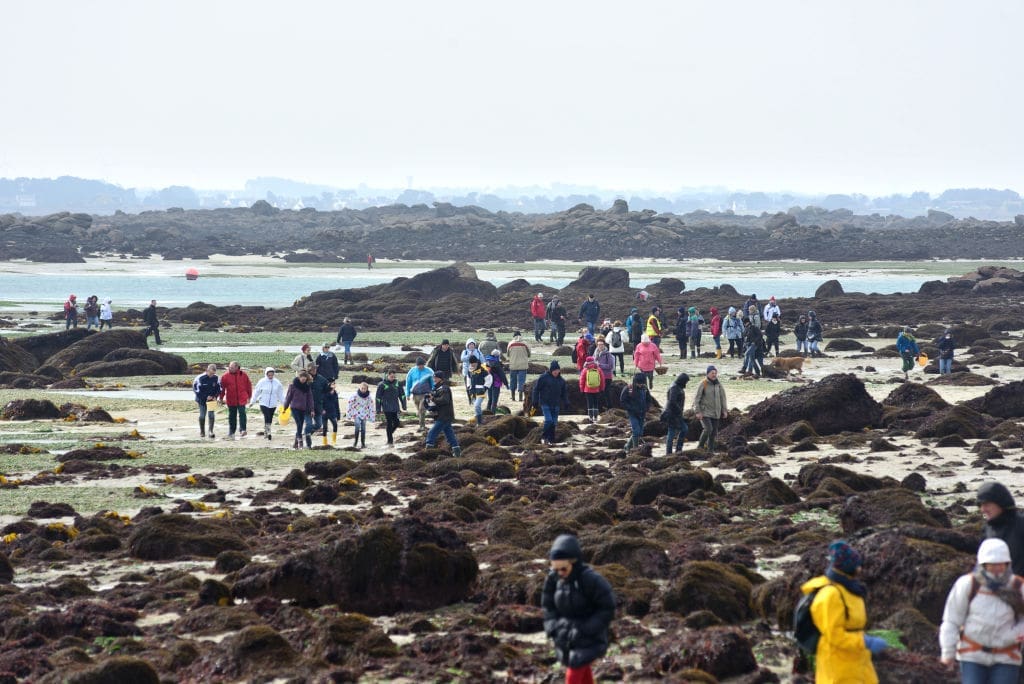
To harvest the seaweed, boats 6 metres long fitted with a sickle blade on a 3 to 4 metre handle first cut the plants from the seafloor. Harvesters then raked the weed onto horse carts and burned it in open-air trenches to form ash blocks. At its heyday, a family of five or six could gather around 12 to 15 cartloads of seaweed daily. Today, things have changed: chemical fertilisers cut the agricultural demand, and iodine factories are no more, having entirely disappeared by the 1960s.
Ama divers: Toba and Shima, Mie, Japan
Ama, which is Japanese for “sea women,” is a group of women who harvest abalone, a large marine snail delicacy in the cities of Toba and Shima in the Mie region. This snail’s shell has been found in prehistoric rubbish heaps across Japan. The divers also harvest pearl oysters. These divers don’t use any breathing gear; they dive head-first and use only a floating wooden bucket to fish.
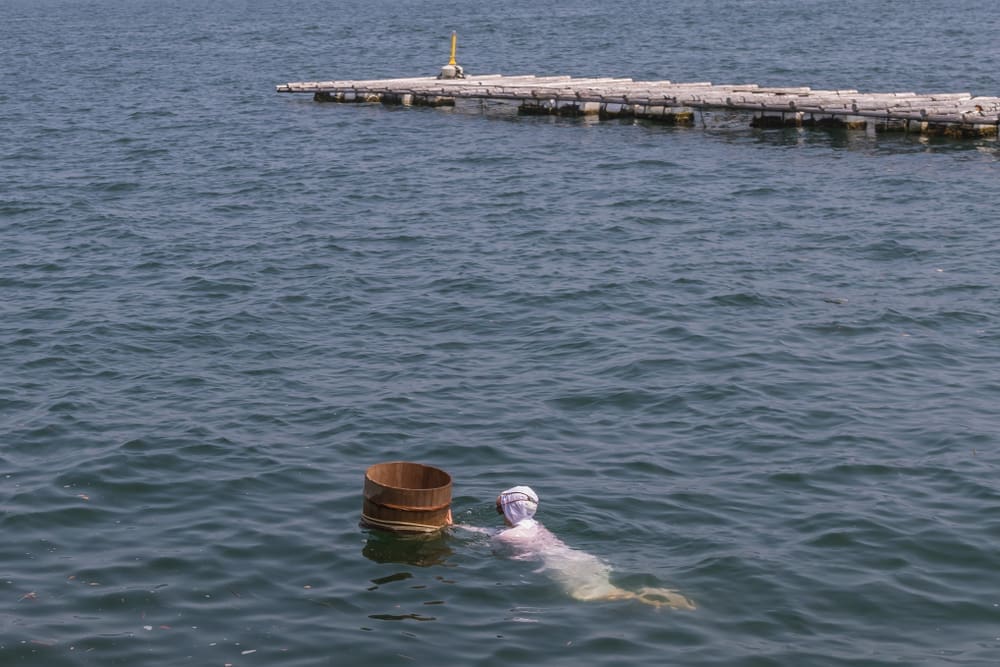
The women who do this are said to hold their breath longer, and their bodies tend to have more body fat for insulation from the cold. Japan’s most sacred Shinto shrine is said to still need about 1,000 fresh abalone for its rituals, and this is why this diving tradition has lasted in Toba and Shima. Their numbers have decreased because of a change in farming techniques, the low income, and the general disinterest in the tradition.
Dhow building: Nungwi, Zanzibar (Tanzania)
Craftsmen of the dhow, a small wooden sailing boat of the Indian Ocean, come from a village called Nungwi, sitting at the northernmost tip of Zanzibar Island. These builders would work right on the shore with hand tools passed down through generations to supply boats to the traders who travelled by sea. The earlier versions were sewn together with coconut fibre rope instead of nails.
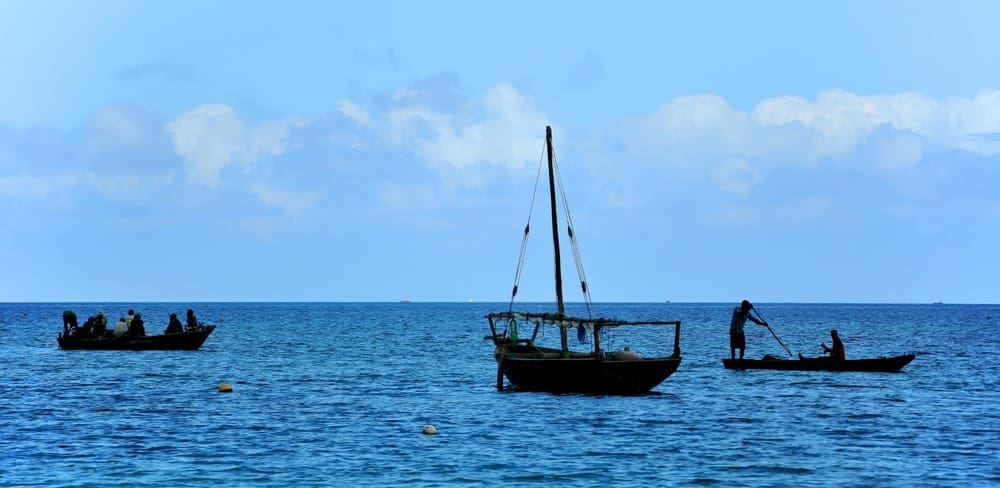
The dhow trade flourished all year round in the 19th century, and this made the demand for boats high. After 1964, dhows slowly started disappearing after strict restrictions were implemented. Another factor that promoted its decline was that wood became scarce. Today, they are used as smaller boats booked for sunset or sunrise tours.
Sponge diving: Kalymnos (Greece)
Locals in Kalymnos, Greece, had one major problem: only 18% of the island could be farmed. To survive, people turned to trading, boat building, and sponges. Sponges are sea animals, harvested and dried for washing. To harvest the sponges, divers dived naked, carrying a 15 kg stone called the skandalopetra to sink fast. When the skafandro, a heavy rubber suit with air pumped from the surface, arrived in the 1860s, they were able to dive even deeper.
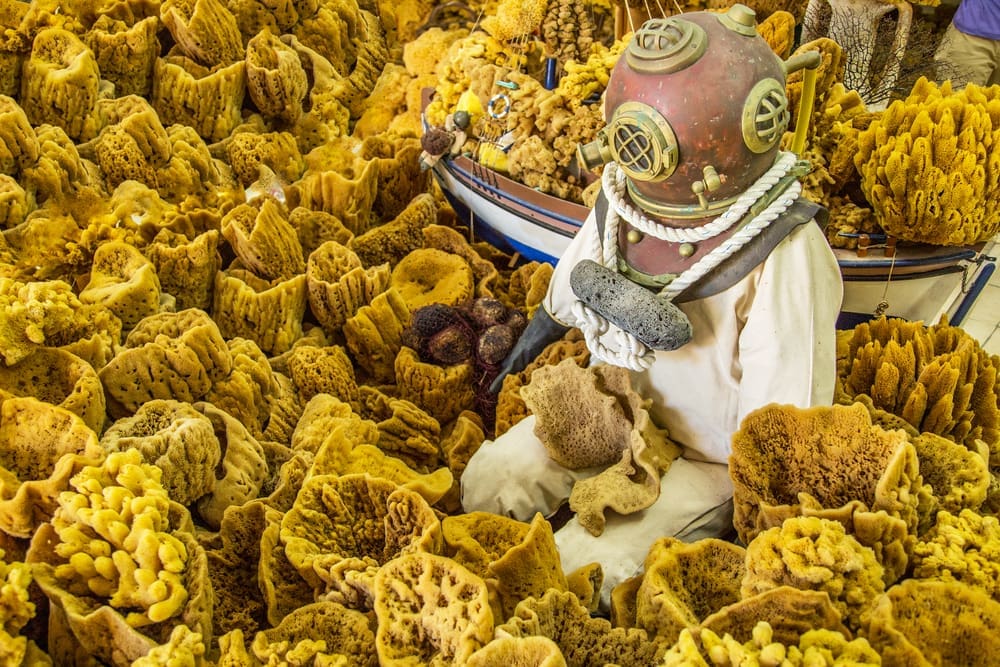
The problem with this new suit was that it also let divers surface too fast, causing “divers’ disease” (decompression sickness), which left many disabled or dead. Despite this setback, the trade still grew, with its peak clocking an estimated production of 180 tonnes of sponges in 1889. A few factors that are causing the sponge diving industry to slowly die include a combination of a devastating marine disease and the fact that several countries banned foreign sponge harvesting over the years.
Cockling and shrimping: Flookburgh, Morecambe Bay (England)
Cockles are small shellfish, and shrimps are small sea creatures gathered from the sand flats of the sea. On the north side of the bay at Flookburgh, fishers went out with horse and cart. On the east side, they used boats. At the trade’s peak, the legal cockle industry in north-west England was worth about £7 to £8 million.
The decline of this coastal trade began in the 1970s. In February 2004, 23 migrant cockle pickers drowned off Hest Bank. This tragedy triggered the implementation of a strict permit system, which was capped at 150 holders. An already dwindling cockle population had caused the main Flookburgh cockle bed closure years earlier. According to the Guardian, what’s left is a cockle trade worth around £90,000.