


Some of the hardy employees of the British Antarctic Survey spend whole winters on the coldest continent, facing freezing temperatures, wild weather, isolation and lots of frozen food. Scotsman Ben Sharp reveals what life is like in the deep freeze.
PICS: Getty Images WORDS: Dominic Bliss
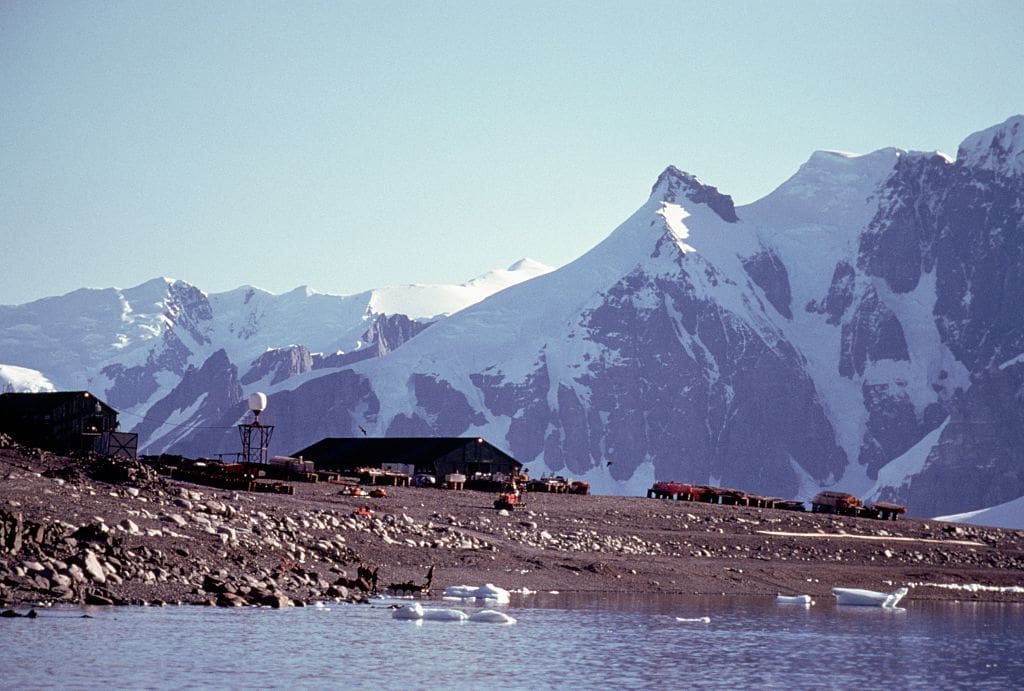
Since November 2025, Ben Sharp has been working at Rothera Research Station, on Adelaide Island, on the Antarctic Peninsula – one of five research stations in the region.
At Rothera there are laboratories, an aquarium, boating and diving facilities, a meteorological office, an air hangar, a runway, a wharf and a vehicle workshop.
Originally from southwest Scotland, 37-year-old Sharp is the station’s boating officer. In summer, employees number around 160, dropping to 25 or so in winter. Sharp’s posting will last until February 2027.
Describe a typical working day at Rothera.
My job is to manage, operate and maintain the small boat fleet and train the station’s coxswains and boat crew. We have five RIBs (rigid-hull inflatable boats), used for scientific work such as diving, water sampling and island surveys, as well as for recreation and search and rescue.
Boating carries on into the winter for as long as the conditions allow. As the days shortened, we were still supporting dives, often leaving the wharf in twilight and picking our way through brash ice, which is slow going and needs careful planning to ensure we’re back before dark. Then in July the sea ice set in around station, and the boats stayed ashore for the next two months while I focused on maintenance and joined the rest of the marine team assisting with diving through the ice.
Like everyone else, I also take my turn at the jobs that keep the station running: helping the chef in the kitchen; the weekly scrub-out when the whole team cleans the station together; a week of night-shift rounds; and a lot of snow digging.
What are the facilities like at Rothera?
Rothera is far more comfortable than most people imagine. The station’s new Discovery Building has a modern gym, a music room, an arts and crafts room and even a sauna. Our main living space is New Bransfield House. There are TV rooms, a library, the bar, a quiet room for calling home and the dining room.
Rooms are shared during the summer, but as the population drops towards winter, everyone gets their own. They’re all heated and we have hot showers, although these are limited to three minutes a day, as all our water is made from seawater by a reverse osmosis plant.
Over the winter we have one chef, who has been on a one-man mission to fatten us all up. The mid-winter feast was a highlight: an incredible eight-course meal to rival any fine dining restaurant.
With no resupply between May and October, fresh fruit and vegetables become scarcer as the winter goes on. But with careful management of the stores, we still had eggs and a few oranges left when the first flights arrived. The day the first flight brought in the fresh fruit and veg was an exciting one. I’d never been so happy to see a lettuce.
What are the challenges of spending the winter there?
We all live through a very similar reality, yet everyone faces their own personal challenges. For some it’s waving goodbye to the close friends they made over the summer, or missing family back home. For others it’s the long hours of darkness, the extra responsibility their job carries through the winter, or small conflicts magnified by isolation. And for most of us, it’s some form of sleep disruption.
The weather plays its part too. At times the wind gusted up to 80 knots, and walking (or crawling) to lunch in goggles, with every inch of skin covered, felt otherworldly. Getting into the boatshed in the morning meant digging out the door first, and, on a few mornings, it took me a good 20 minutes to get it shut again behind me. Snow kept packing into the door frame, and by the time I’d cleared one side, the other had filled in again. By the end, the entrance and everything in it would be caked in an inch of snow.
How long is the winter shift?
Winter contracts vary by role. I arrived in the austral summer in November 2025 and I will leave in February 2027. So I will have seen a summer, a winter and another summer. Winter itself runs from the last ship call to the start of the flying season: for us that was May to October, around 21 weeks with no one arriving or leaving.
Part of my role is leading the landside mooring operations. Casting off the ship, the RRS Sir David Attenborough, for the last time was a strange feeling. We marked her departure with flares. We’ve had a lovely supportive team, but with the whole winter ahead of us, sitting together for the first time with the only 25 people you’ll see for months was a subdued and slightly strange moment.
Do you get outdoors much during the winter?
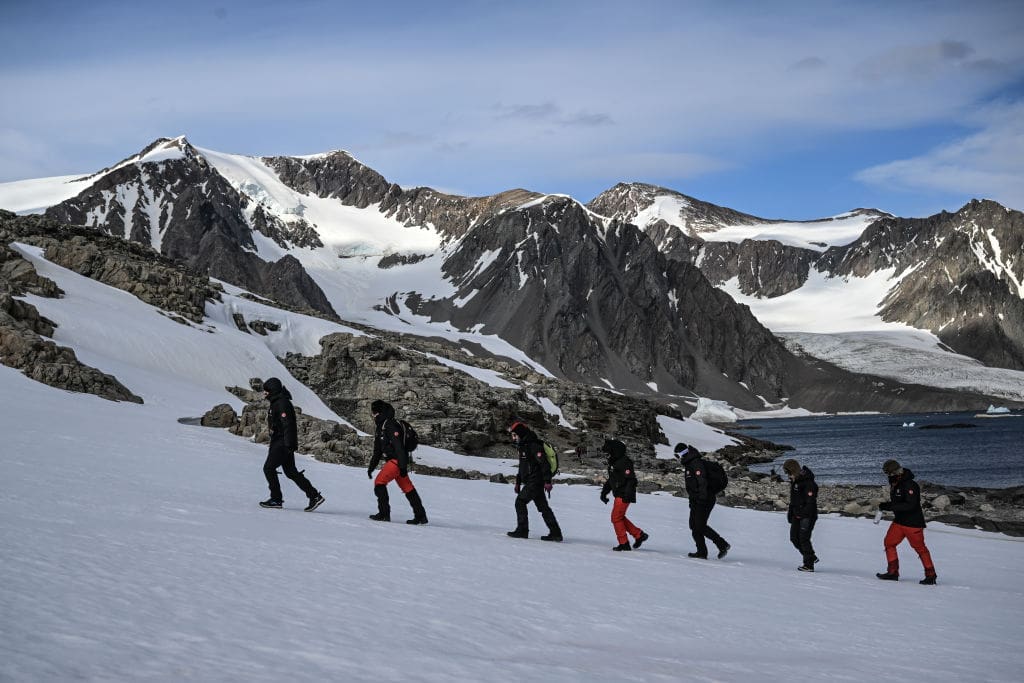
Rothera sits at 67° South, so even in the depths of winter we still get civil twilight around midday, and everyone is encouraged to shift their working patterns to fit in a walk or a run around the runway.
With the sun only just below the horizon, twilight lasts for hours, lighting the clouds and mountain tops in pinks, reds and oranges. One of my enduring memories of the winter was the iridescent rainbow colours shimmering across the lenticular clouds, a regular sight every time I walked out the door.
For a while it feels as if the sun will never return. We watched it set for the last time on 22 May, and its first reappearance in late July noticeably lifted everyone’s spirits. Towards the end of the winter we were lucky to have sea ice around station for months (the winter before had none thick enough to walk on), turning the usual backdrop of open ocean into a still, silent landscape as far as the eye could see. It’s a surreal experience to walk hundreds of metres across water I’d normally drive a boat over.
Are romantic relationships possible between employees?
Love wasn’t in the air for my particular winter, but there are plenty of happy couples who met at Rothera. The station has even hosted weddings: in 2017 two field guides became the first couple to marry in the British Antarctic Territory, and the bride’s skirt was made from an old orange pyramid tent.
What happens in case of medical emergency?
The distance from help and from modern medical care is not lost on the winter team, and looking after yourself and the people around you carries far greater weight than it does back in the UK. Over the winter the team becomes its own emergency service: fire, search and rescue and medical teams, alongside the station doctor, give us a remarkable level of readiness should something go wrong. We have a modern medical surgery in the new Discovery Building, supported by the BAS medical unit back in Plymouth.
A medical emergency in the depths of winter is something everyone hopes to avoid. Getting someone out is a huge logistical undertaking, but there are plans in place if it’s ever needed. Rothera, with its own airstrip, has served as the staging post for midwinter evacuations in the past.
What are your plans when you return to the UK in February 2027?
I’ll be back in the UK at what’s normally the peak of the Scottish winter climbing season, so I’m hoping to get my Land Rover back on the road, dust off my ice axes and base myself up north for as long as it lasts. That could very well mean sitting in a café in Fort William, reminiscing about the ice conditions of yore while the rain pours down outside.
For more information on the British Antarctic Survey, visit www.bas.ac.uk