
The 200-year-old Royal National Lifeboat Institute relies on thousands of brave volunteers to keep our waters safe. Lesley Gillilan finds out what it takes.
On the coast of west Wales, hospital porter Adam Gilbert works as a volunteer for The Mumbles Lifeboat Station. One of his first call outs, six years ago, was as part of a crew attending a medical emergency on a cargo ship 20 miles offshore. It was early in the morning, he says, and the sea was rough – too rough for a helicopter.
‘I remember looking at the waves out of the lifeboat window and thinking: “Oh, my goodness, what am I doing here?” I soon learned that you can’t afford to take your eye off the ball for a moment. The sea is in charge.’
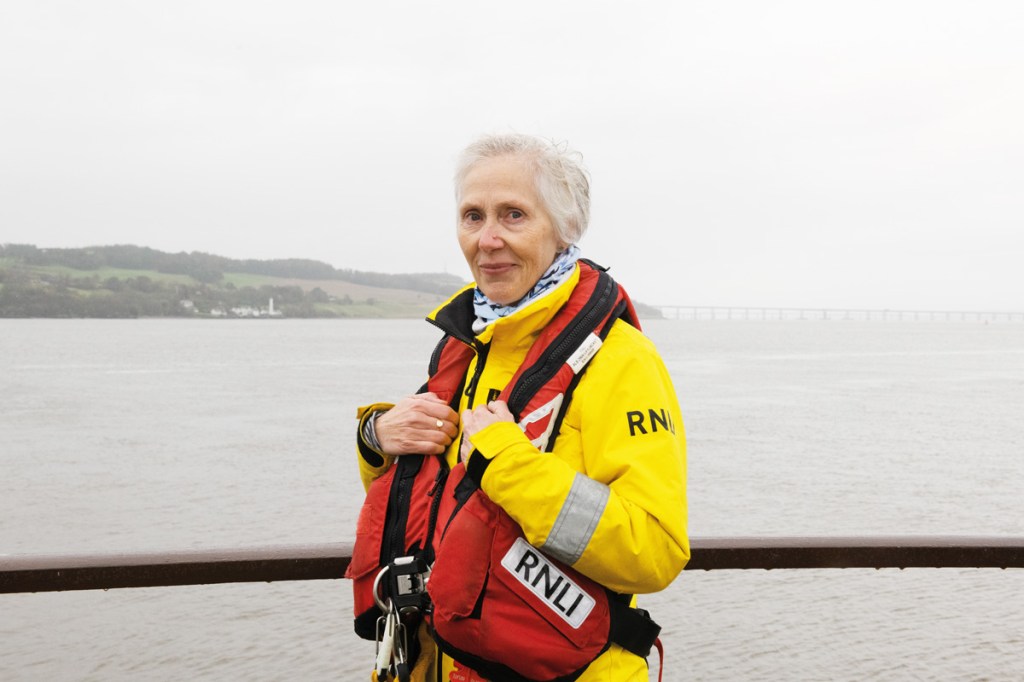
In Broughty Ferry, near Dundee, Fiona Johnston is an RNLI veteran of 30 years. She has retired from her job running a student shop in an art college but continues to volunteer for the service. She has been out on numerous rescue missions in the Tay Estuary and the North Sea – an area that often takes her as far as Fife, Perth and St Andrews. Much of the work, she says, involves stranded paddleboarders, capsized dinghies, yachts that have run aground and kitesurfers in trouble (plus the occasional missing dog).
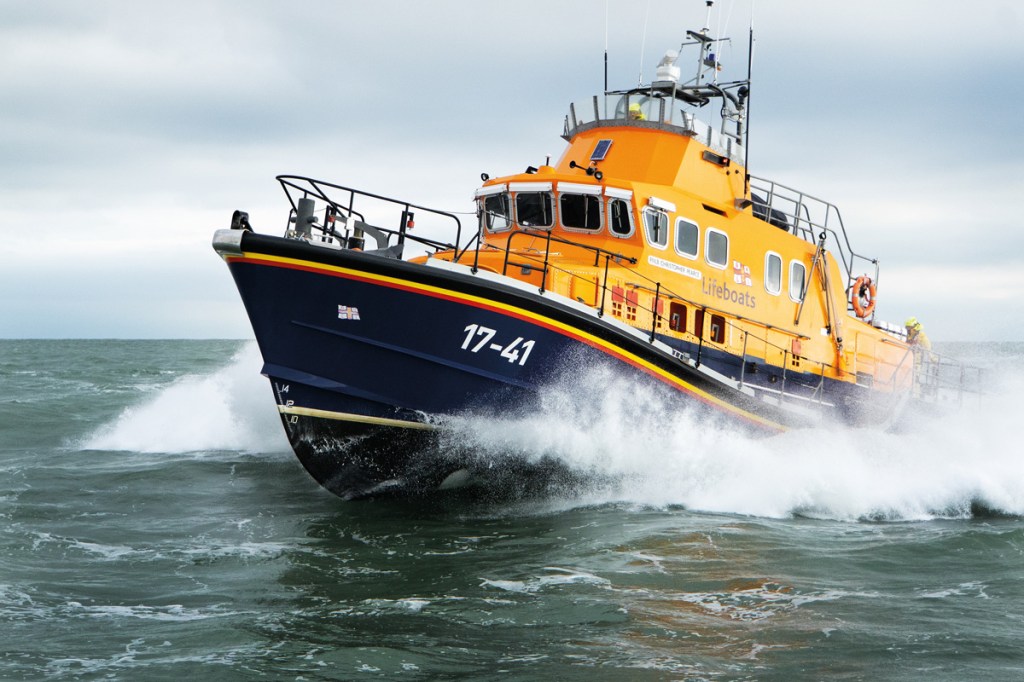
‘We are usually dealing with victims of unforeseen circumstances,’ says Fiona. ‘Sudden changes in weather, for example, or kit breaks like broken masts.’ She was on the lifeboat when it was called out to tow a yacht into harbour in a force 9 gale. This is not a job for the faint-hearted.
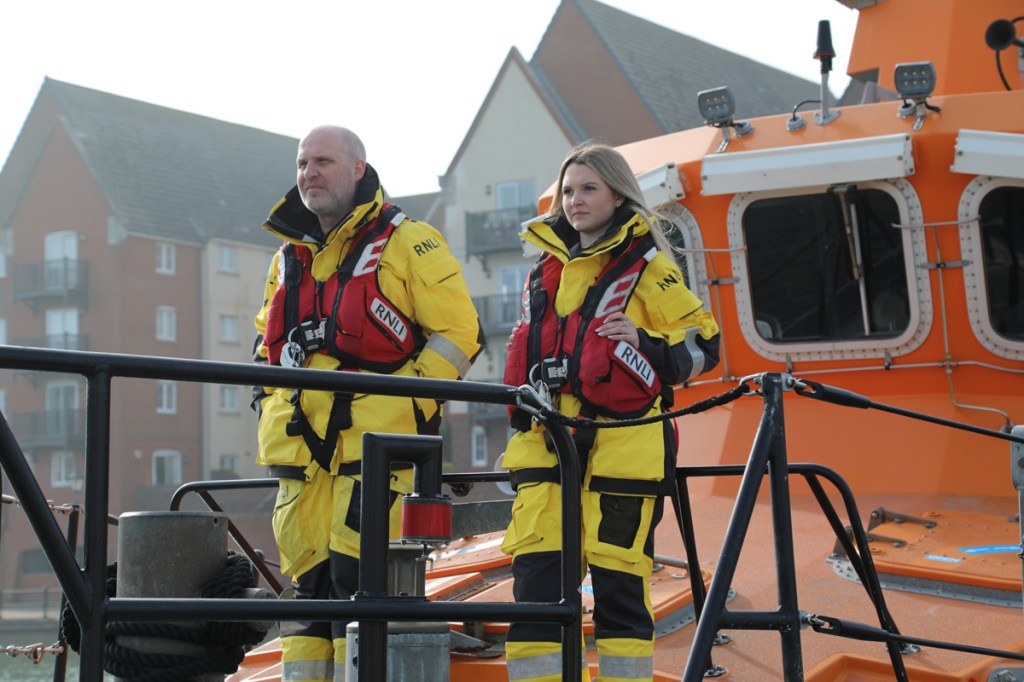
In Eastbourne, 19-year-old shop assistant Ellie Guy has yet to do a ‘shout’ (the RNLI’s term for an emergency call out), but coming from a long line of volunteers, she knows what to expect and is sure that soon, she will have stories of her own. She was just 18 when she finished her training.
A Revered Institution
These are only some of the thousands of volunteers who represent one of the UK’s most revered institutions. Anyone who lives on the coast is familiar with their local lifeboat station, and the image of an orange-hulled, all-weather lifeboat racing down a slipway into stormy waters is the stuff of legend – epitomising national heroism. As an island nation, set in unpredictable, often rough, northern seas, we couldn’t do without the Royal National Lifeboat Institute – but how many of us really know about the 200-year-old search and rescue service on which our maritime safety depends?
The RNLI has been saving lives at sea since its foundation in 1824, and it is uniquely British – there are smaller services elsewhere around the globe (Canada, Germany and the Netherlands, among other places), but none protects the coast of an entire country, nor operates on the same scale. The RNLI currently runs 451 lifeboats and hovercraft from 238 lifeboat stations, placed strategically around the coasts of the UK and Ireland.
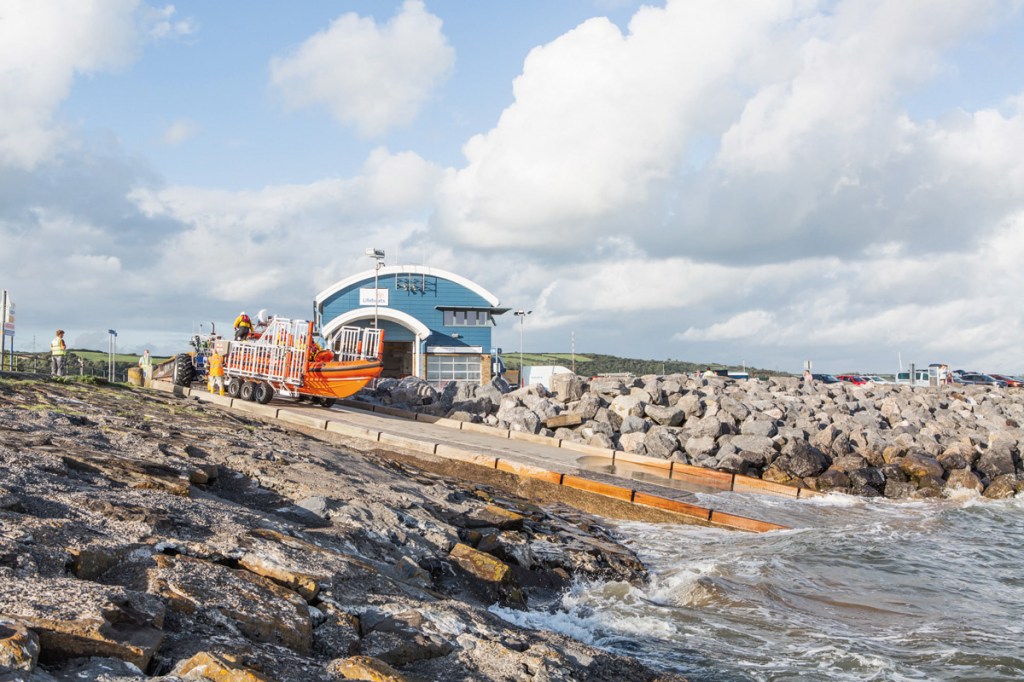
Since the service was founded, some 146,700 lives have been saved, yet it receives no government support or state handouts; instead, it’s a registered charity, heavily dependent on donations, legacies, merchandise sales and, indeed, on the devotion of ordinary people like Adam, Fiona and Ellie, who freely give their time to it. Of the 7,828 brave men and women who currently make themselves available all day, every day, to respond to emergency call outs, 97% are unpaid volunteers.
They come from all walks of life in all ages from 18 to 65, though volunteers have been known to continue into their 70s. Aside from a willingness to serve, the only condition
of joining is that they live within 10 minutes of their local lifeboat station. Many come from second, third or even fourth-generation RNLI families. Fiona Johnston, 65 – Broughty Ferry’s first female volunteer back in 1996 – now works with her son, Craig, who joined the station’s crew 19 years ago.
In Eastbourne, Ellie Guy followed her father, uncle, grandfather and great-grandfather into the service. ‘I grew up with it,’ she says. ‘The RNLI has been a huge part of my life from
a very young age. It felt inevitable that I would join at some point.’
Mumbles volunteer Adam Gilbert is a first-generation crew member but, he says, the sense of family is not just about sons or brothers. ‘People don’t realise how big a part of a village life this is. The lifeboat station is as much a part of our community identity as the church or the school or the local pub. Everyone knows when the lifeboat crews are called out; everyone is concerned.’
All Stations
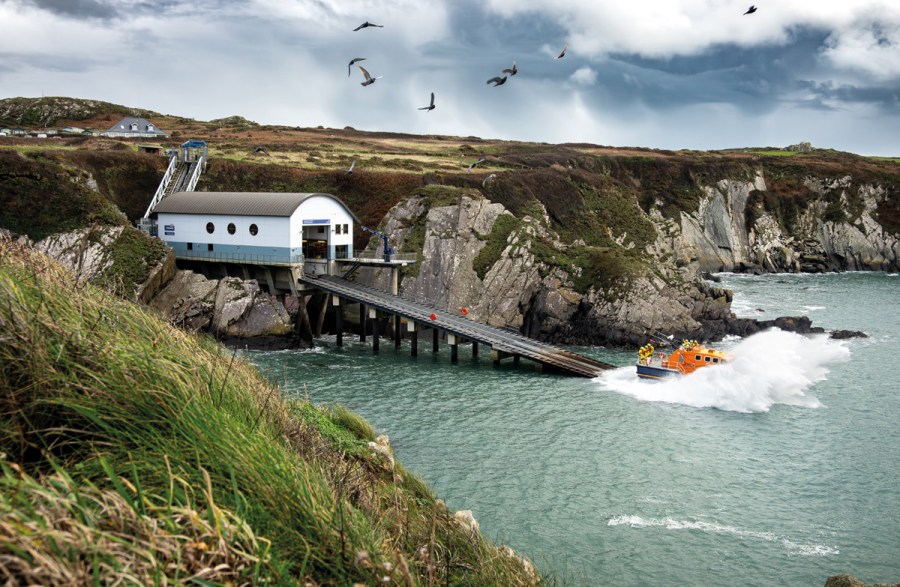
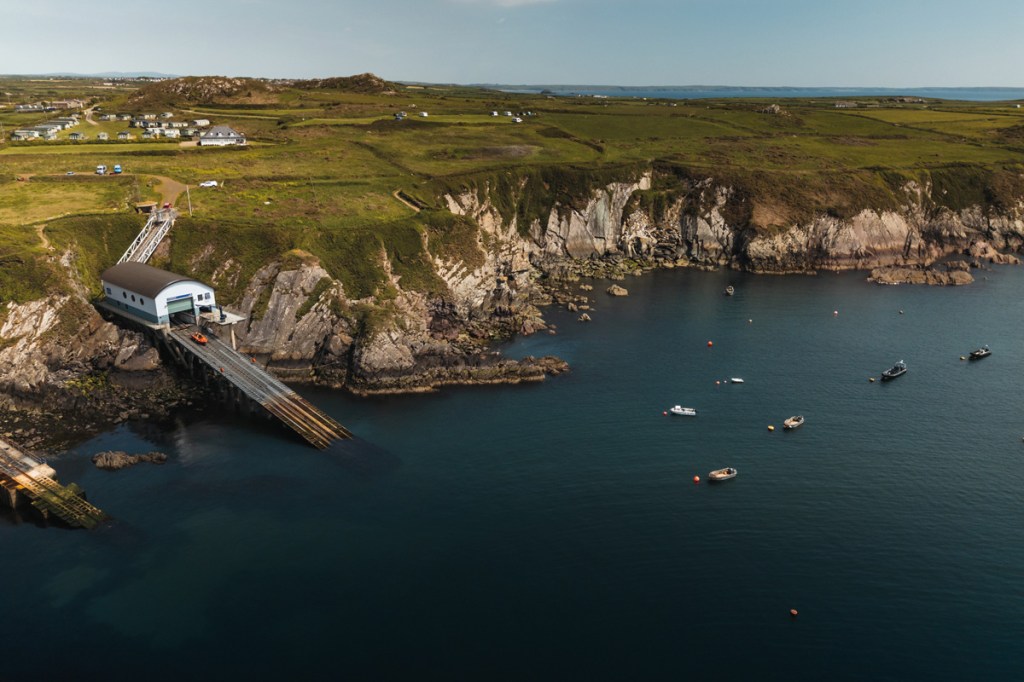
Not only are they the pillars of coastal communities, but many lifeboat stations are striking landmark buildings set in dramatic locations, often open to the public. In Cornwall, the Lizard Peninsula’s sleek modern station (opened in 2012) is perched on a cliff of serpentine rock 45 metres above Kilcobben Cove and combines a boathouse, funicular railway access, a steep slipway and a heritage centre. Here, visitors can learn about the charity and the station’s history, meet Rose, the station’s Tamar-class all-weather lifeboat and help contribute to its work by buying, say, a Yellow Welly Mug, a Lifeboat Statistics Tea Towel or an RNLI Teddy Bear. What is less obvious to visitors, perhaps, is that the Lizard’s volunteers face one of the most treacherous stretches of coastline in the UK.
Other noteworthy stations include Hoylake, serving Liverpool Bay and the Mersey, which is credited as one of the UK’s oldest, predating the founding of the RNLI by 21 years. St Davids in Haverfordwest has another dramatic slipway: set at the foot of remote coastal cliffs, the £10 million station, officially opened in 2017, sits alongside its disused predecessor. Aith, in Shetland, is the most northerly, Cromer in Norfolk is unusually set at the head of the town’s pier, and Enniskillen on Lough Erne in Northern Ireland made history in 2001 as the RNLI’s first inland station. The busiest is London’s floating Tower boathouse at Victoria Embankment on the Thames.
Wherever they are, all lifeboats face hazardous conditions, often peculiar to the waters in which they operate. In North Sea settings – which, according to the RNLI, are among the most challenging on the planet – it is not unusual to see the lifeboat plough into waves which are higher than the wheelhouse. On the Severn Estuary, conditions are notoriously perilous due to its tidal range – one of the world’s most powerful. Fast incoming tides are a common hazard for some of the stations on the UK’s south-east coast; others deal with rip tides, Atlantic swells, freezing temperatures and frequent gales.
‘We all know our own waters,’ says Adam. ‘But you can’t account for the sea’s unpredictable nature or the ever-changing weather. One minute the water is lovely and calm, then half
an hour later, it turns ugly.’
Then and Now
Things have changed since Sir William Hillary (a former soldier who, incidentally, couldn’t swim) founded the original National Institution for the Preservation of Life from Shipwreck. Hillary lived on the Isle of Man, where loss of life due to shipwrecks was a regular occurrence. He helped roll out the first handful of lifeboat stations, but it was nothing like the coordinated national operation that exists today.
Then as now, there were unpaid volunteers, though in the early days they were mainly fishermen and exclusively male. Under Hillary’s guidance, a medal system was introduced to reward acts of bravery. ‘To many minds, even in the humblest walks of life, such recompense would be more acceptable than a pecuniary reward,’ he wrote.
Medals are still awarded for gallantry (Mumbles boasts 33 in all), but the incentives are more personal. In a call for new recruits, the RNLI invites would-be volunteers to ‘have fun, meet new people and join a motivated and enthusiastic team who are making a difference’.
Over the years, the service has seen a distinct change in demographic. Fiona Johnston claims a ‘lifetime of boating skills starting at an early age’, but across the board, only one volunteer in 10 comes from a traditional maritime background, despite the skill and courage required to ‘make a difference’.
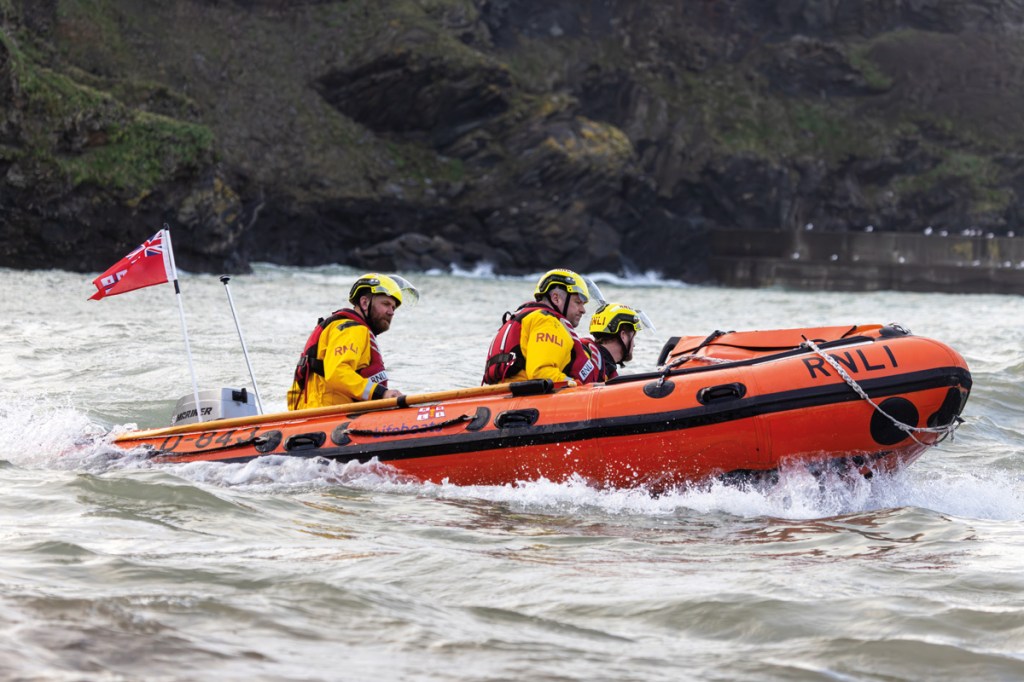
Shipwrecks are more or less a thing of the past, but there is no decline in the demand for lifeboats. ‘An increasing number of call outs are from recreational users,’ says Adam Gilbert, whose crew frequently deals with distress calls from swimmers, paddleboarders and canoeists who have underestimated the weather or the conditions and found themselves in danger.
These situations may not sound quite as dramatic as shipwrecks, but all represent a high-pressure search and rescue scenario for the crews of both all-weather lifeboats (or ALBs, the rugged sea-going vessels that define the service) and in-shore craft (high-speed rigid inflatable boats – RIBs – and nimble workhorse inflatables usually in use close to cliffs, sandbanks and surfy beaches).
The rescue of small-boat migrants in the Channel is an increasing demand for stations on the south coast. And big vessels still need help. Recent cases include the trawler which got into trouble in choppy seas and had to be towed to shore in a rescue exercise that took Torbay’s crew five hours.
Learning the Ropes
Over the last 200 years, there have been numerous lifeboat tragedies, but no lives have been lost in service since the infamous Penlee Lifeboat disaster, when all eight crew on the RNLI’s Solomon Browne perished off the coast of Mousehole in Cornwall during an attempt to rescue passengers on the Union Star, a coaster which had suffered engine failure in a hurricane-force gale. The 1981 disaster, which touched the entire community, helped change the design of the lifeboats and began a gradual strengthening of health and safety requirements. Modern all-weather vessels are self-righting and equipped with state-of-the-art navigation and communication instruments. ‘Safety regulations are rigorous,’ says Adam.
According to Ellie Guy, her father started volunteering when he was 15 and learned on the job. Those days are over. It took Ellie four months of instruction before she was ready to ‘go afloat’, as she puts it. During the course of her training, the minimum age of entry was raised from 17 to 18 years.
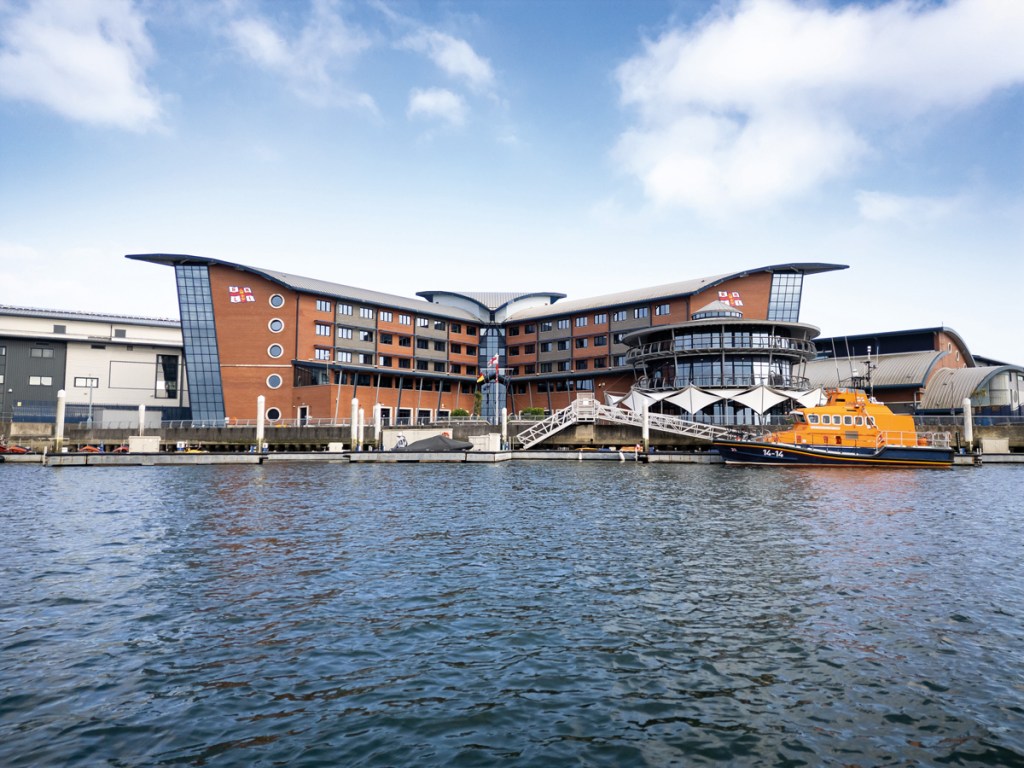
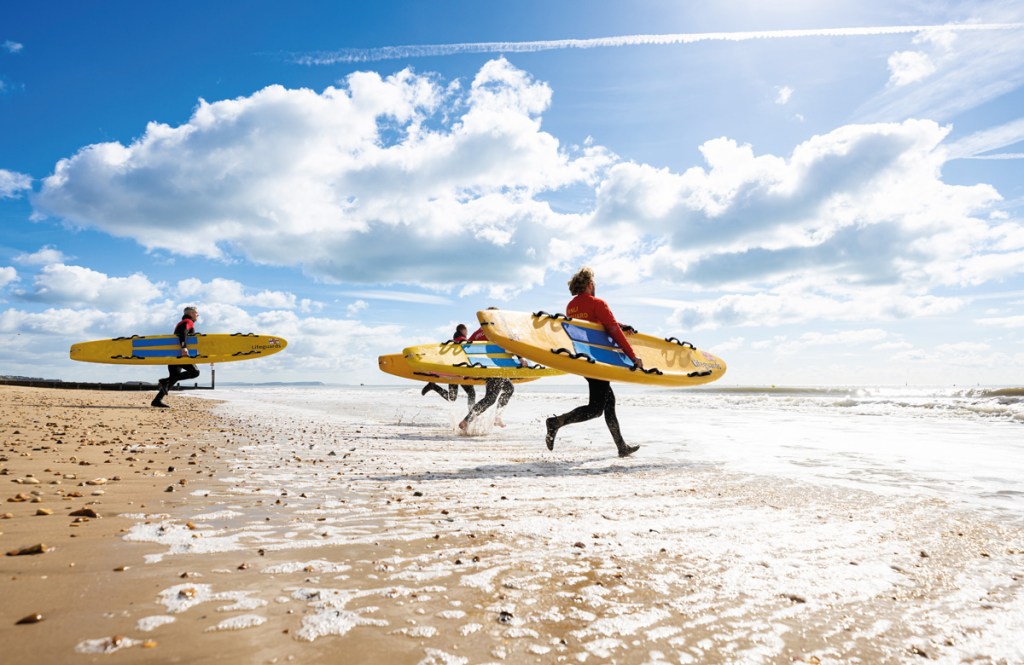
Adam remembers the training as ‘intense but friendly’. Like all of today’s volunteer crew, he attended residential courses at the RNLI’s Lifeboat College in Poole in Dorset, where realistic scenarios are acted out to test new recruits in the waters around Poole Harbour and the Isle of Wight. Adam remembers dealing with a boat fire, a floundering jetski and a yacht with injured crew on board. The college also features an indoor facility – or ‘sea survival pool’ – that simulates conditions such as stormy weather, thunder and complete darkness. ‘It’s like Disneyland,’ jokes Adam.
Further training is conducted at the lifeboat stations and on the job. Volunteers are also trained in ‘casualty care’, learning enough first aid to keep someone alive until they can be handed over to the emergency services. According to the RNLI: ‘Crew training is a continuous process and the learning never stops.’ For an unpaid job, it’s a massive commitment.
Calls to Action
A lifeboat crew’s shout usually starts with a 999 call, which then gets passed on to the RNLI through the police or the coastguard. ‘As soon as our pager goes off, we hurry down to the boatshed and, depending on how many of us there are, the coxswain picks a crew,’ explains Fiona.
The number of crew on hand varies from place to place. In Broughty Ferry, there are 24 volunteers. Eastbourne has around 40. In most places, the majority have other jobs and can’t always drop everything in response to a call out; thankfully, there are enough volunteers to fulfil the crew requirements to meet an emergency: an ALB typically needs a crew of seven, including a coxswain, a helm and a navigator.
Adam’s recent shouts include rushing to the aid of a heart attack victim on board a tanker, a fisherman who’d fallen off the back of his boat and a 14-year-old boy who got into difficulty on a paddleboard. His most memorable rescue involved a fire on a motor boat. The two owners had taken the vessel a mile out to sea as part of a regatta when its faulty battery caught fire. ‘It was like something out of a movie,’ says Adam. ‘Literally seconds after we’d got the couple off the boat, it burst into flames. Without our help, they wouldn’t have stood a chance.’
In Eastbourne, Ellie remains on standby for the call out that will place her on the same page as her dad who, she says, ‘has put his life on the line to save other people’. Her father, Dan, a coxswain with the Eastbourne Lifeboat Station, won a bronze medal for gallantry when he jumped onto a stricken yacht in dangerously rough weather to rescue one of its crew. ‘There’s no way he would have survived without my dad,’ says Ellie. ‘I am so proud of him. I have always found that really inspiring, and I can’t wait to be part of that.’
After so many years as a volunteer, Fiona Johnston has experienced more proud moments than most, one of the most memorable being the time she spotted a ‘barely conscious’ woman in the tideline of the River Tay, in thick fog. ‘She’d been in the water for some time and wouldn’t have survived much longer.’
Fiona sums up the motivation of every volunteer in the service of the RNLI when she says: ‘There is no better feeling than being responsible for saving someone’s life.’ Does she ever feel unsafe? Apparently not. ‘I trust the boats, I trust the crew. We trust each other.’
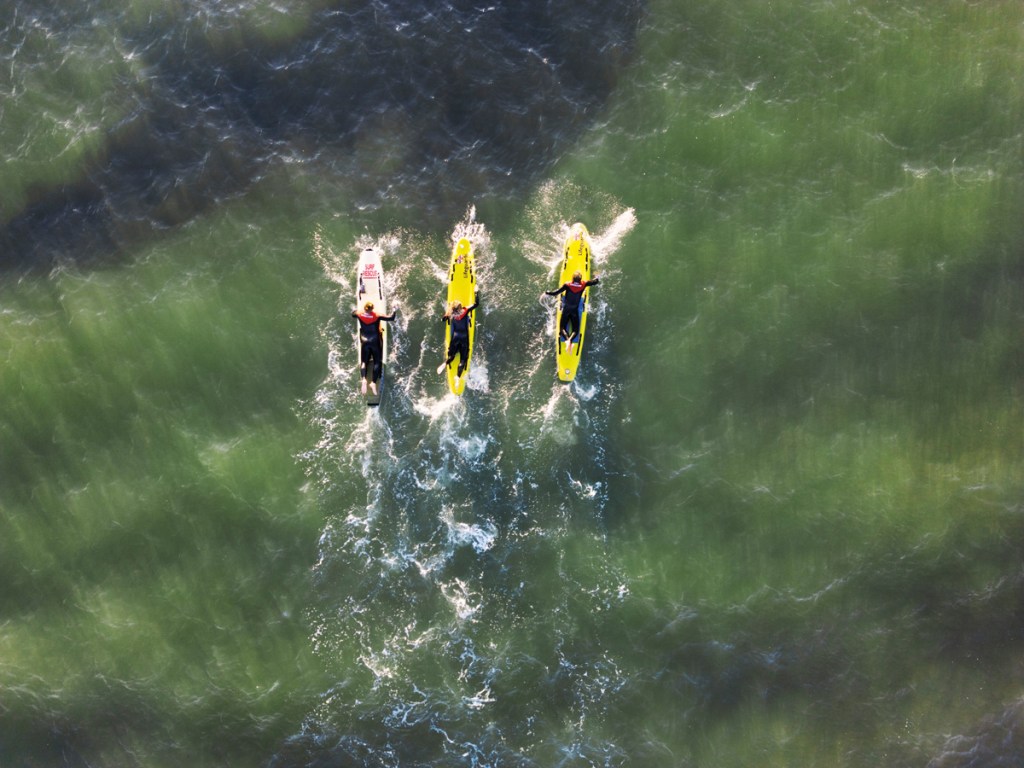
SAFETY ON THE BEACH
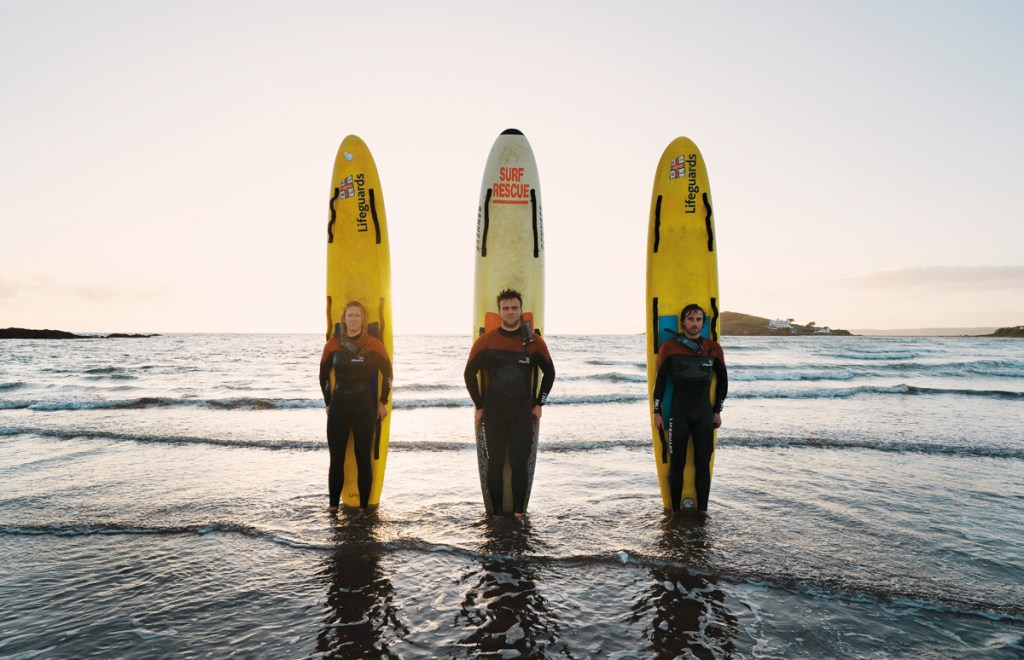
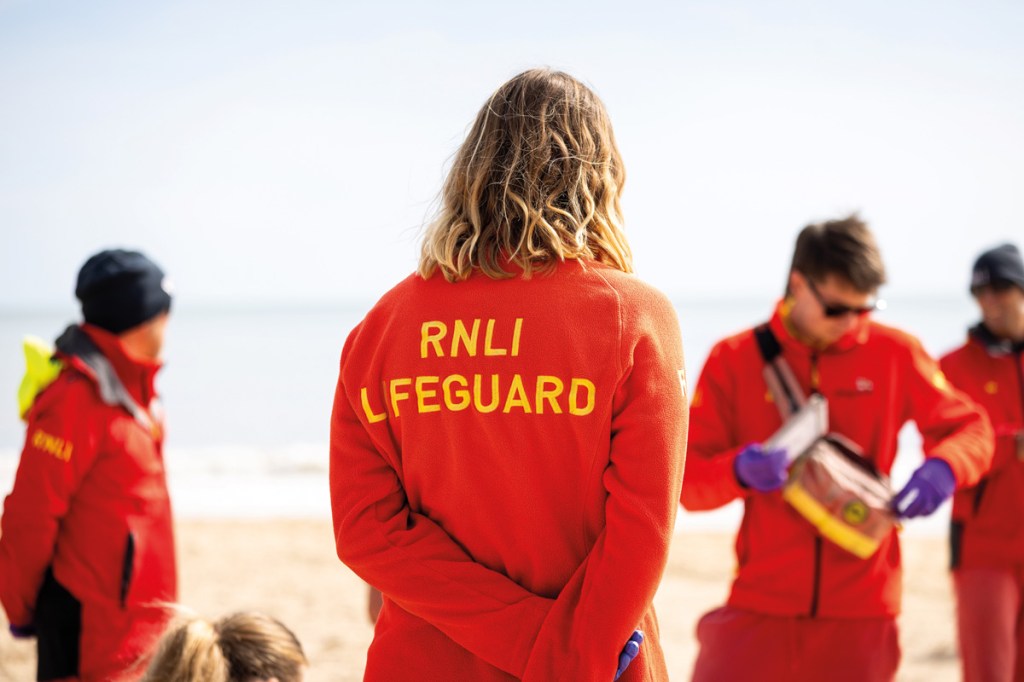
Although the RNLI is best known for saving lives out at sea, the organisation is also responsible for protecting swimmers, surfers and paddleboarders closer to the shoreline. This year marks the 25th anniversary of its Lifeguards service, which not only patrols our beaches but also hands out safety advice and administers first aid, often working with lifeboat crews to provide an integrated rescue service in and out of the water. Since the division was founded in 2001, the RNLI’s army of lifeguards has taken over 48 million preventative actions, attended 330,000 potentially fatal incidents and helped more than 440,000 people. Help them by helping yourself– follow these five tips for staying safe:
- Choose a lifeguarded beach: around the UK and the Channel Islands, the RNLI’s lifeguards patrol over 240 beaches, so there are plenty to choose from.
- Call for help: invest in a waterproof pouch for your mobile phone, so you can call 999 (or 112 from Ireland) in an emergency while boating or bathing.
- Don’t panic: if you find yourself in trouble in the water, follow the ‘float to live’ rule – just relax and breathe normally. Learning to float should be an important part of safe swimming practice, especially for children.
- Know the risks: high tides, rip currents, freezing water and rough seas are among the risk factors for swimmers and beachgoers. Read the signs, heed the dangers and never go into the water after drinking alcohol.
- Red flags: a red flag on the beach is a clear warning – the water is simply too dangerous for swimming.
For an A-Z of the UK’s lifeguarded beaches and more safety tips, visit the RNLI website: rnli.org.
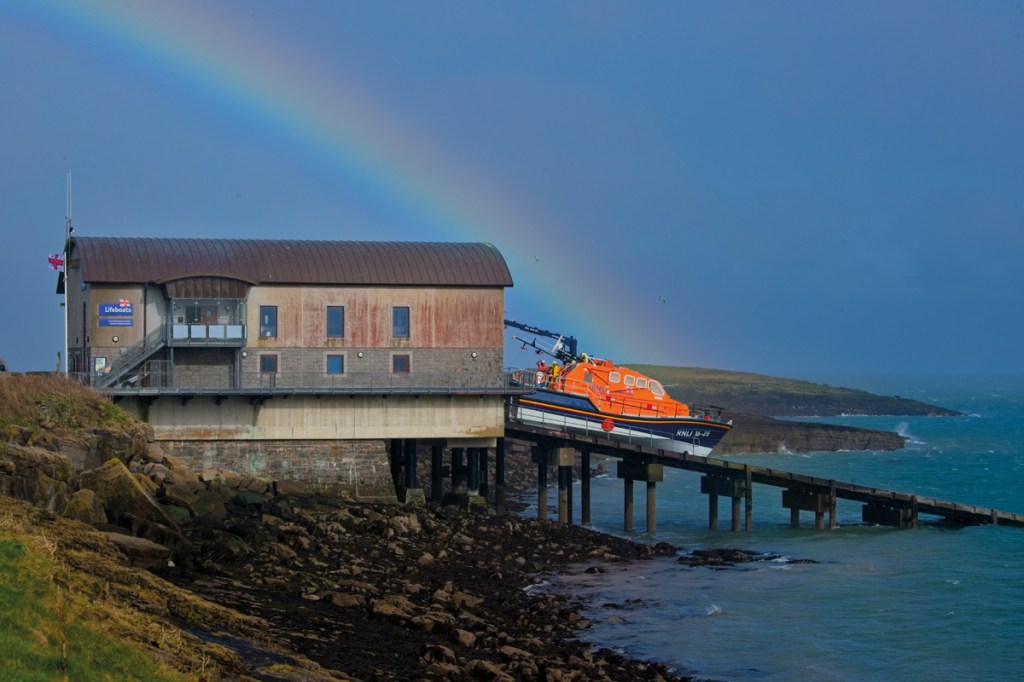
LIFEBOAT STAYS
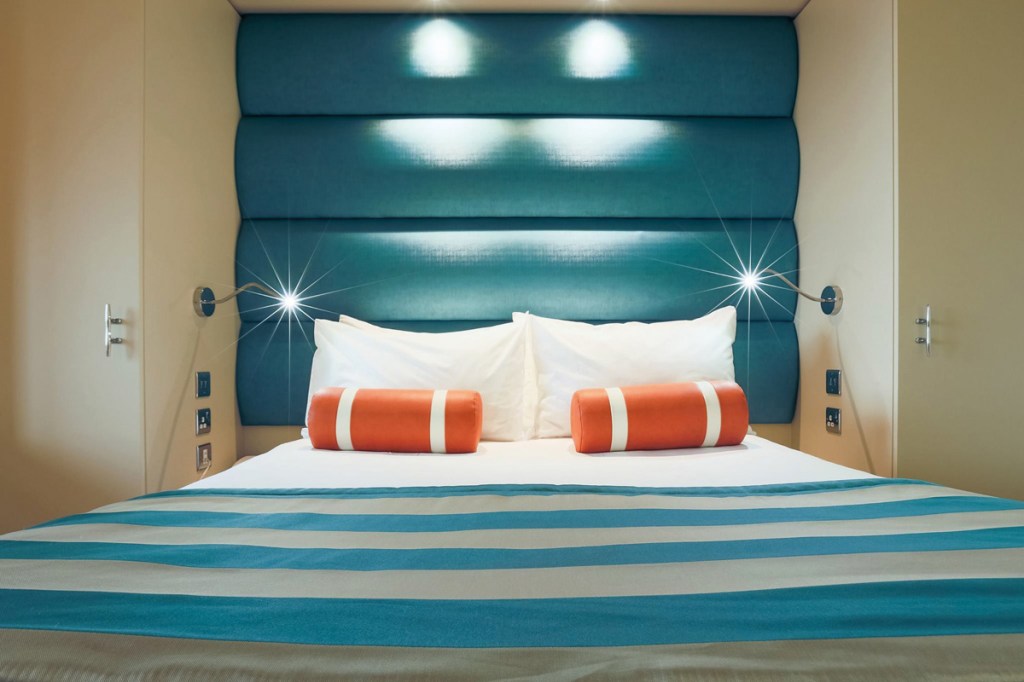
Help fund this vital service by spending a night or two at its harbourfront headquarters in Poole, Dorset. The RNLI College not only provides a state-of-the-art residential training facility for its volunteers but also doubles as a hotel. The £18-million centre, completed in 2004, occupies a strikingly nautical building which overlooks Poole Harbour through porthole windows. The college’s 60 bedrooms, all decked out in RNLI colours, Riggers Restaurant and Slipway Café:Bar are all open to the public. B&B prices start at around £119 per room per night – to book, call 0300 300 7654 or go to rnli.org/rnli-college.
Photography Credits: RNLI/Nigel Millard, RNLI/Dave Riley, RNLI/Richard Adams, RNLI/Hannah Scoular, RNLI/Nathan Williams, RNLI/Richard Hyslop