
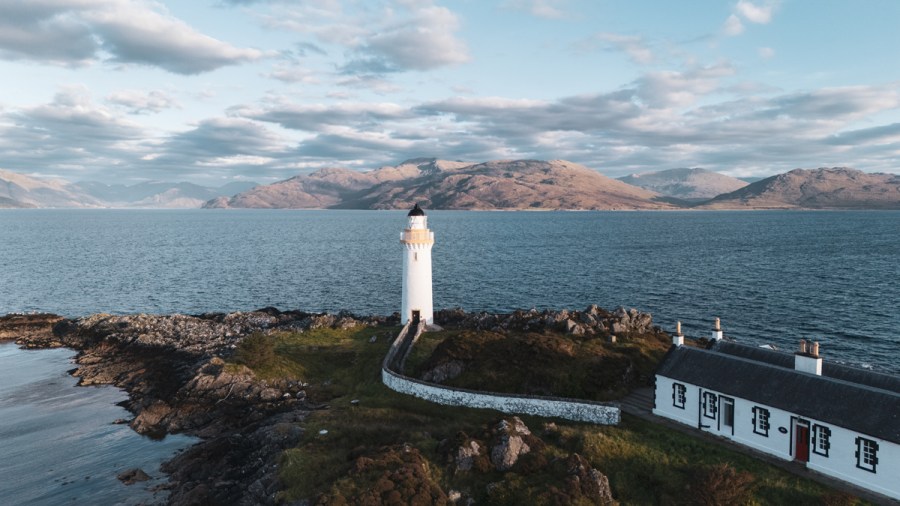
What would it be like to stay on a tiny, remote island, with no other visitors or inhabitants, shops or people? Suzy Walker takes a trip to Scotland to find out
Photography Neil Speakman/Studio Maple
Halfway up the four-acre island, high on a rocky ridge of Eilean Sionnach, there’s a small stone memorial to its former owner, Paulita Sedgwick. An inscription by the poet WH Davies reads, ‘What is this life if, full of care, we have no time to stand and stare.’ As I explored the island on my first evening, it felt as if I was being given a message across time.
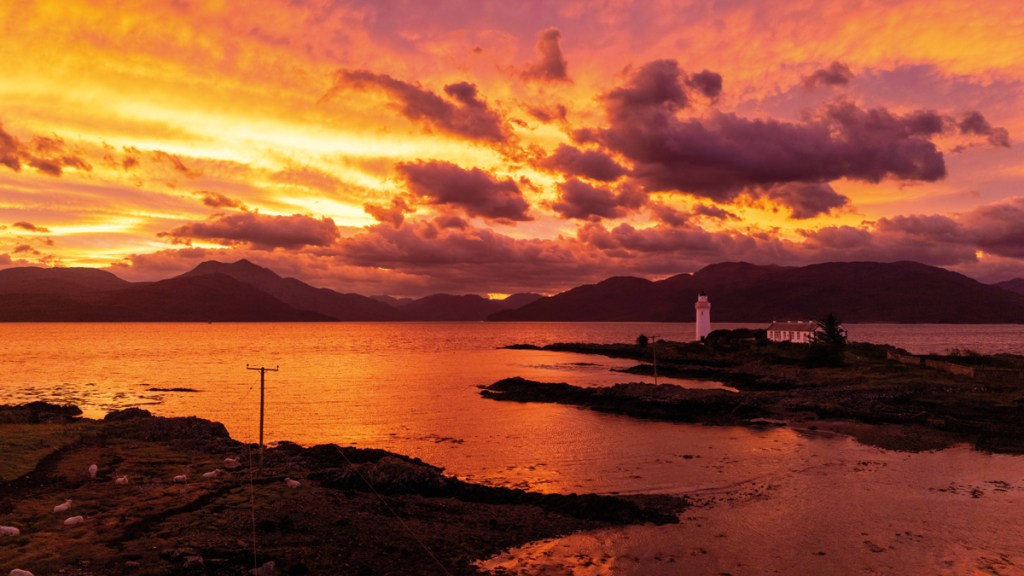
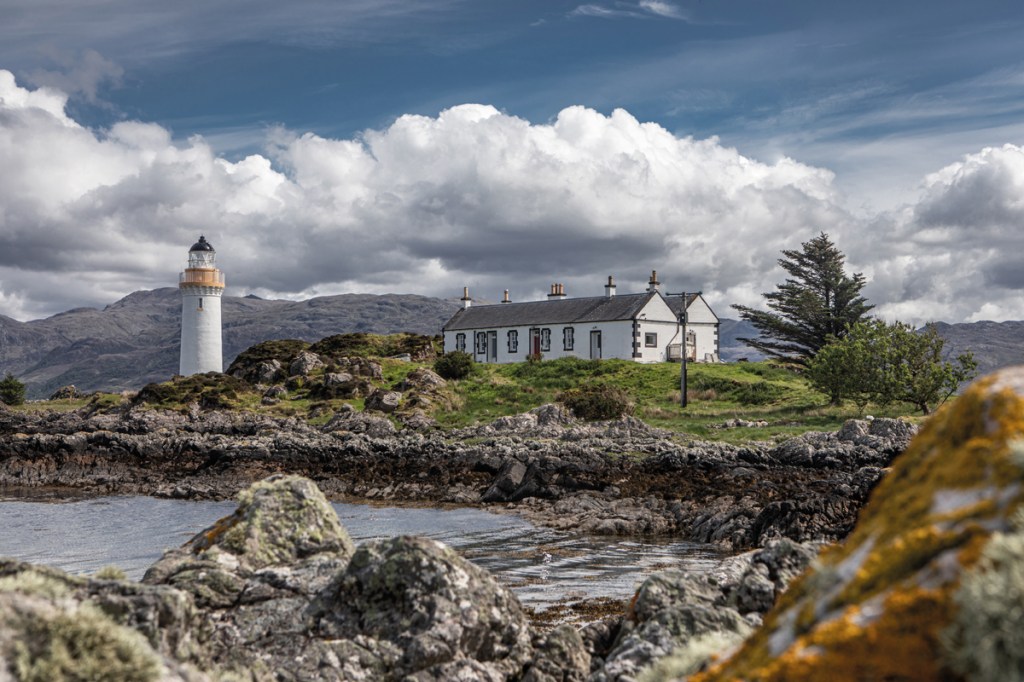
Eilean Sionnach, Gaelic for Island of the Fox, is a rocky island off Skye’s Sleat Peninsula, the size of a couple of football pitches and home to just one cottage and a working lighthouse. With a few resident otters and more weather systems than seem strictly necessary, it’s cut off twice a day by the tide.
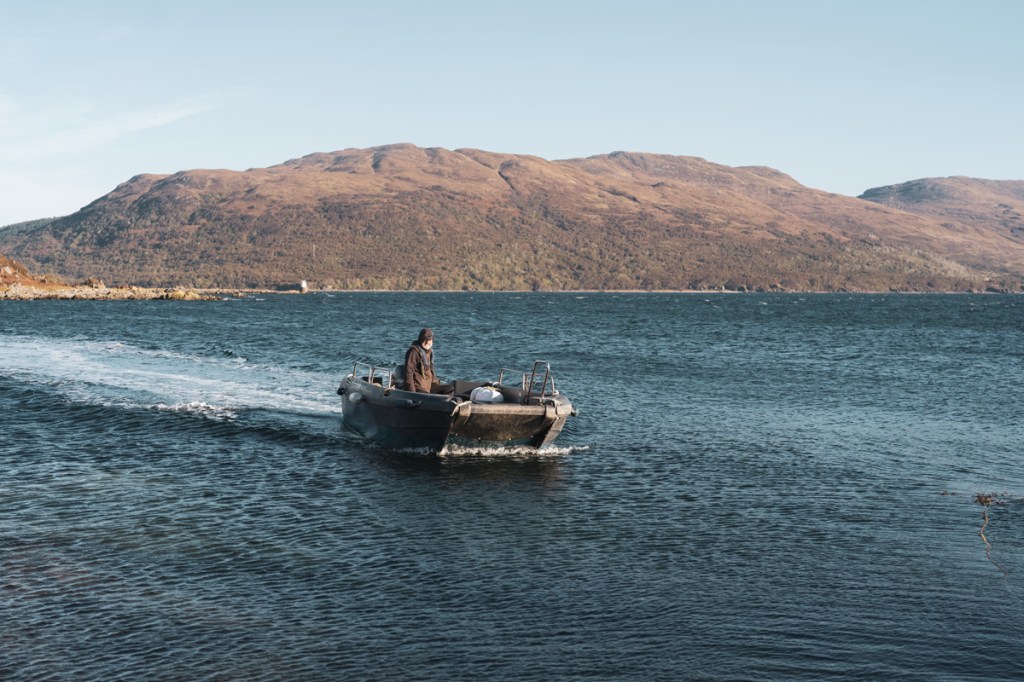
To get there, my partner and I turned south after crossing the bridge to Skye and, half an hour later, arrived at the small Isleornsay Harbour with three bags of groceries, a backpack and my little dog. We’d been advised to pack light, as you’re ferried across the narrow channel to the island in an eight-foot open-topped inflatable boat. Gus, the boatman, met us at the pier – brisk, capable and seemingly born with the art of the slow head-tilt when tourists ask obvious questions. When I wondered what happens if the weather turns, he simply said, ‘You wait.’
ISLAND LIFE
Clambering into the boat, we set off at speed, and within 10 minutes, the island came into view. Much smaller than I’d imagined, with a cottage at one end and the lighthouse at the other, it dawned on me that we were going to be marooned here for the next three days. Gus helped us up the slippery walkway from the sea, pointed at the wheelbarrow and motioned for us to take our bags up the path. After shouting instructions about which random rock hid the key, he was gone, his bobbing boat disappearing from view.
After the engine noise faded, a deep silence settled. We looked at each other – no other people, no cars, no shops, no pub, no background hum of voices, just the whoosh of the waves. Then the excitement hit and we set off exploring our very own private island.
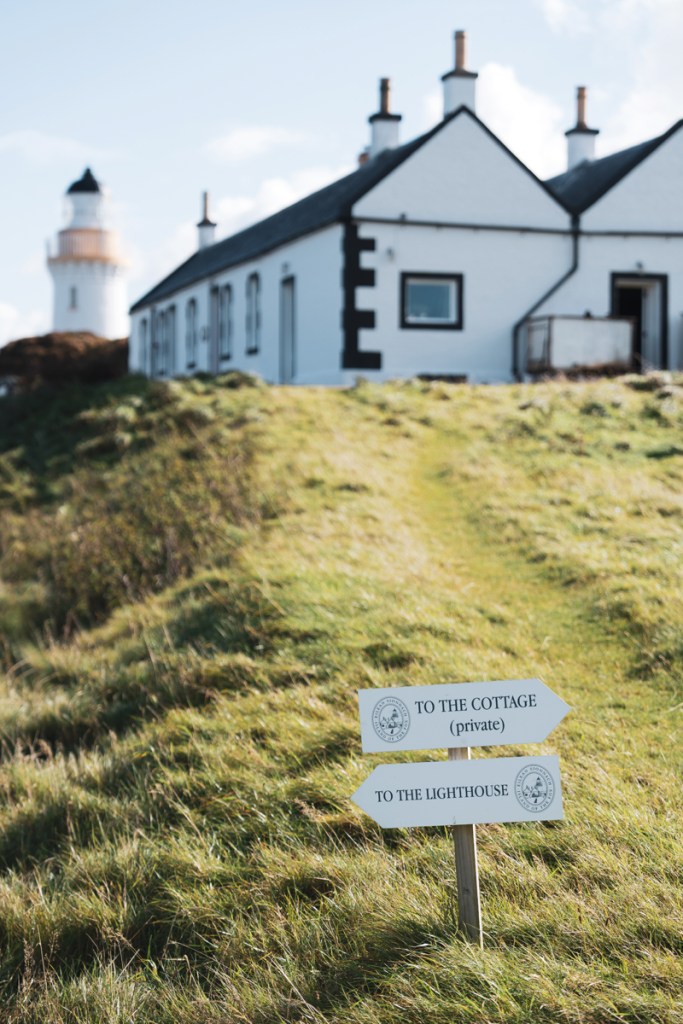
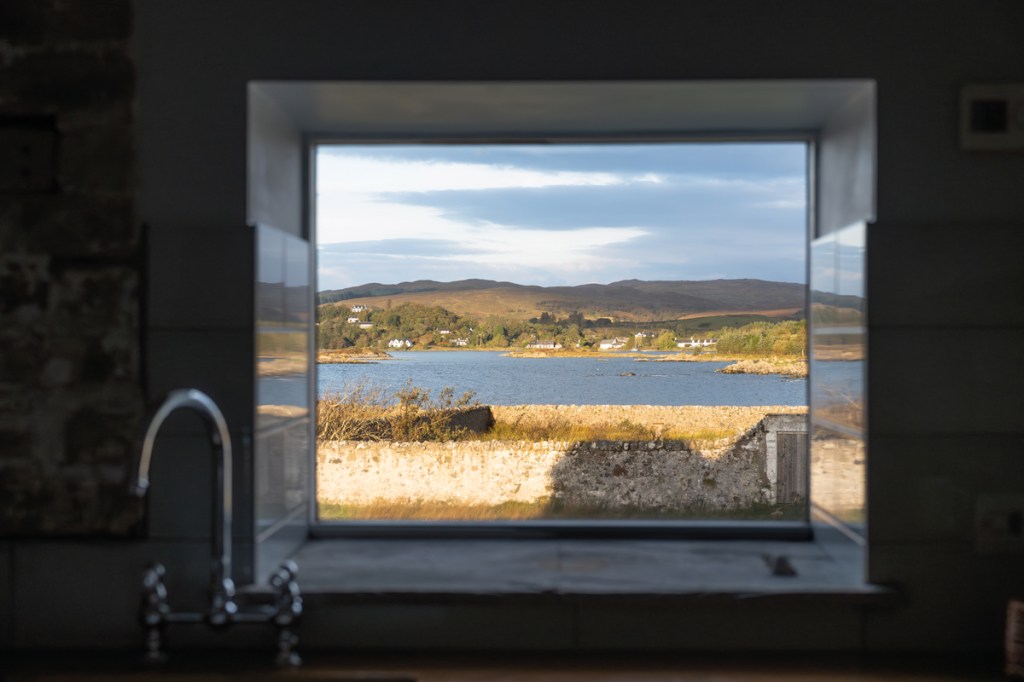
It was like stepping into a childhood adventure – Treasure Island meets Swallows and Amazons. The island’s grassy paths lead to rocky coves, tidal pools and a tiny disused walled garden where lighthouse keepers once grew their vegetables. You can walk the perimeter in 20 minutes and it’s a two-minute dash from the cottage to the lighthouse. It’s easy to imagine the keepers sprinting down that path to tend the light that keeps ships safe in storms. I began to understand first hand the importance of a lighthouse showing the way to safety.
Built in 1857, Ornsay Lighthouse has spent more than a century keeping watch over the Sleat Peninsula. The old steamers from the mainland have long disappeared, but the light still shines for passing ships. Automated in 1962, the lighthouse no longer needs a keeper – but standing at its base on the north end of the island, looking out at the dark water and jagged peaks of the surrounding mountains, you get a sense of what may have inspired David and Thomas Stevenson, two brothers from a family of engineers who designed many of Scotland’s lighthouses. I felt grateful for their mix of science, grit and compassion, which has protected sailors from these seas for generations.
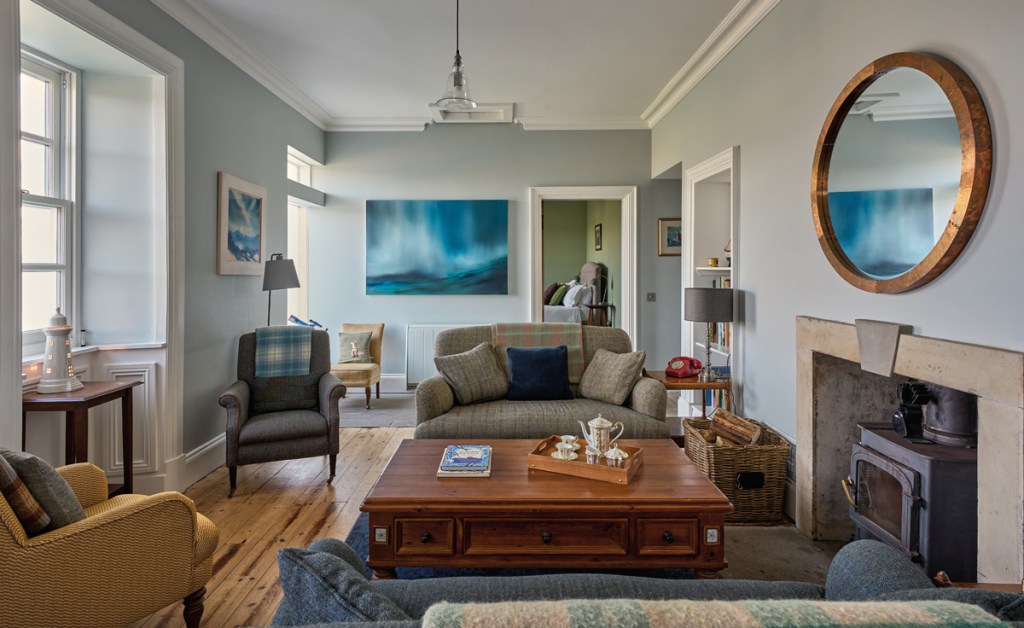
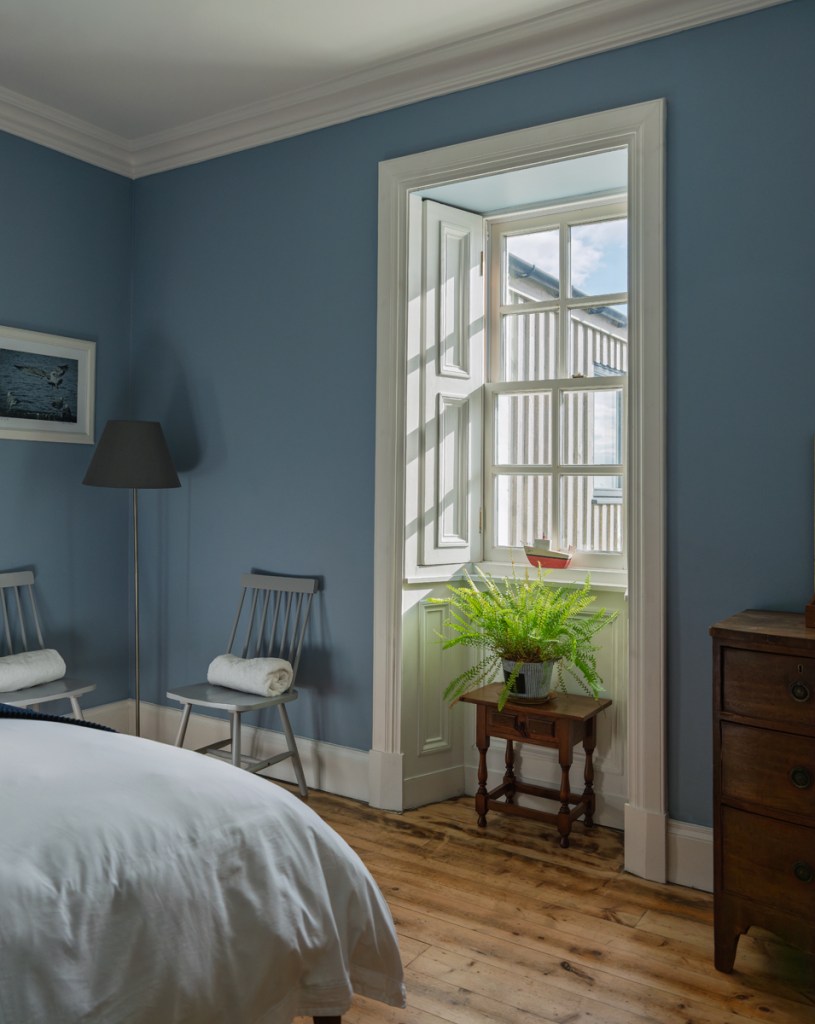
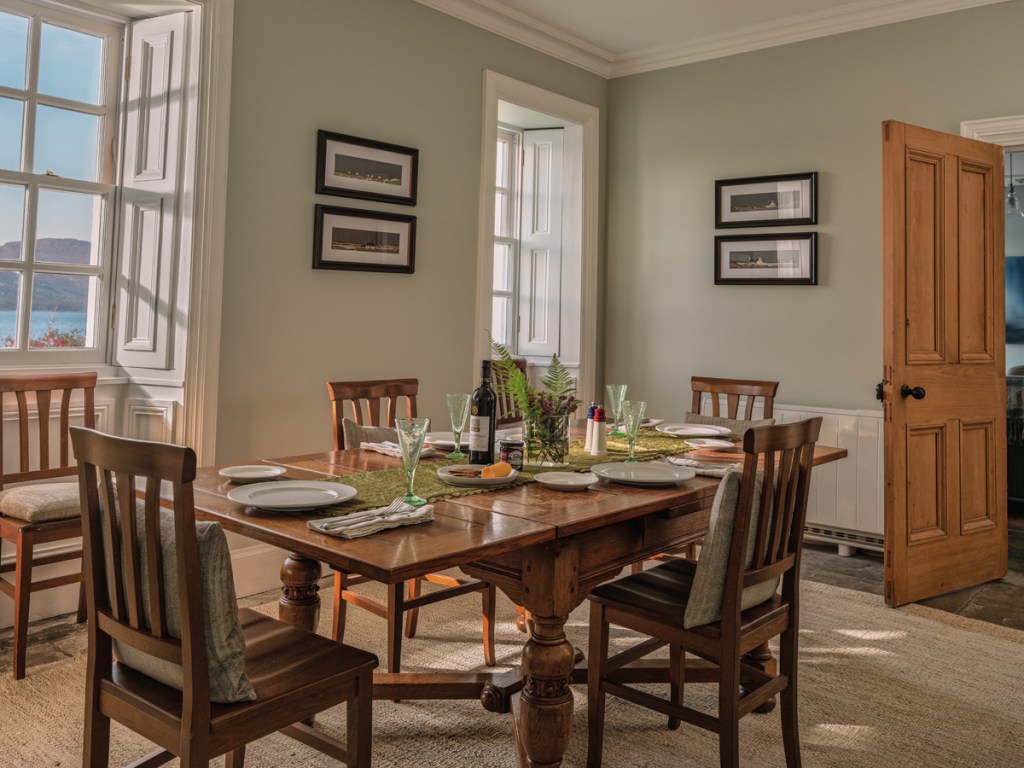
Our accommodation for the weekend was the Eilean Sionnach Lighthouse Cottage, a cluster of former keepers’ cottages knocked through into one four-bedroom home. It was a delight – soft lamp-lit luxury, piles of books, picture windows, vintage furniture and original works by the Skye artists Helen Robertson and Ellis O’Connor hung in every room.
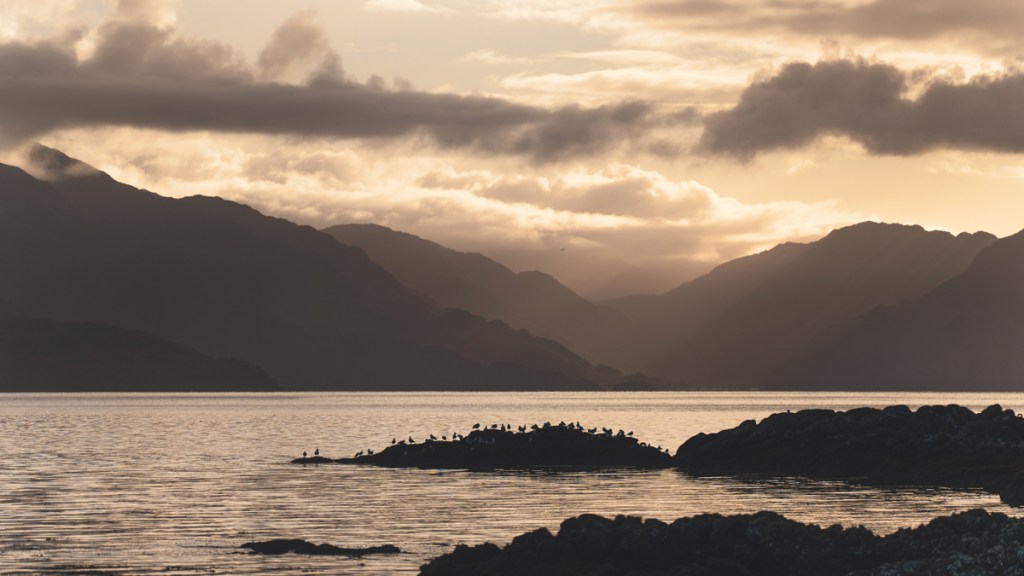
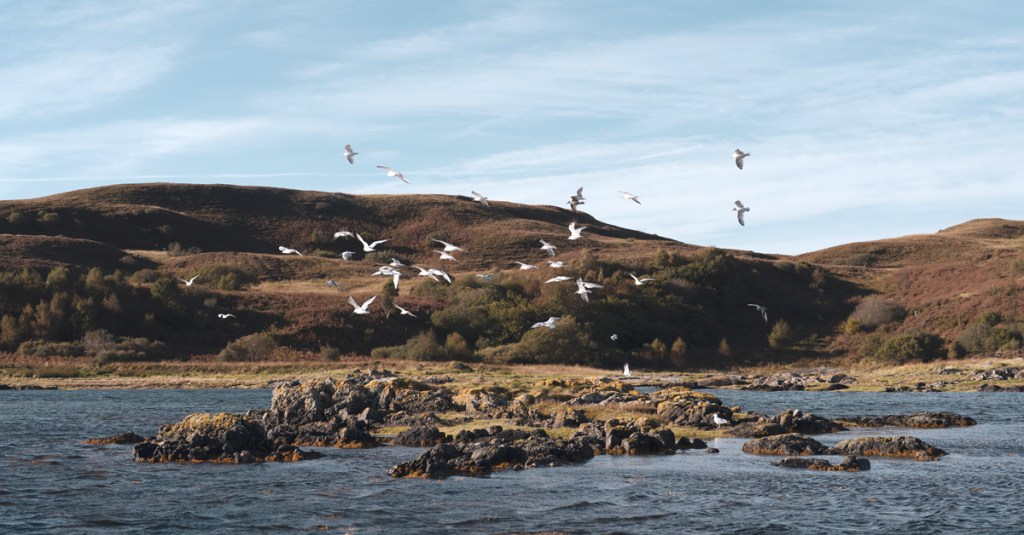
That first evening, we did nothing but sit by the window watching the weather roll in. The sky changed from bright silver to gunmetal in minutes. A heron stalked the shoreline. Out in the bay, a seal lifted its head as if to wave.
OTTER WATCH
By day two, I’d lost track of time. We cooked simple food, walked the perimeter at low tide and debated whether to try and walk off the island, which is in theory possible but we didn’t want to risk it, so we spent the day instead watching the mountains appear and vanish in the shifting light. As night fell, we sat by the fire inside and watched the lighthouse’s steady eight-second pulse sweep through the dark over the water. Later, wrapped in rugs, we sat on the bench outside the kitchen under a star-pierced sky, comforted by the constant rhythm of the beam of light
The next morning, I pulled on my wetsuit and swam off the south side of the island. I’m usually a fair-weather swimmer – a quick dip in just my costume – but the chance to swim from our own private island was too good to resist. The water was icy but crystal clear. With the lighthouse behind me and the mountains ahead, I felt utterly alive. Other guests had mentioned the island’s regulars – seals and sea otters – and I was hoping for a glimpse.
After the lighthouse was automated in 1962, the cottages were sold and the first private owner was Gavin Maxwell, the author of Ring of Bright Water. His memoir about life on the remote Scottish coast and his bond with a wild otter named Mijbil became a classic of British nature writing and inspired a film and a renewed love for otters and wild Scotland.
The island’s current otter residents – a mother with kits and a large dog otter who fishes in the bay – are said to be descendants of Mijbil. From the moment I arrived, I was on permanent otter watch and although I didn’t see any on my swim, I was rewarded on our third day. While I was rockpooling in the afternoon, a small head with cocked ears popped up from a wave and drifted lazily past, backstroking like it owned the place.
Gavin and his otters weren’t the only famous residents. The island was later owned by Paulita Sedgwick, an actress and filmmaker once part of London’s 1960s creative scene. Her cousin was Andy Warhol’s muse, Edie Sedgwick. Paulita bought the island for her son, Angel, who still owns it today. The memorial with the WH Davies quote is hers – a fitting message from a woman who knew how to live fully.
If Paulita was seeking an escape from London life, you can see why she loved it here. There’s a simplicity that’s hard to find anywhere else. You feel both small and safe at once. For me, it was a good reminder that the world carries on perfectly well without your inbox.
STAND AND STARE
On our final night, the weather turned wild. The wind howled, rain battered the windows and the sea hammered the rocks. Through it all, the lighthouse beam kept flashing steadily, as it has for nearly 170 years. Watching it was oddly reassuring. Whatever happens, the light endures.
The next morning, after the storm had passed, the lighthouse looked exactly as it had before – unruffled, reliable, still doing its job. Gus arrived, nodded once, loaded our bags and turned the boat back towards Skye. Back on the mainland, I thought again of the words on Paulita Sedgwick’s memorial: ‘What is this life if, full of care, we have no time to stand and stare.’ On Eilean Sionnach, surrounded by sea and silence, I’d finally done just that.
THE LIGHTHOUSE STEVENSONS
Generations of the Stevenson family built many of Scotland’s lighthouses
- In the 1790s, Robert Stevenson followed in the footsteps of his lighthouse engineer stepfather, Thomas Smith. Robert designed and built Bell Rock Lighthouse in 1811.
- Robert’s sons, Alan, David and Thomas, continued his work, designing lights such as Skerryvore and Ornsay.
- Their innovations included revolving optics, interlocking masonry and a clever ‘condensing apparatus’ that focused the beam where it was needed most.
- David’s sons, Charles and David, also built lighthouses. Thomas’ son, Robert Louis Stevenson, took the family’s love of the sea and spirit of adventure in a different direction, swapping lighthouses for literature as the author of novels such as Treasure Island.
As author Bella Bathurst writes, ‘They built against odds that defied reason, in places where no man had stood, in storms that swallowed ships whole.’ Their lights still shine today – proof that care and courage can outlast centuries. The Lighthouse Stevensons by Bella Bathurst (£10.99, William Collins).
STAY AT EILEAN SIONNACH LIGHTHOUSE COTTAGE
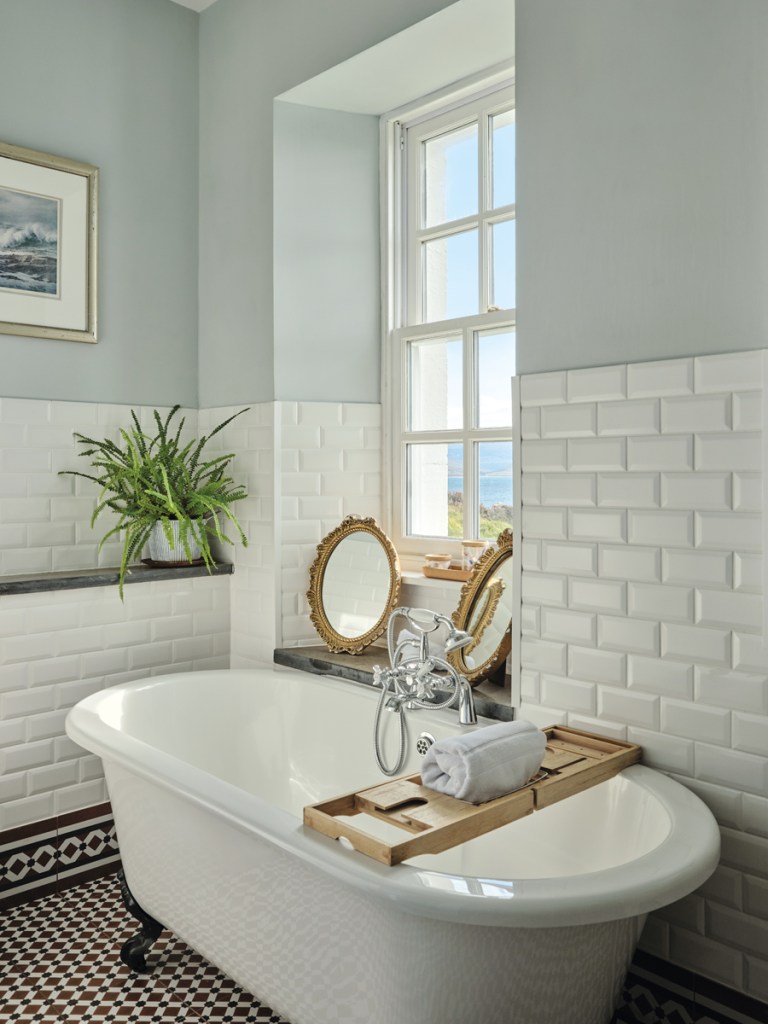
The cottage sleeps up to eight guests across four beautifully designed bedrooms, each with its own en suite bathroom. The main bedroom is a showstopper, featuring a free-standing bath positioned for stunning sea views. The fully equipped kitchen includes a SMEG range cooker, American-style fridge and microwave, and leads into an elegant dining area and a cosy lounge with a wood-burning stove and panoramic coastal vistas. Underfloor heating keeps the bathrooms and kitchen snug.
Stays cost from £650 a night for a minimum of two nights. Book at coolstays.com/property/eilean-sionnach-lighthouse-cottage/21444.
Discover more seaside places to stay, beaches to visit or the best coastal places to eat. Pick up the latest copy of coast magazine for more news, events and travel inspiration