
Claire Gaudion is one of the last makers of traditional Guernsey fishing baskets and is keeping this endangered coastal craft alive, one willow weave at a time
Words Susie Atkinson
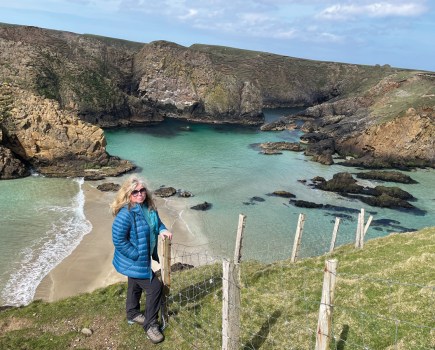
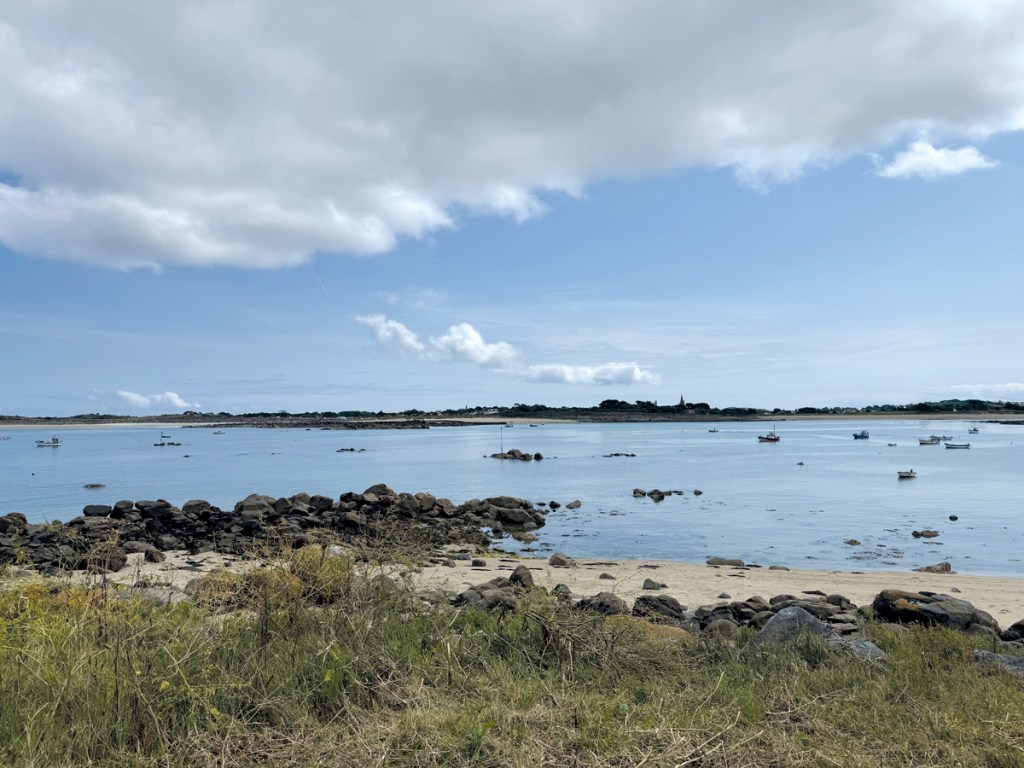
I grew up on Guernsey, one of the Channel Islands, in a family where the sea was central to our lives. Our house wasn’t far from the coast and some of my earliest memories are of cycling down to the beach to wait for my dad’s boat to come in. Dad was a fisherman. We’d try to guess how good the catch was by watching the gulls following him back. That connection to the sea – the sounds, the salt in the air, the open skies – has shaped everything about me, including the work I do now.
I’m a heritage basketmaker, specialising in traditional Guernsey fishing baskets. These are the same kinds of baskets my dad, Max Gaudion, made and used during his years as a fisherman. He learned from his great uncle, Wilfred, who learned from generations before. I learned by watching and eventually by trying – first making a ponier à cou more than 20 years ago and then slowly building it into my full-time craft practice.
Although I no longer live on Guernsey, I return often. My family is there and our home remains a base for coastal traditions, including basketmaking and foraging for shellfish.
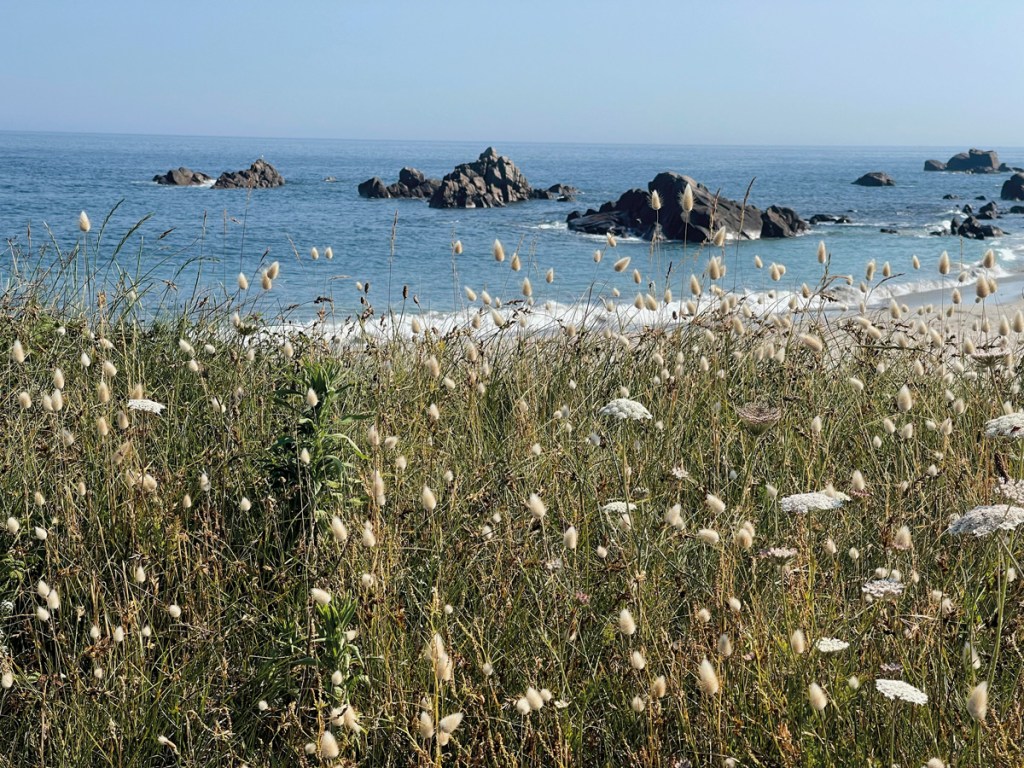
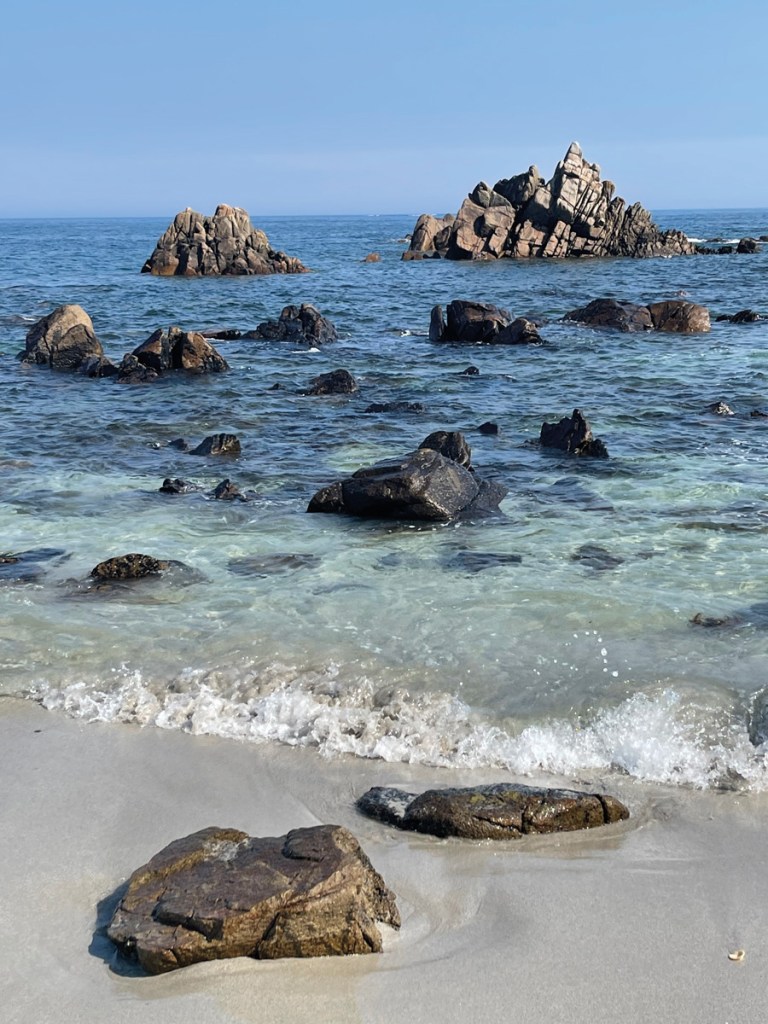
There’s something about being by the sea that makes me feel grounded and whole. The sound of the waves, the daily ebb and flow of the tides, the colours of the granite reefs and cliffs, the wildflowers on the headlands, the shape of the horizon – all of that gets into your system when you grow up with it. And somehow it comes back out again when I work with willow. The craft is hands-on, physical and completely absorbing – what people call
a state of ‘flow’. When I’m weaving, I’m not just making a basket; I’m back on the beach, I’m out in the boat, I’m part of that coastal rhythm again.
TRADITIONAL CRAFTS
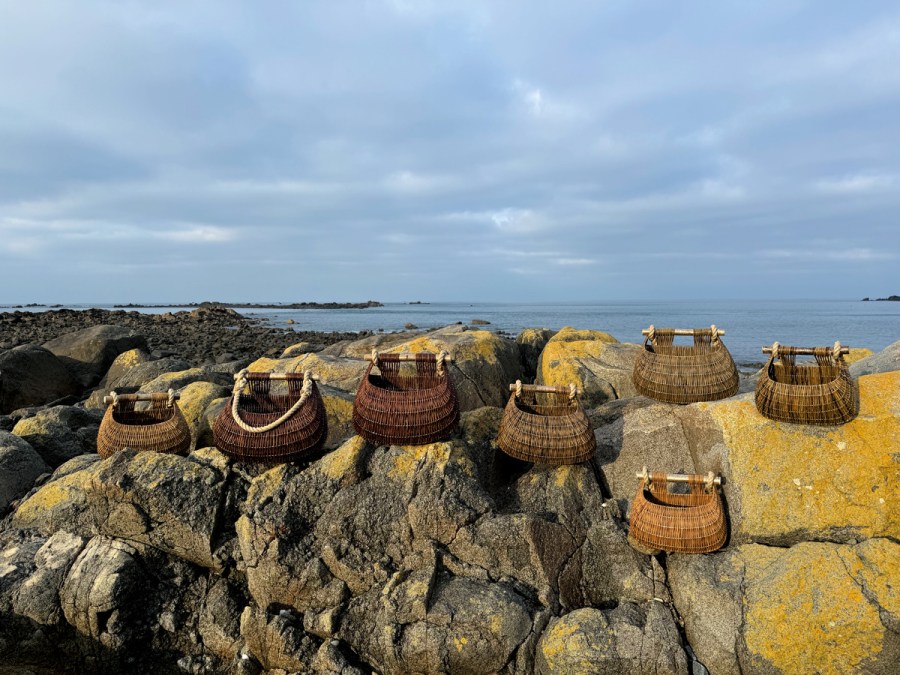
My baskets are based on traditional Guernsey designs that are used for fishing and foraging. The ponier à cou, for example, was used for collecting ormers – a local shellfish delicacy that you’re only allowed to forage on certain days, tied to the moon and tides. You wear the basket slung over your back, leaving your hands free to turn over rocks and look in crevices.
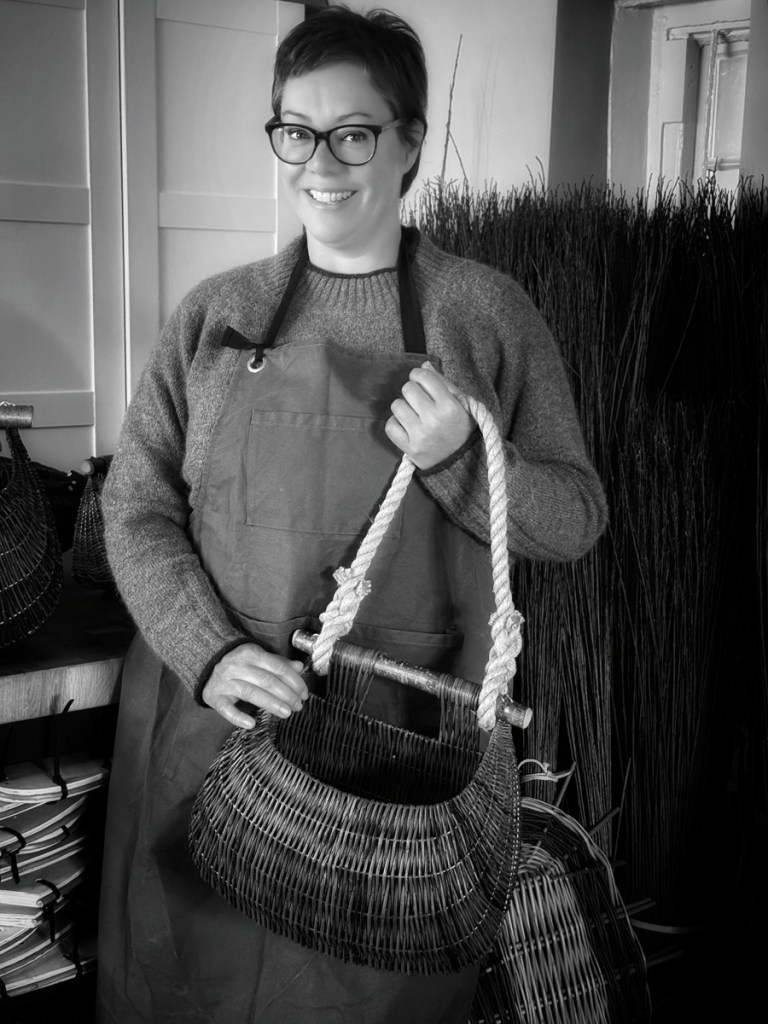
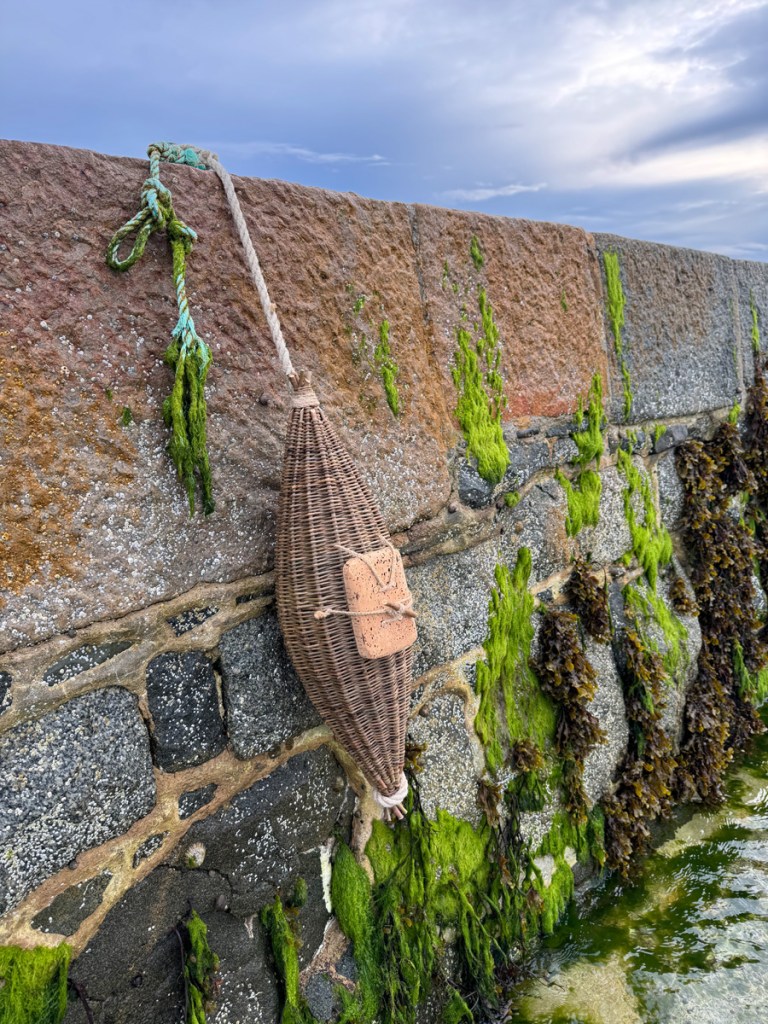
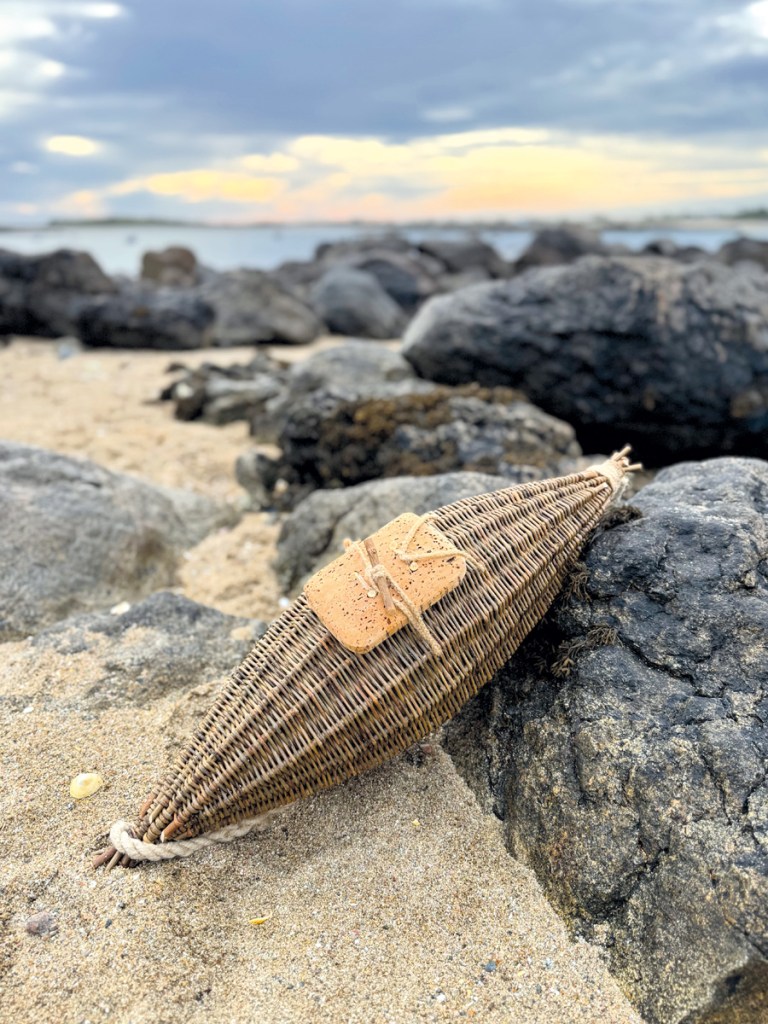
Then there’s the courge (pronounced like the French ‘rouge’), which is used to hold live sandeels as bait. The basket would hang off the back of the boat in the sea to keep the bait fresh, with seawater flowing through and a cork trap to stop the sandeels escaping.
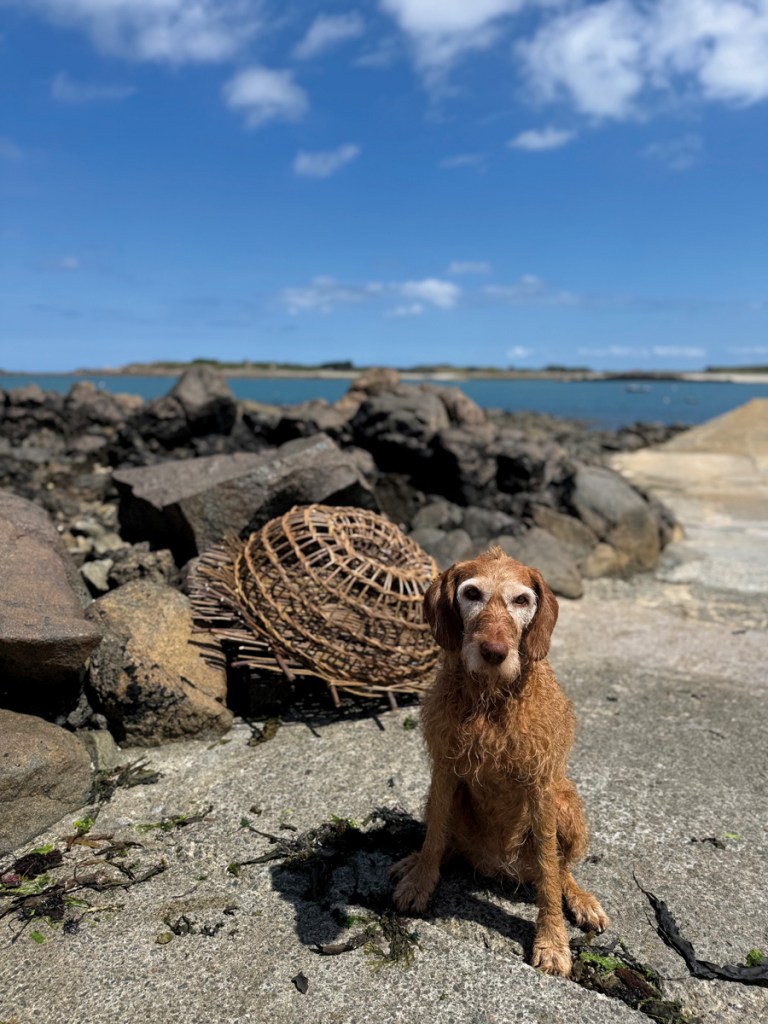
And then there are the crab pots. These are strong, squat baskets made with rows of twisted willow around their curved form. The slightly angular shape and extended base ribs allow them to grip the seabed. Traditionally, Guernsey crab pots are woven from 7ft and 5ft lengths of willow, each one twisted into shape by hand. My dad made hundreds in his time. Today, these have largely been replaced by plastic and metal in commercial fishing and they’re now on the Red List of Endangered Crafts. That’s part of what drives me – to keep the knowledge alive.
A FAMILY BUSINESS
This is very much a family tradition. My dad still weaves and we’ve worked together on film projects to record the techniques, especially for crab pots. There’s a YouTube video of him making one, which we made to preserve the knowledge for future generations.
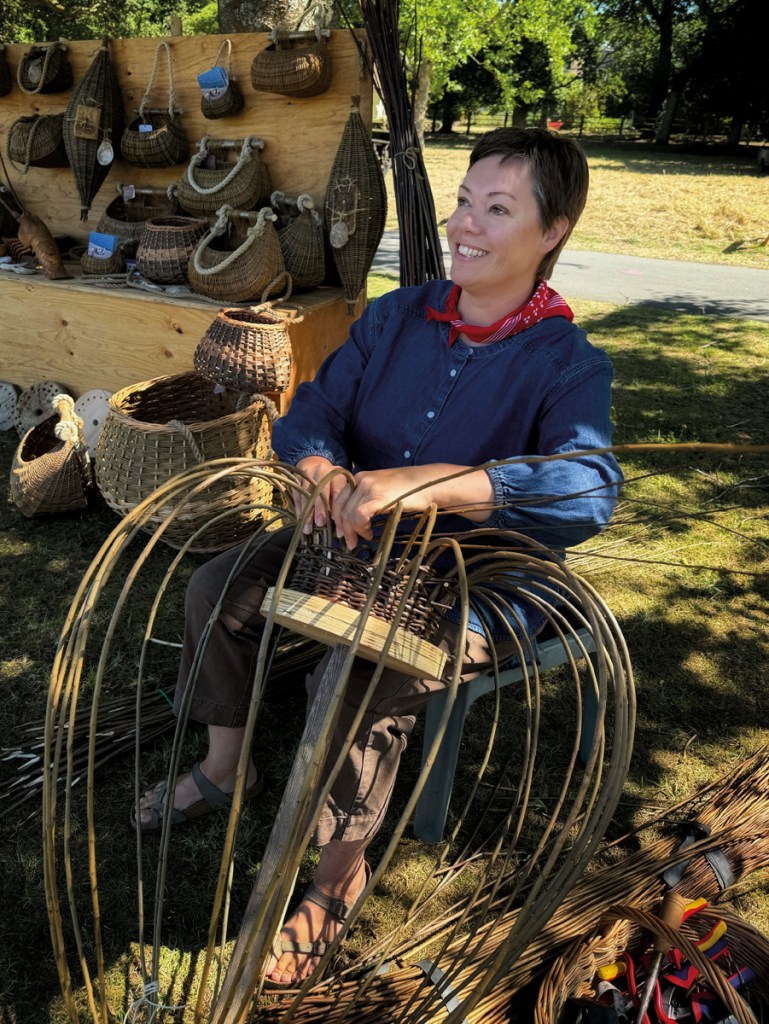
My niece and nephew have also started to learn. They help demonstrate at Lé Viaër Marchi – Guernsey’s traditional ‘old market’ hosted by the National Trust of Guernsey every July. Plus, when King Charles and Queen Camilla visited last year, the whole family presented our willow craft as part of a showcase of local island heritage. The King had a long chat with my dad about the craft and my niece presented a mini ponier à cou that I’d made to the Queen. That kind of recognition, as well as our basketry being featured in the Guernsey coastal-themed, Gold medal exhibit by Raymond Evison Clematis [a Guernsey flower nursery] at the 2025 RHS Chelsea Flower Show, really lifts our spirits.
Our family also gets together to forage for ormers. It’s a bit like a coastal treasure hunt – you follow the tide out, search under rocks, get wet and salty and come back with your catch.
Afterwards, we all gather at my parents’ house – the house I grew up in – for a big ormer feast. Mum cooks them slowly in a garlicky gravy with mushrooms and bacon. It’s a wonderful experience of foraging and cooking and the meal always feels like a celebration of the island and the sea.
THE MAKER’S ART
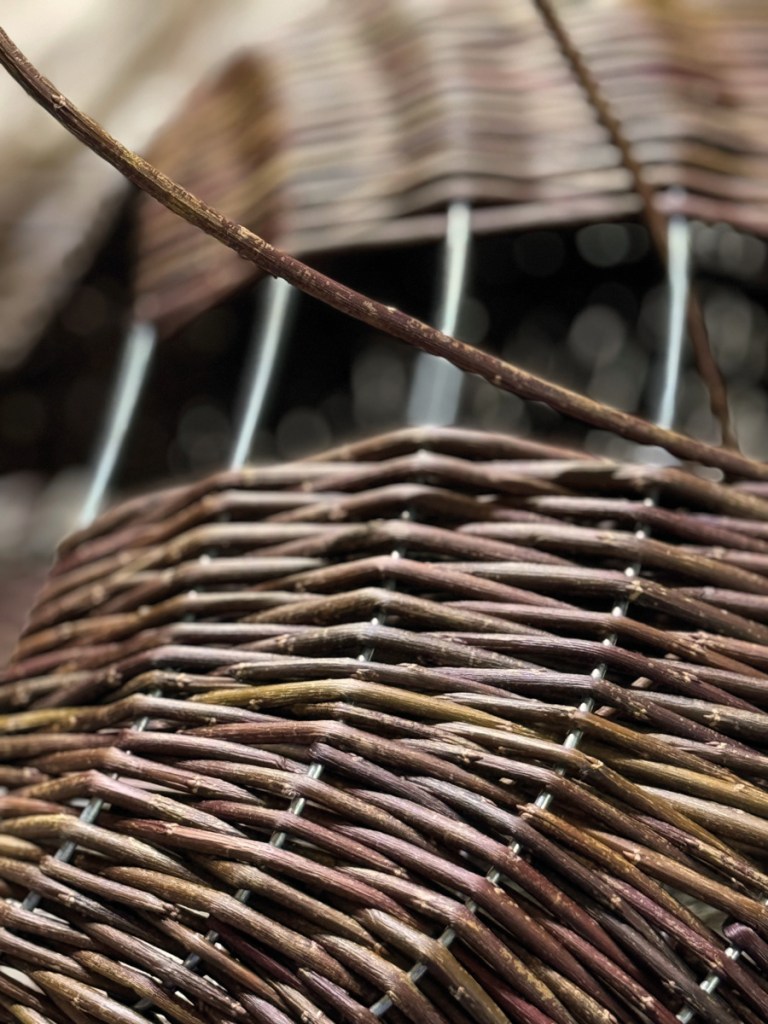
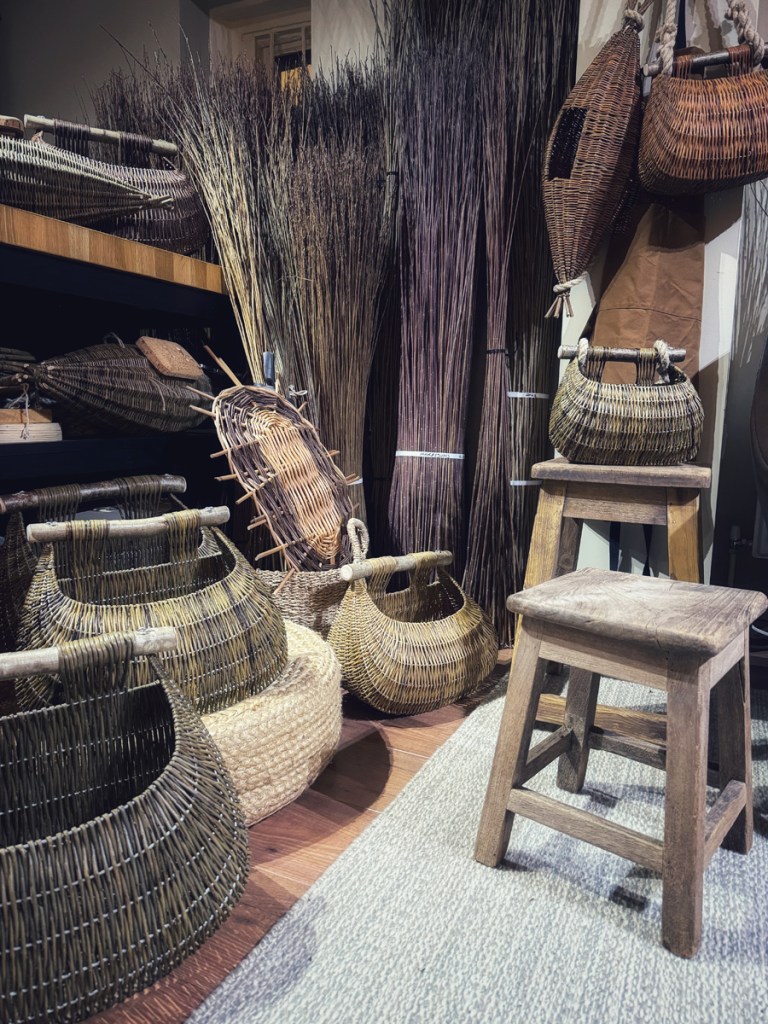
I mainly use Somerset willow these days, though Guernsey fishermen used to grow it near the beaches. My willow arrives dried and needs to be soaked for several days, depending on the thickness and variety. Once soaked and mellowed, it’s flexible and ready for weaving.
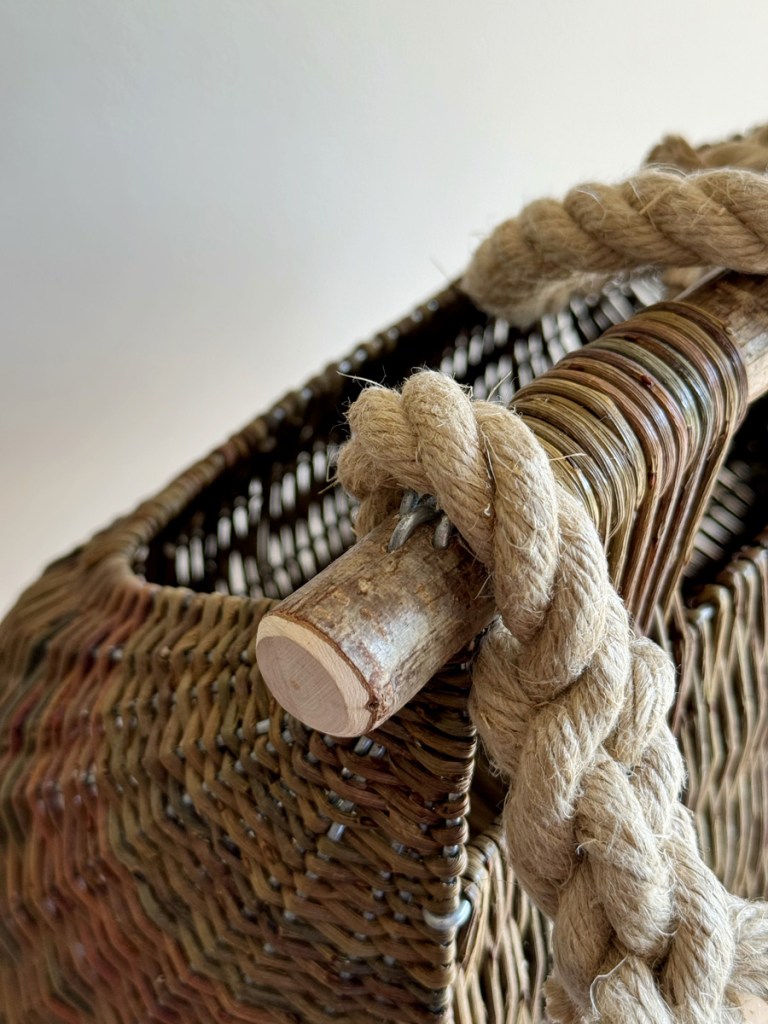
For frame baskets like the ponier à cou, I start by cutting a piece of hazel for the handle and drilling holes to anchor the first ribs. I create a shaped wire or willow frame, then weave in additional ribs and rows of willow around it, all by hand. Each basket has its own personality, shaped by the material and the process. No two are ever quite the same.
I love the texture and smell of willow – it’s a very sensory process. If I don’t weave for a few days, I miss it. There’s something deeply satisfying about making something with your hands that’s functional, beautiful and steeped in history.
PASSING ON THE SKILLS
I teach basketmaking, too, both in-person and online. People come to make miniature baskets in a day, or spend two or more days learning the full process. It’s about more than just the finished object – it’s the stories, the coastal connection, the rhythm of weaving. I think people are drawn to the idea of making something with heritage and meaning.
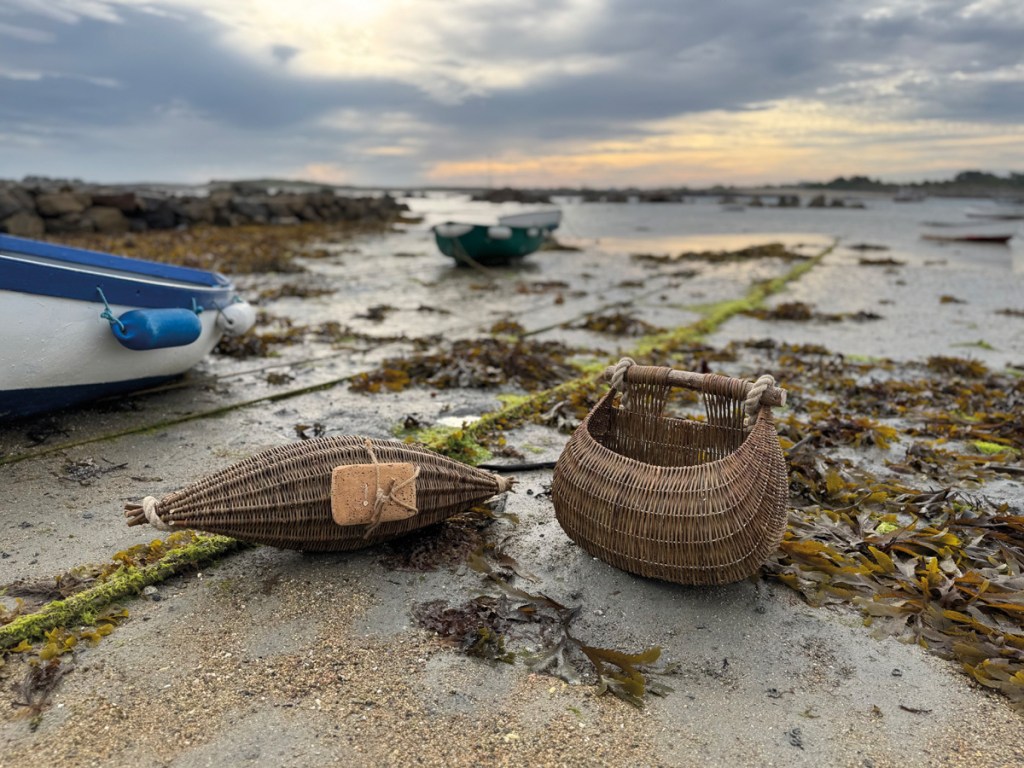
I’ve also been researching older Guernsey baskets, like the vraic pannier, or seaweed gathering basket, which I replicated from examples in the Folk & Costume Museum. These were worn by donkeys and used to collect seaweed to enrich the soil in fields. Guernsey people are affectionately known as ‘donkeys’, apparently for our stubborn and hardworking nature – probably quite apt!
Basketmaking is good for the soul. It’s a peaceful, focused activity that brings me back to where I come from. Every twist of willow carries memories of home, of family, of the sea. I may live in England now, but Guernsey is still my anchor – in my craft and in my heart.
We live in a world where so much is fast, plastic, throwaway. Making something slowly, with natural materials, that will last – that feels like a small act of resistance, but also one of love. Love for the coast, the craft and the people who passed it down.
Find Claire’s baskets and courses at guernseywillowbaskets.com and on Instagram @guernseywillowbaskets.