
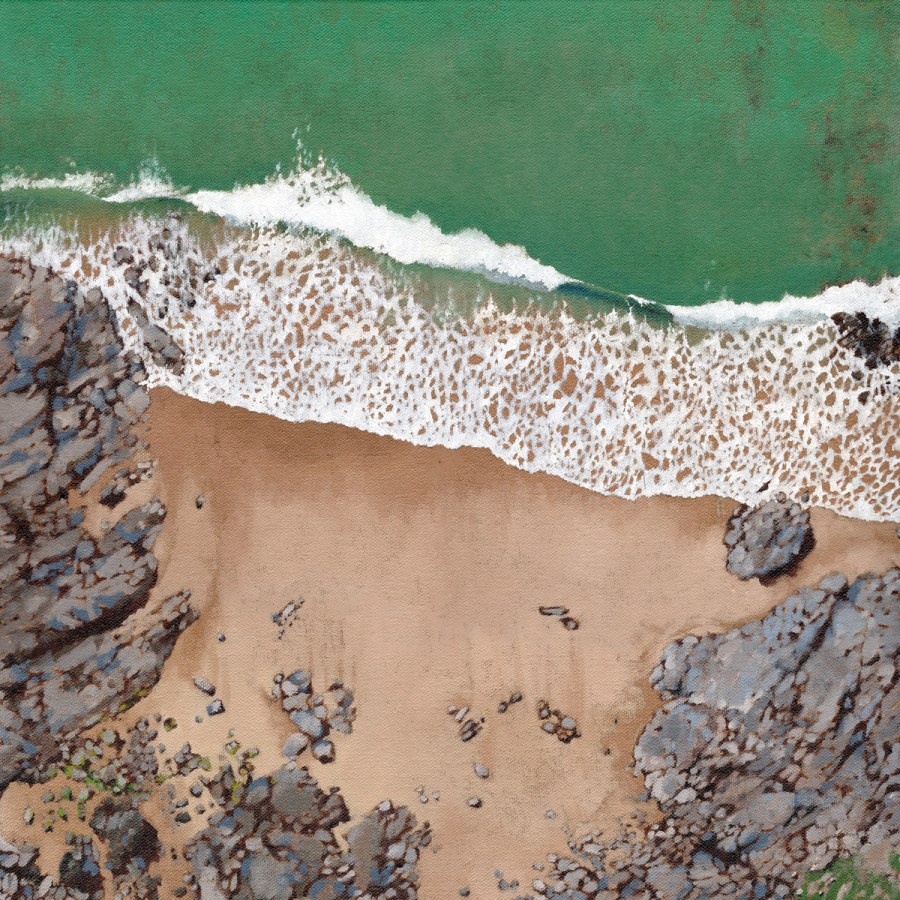
Artist Lenny Cornforth explains how moving near to the sea changed her painting style and led to a new career sharing her stunning paintings of the Devon and Cornwall coastline
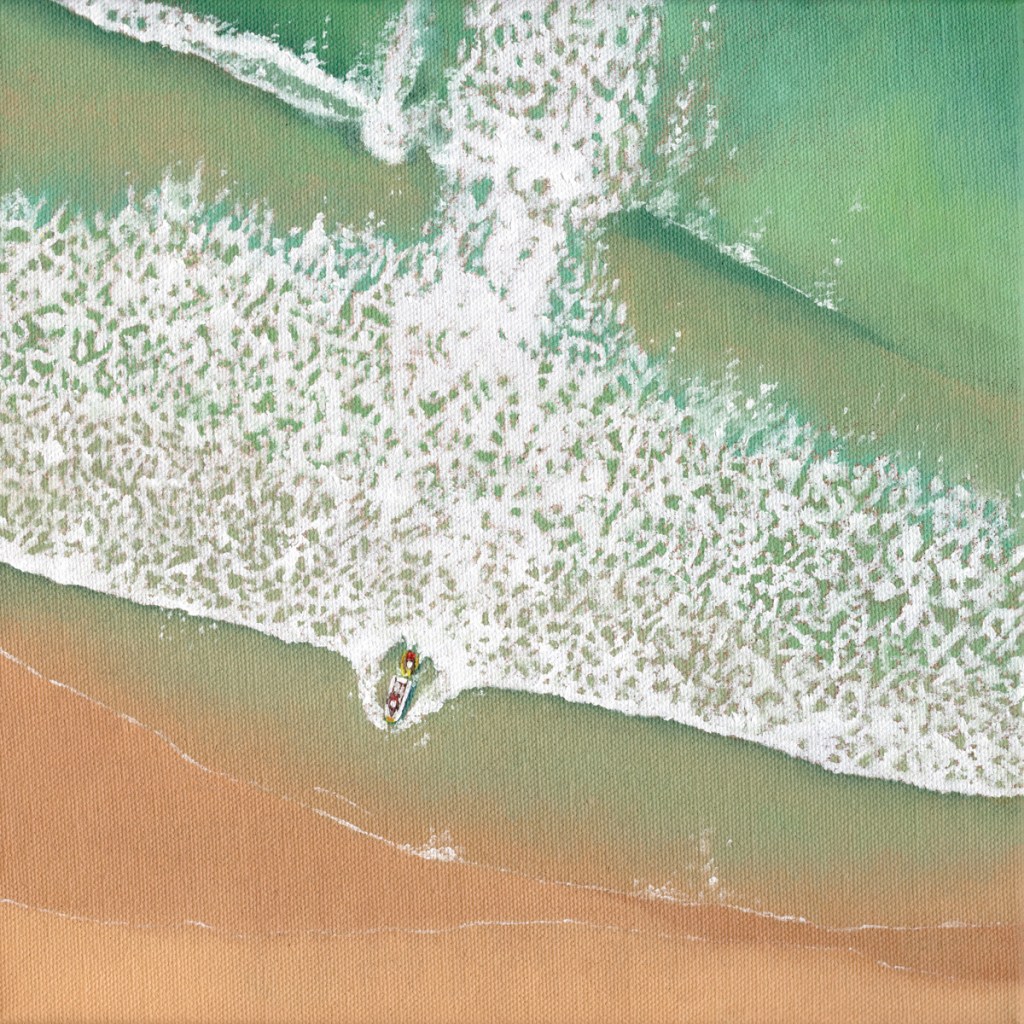
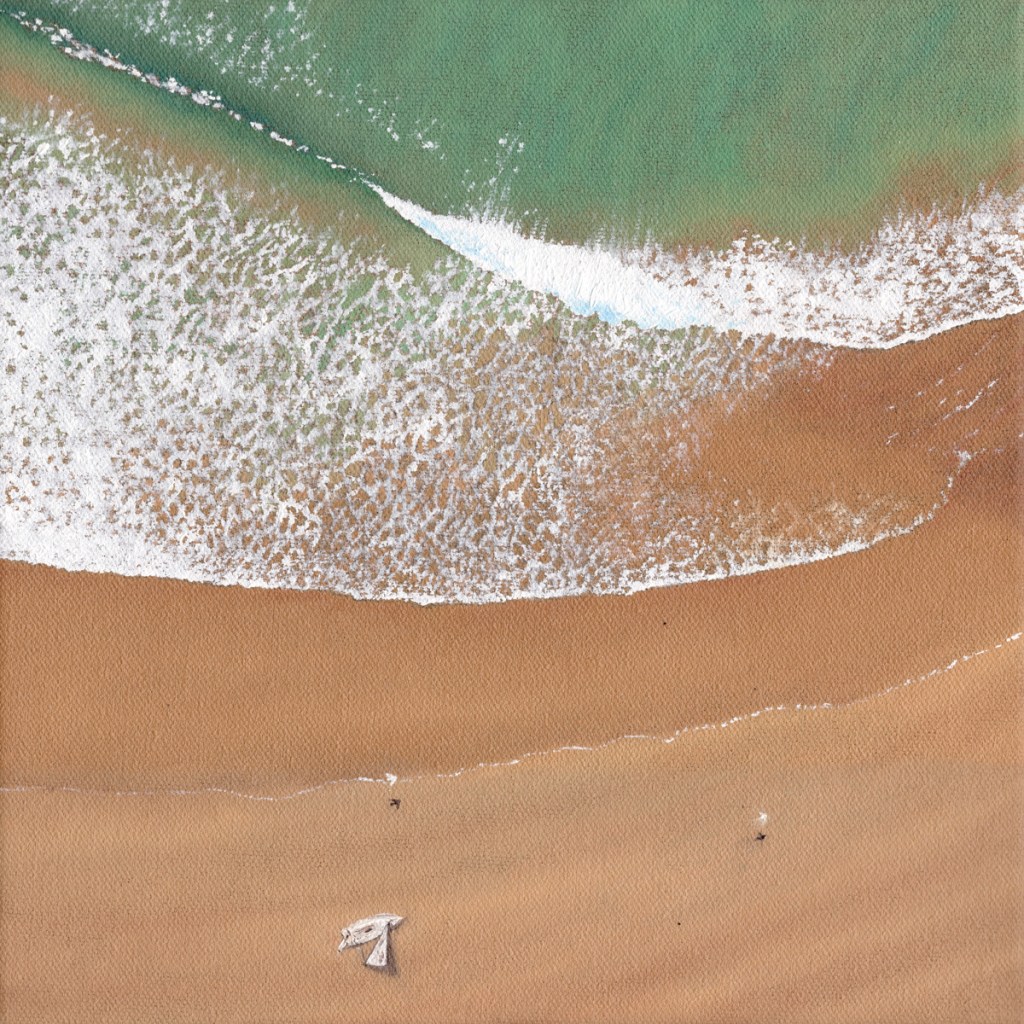
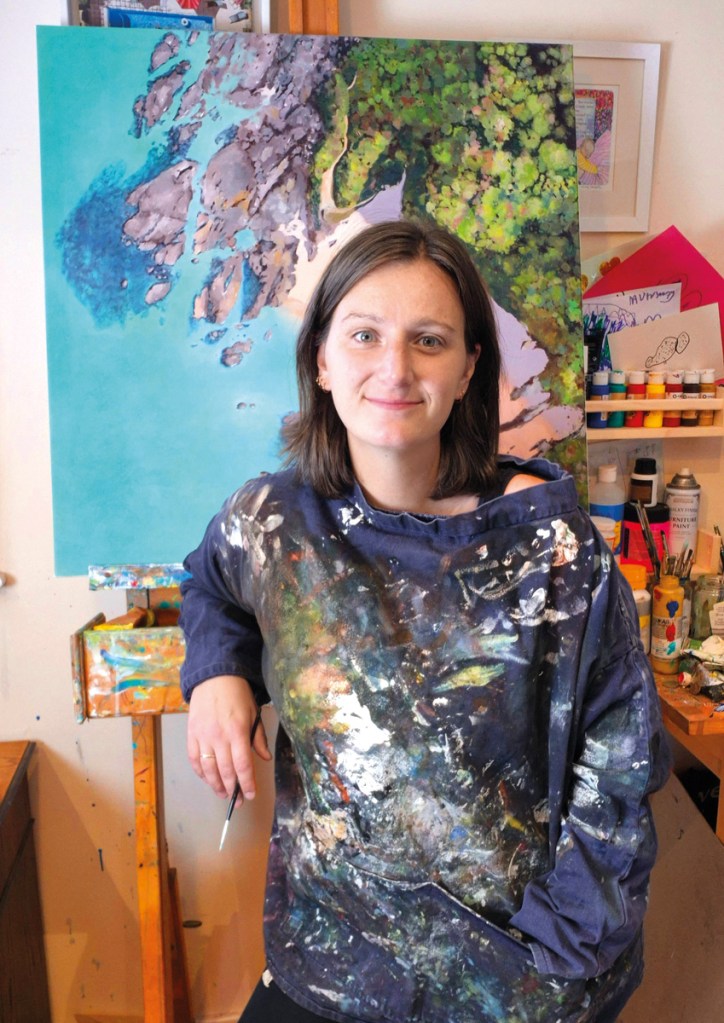
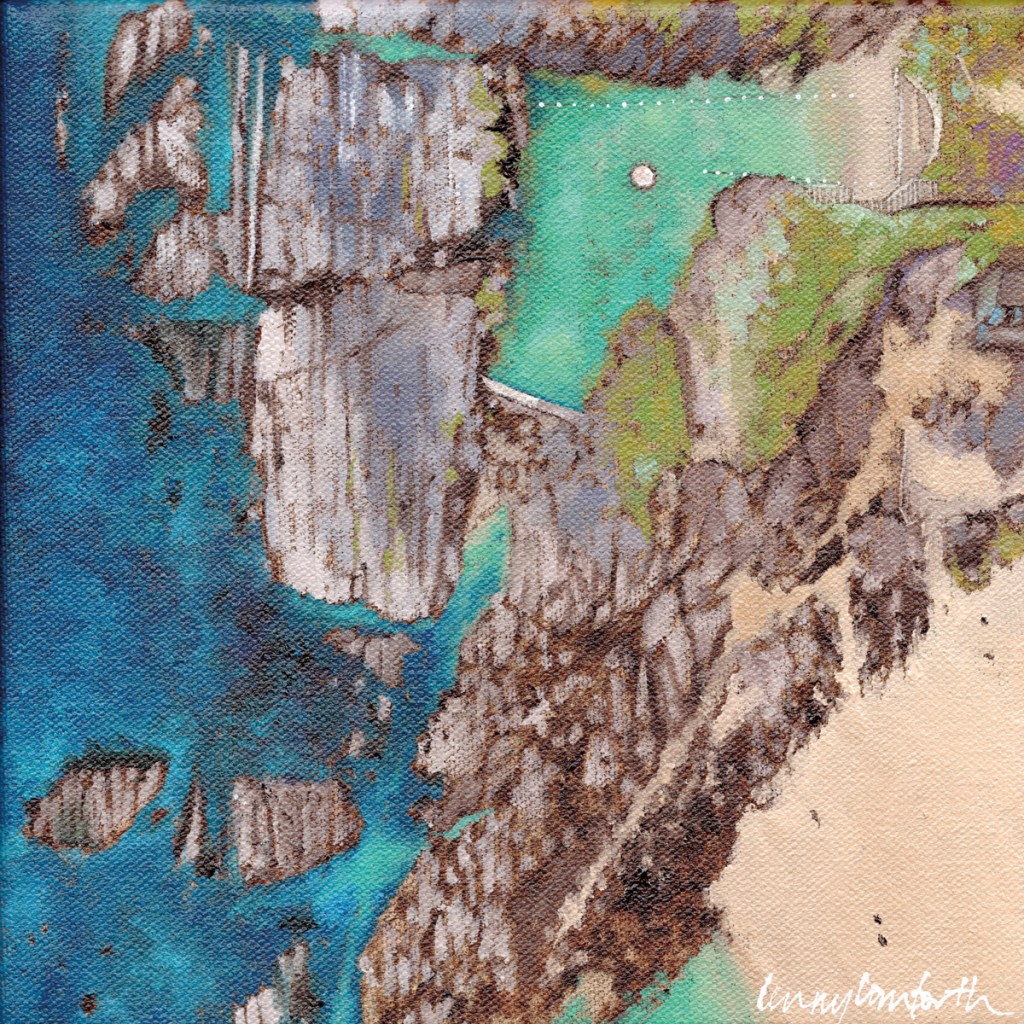
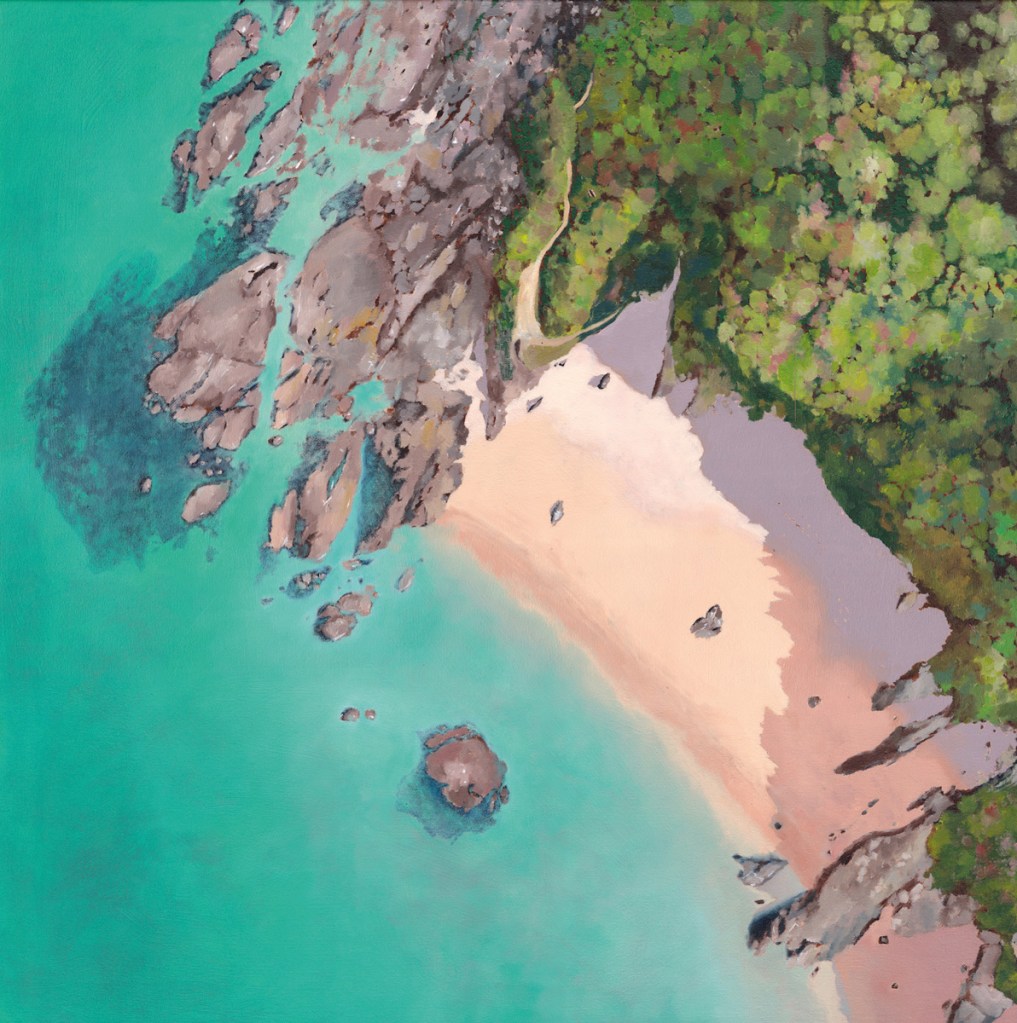
I paint the coastline from above. Beaches, rocks, water and light, seen from a perspective looking downwards from the sky. But my paintings begin with walking the shore, often followed by a sea swim, and then flying my drone to photograph the stretch of coast I want to work from. That physical connection to the place matters to me. I like to be in the water, feeling the conditions of the day, before I step into the studio.
Using my own drone photography allows me to see the coast differently: the way light cuts across rock pools, how shadows fall, how the tide reshapes the shoreline. I’m not trying to document a place exactly, but to capture its atmosphere. What interests me most is the meeting point between land and sea, and the visual tension created where textures change: rock against water, foam against sand, light against depth.
Back in the studio, I print the drone photograph at the same size as the painting so I can work accurately with colour and tone. I usually begin by painting the shadows first, focusing on where the light is falling before I get absorbed in colour. It helps anchor the painting early on. Once the structure is there, I build the layers slowly, letting the surface develop over time.
I know a painting is finished when I can finally see it as a whole. If I’m unsure, I’ll live with it for a while, sometimes hanging it in the kitchen and looking at it over a few days while I go about normal life. There’s usually a moment when it becomes clear that it doesn’t need anything more.

SEA SWIMS FOR MENTAL HEALTH
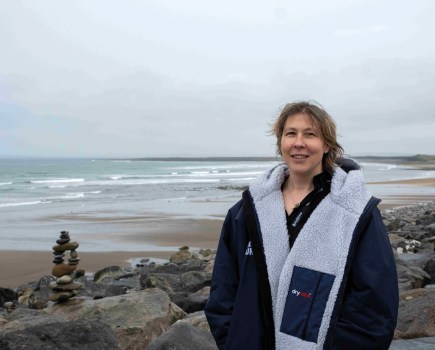
The sea is central to both my work and my wellbeing. I grew up sailing, and I’ve always felt drawn to being near the water. Plus, I have found that living by the coast has had a real impact on my mental health, particularly when it comes to anxiety. I sea swim regularly, even through winter, and it’s one of the few things that completely quiets my mind. After a swim, I find it much easier to concentrate, and I often head straight back to the studio feeling focused and clear.
I’ve lived by the coast for just over two and a half years. I’m now based just outside Dartmouth, close enough to see the sea from my kitchen window, which still feels like a huge luxury. Before that, we lived in Cornwall, just outside Bodmin, and earlier still, in Oxfordshire. Cornwall felt familiar because my family spent holidays there throughout my childhood, usually around Rock, so moving south felt like a natural step rather than a dramatic change.
The decision to move from Oxfordshire with my family came during lockdown. At the time, I was running a gallery and picture framing business, which had to close when everything shut down. We’d just had our first child and I remember thinking that if we didn’t make a change then, we probably never would. We were renting, and when our landlord mentioned selling the house, it felt like the push we needed to act.
My husband works in farming, so when he was offered a role managing a farm on the Devon coast, it was the perfect opportunity to make the move.


THE CREATIVE PATH
Creativity has always been my focus. I studied Fine Art at Newcastle University, where the course encouraged experimentation across painting, printmaking and sculpture. At the time, my work was largely abstract, influenced by artists like Rothko, and often very large in scale. Although the work I make now is more representational, I can still see a clear link – particularly in my use of colour and interest
in space and depth.
The move towards recognisable coastal imagery happened gradually, but lockdown was a turning point. I was painting small, abstract works but felt disconnected from people, from place and from the work itself so I started painting small sailing boats from old holiday photographs and shared them online. They sold quickly and, for the first time, painting became my main source of income, rather than the gallery and picture framing business I’d been running. That gave me the confidence to commit fully.
The coastal weather plays a practical role in my work, too. Wind affects when I can use the drone, particularly in winter, so images tend to be taken on calmer days. The sea itself is constantly changing colour, from deep green to bright turquoise, and that often dictates the mood of a painting. I’m drawn to coastlines with texture and complexity: rocky coves, headlands, places where the water breaks.

Making a living as an artist hasn’t happened by chance. I had to learn how to put myself forward, contacting galleries, sending images, following up conversations. This process doesn’t come naturally to me, and to many creatives, but it does get easier with practice. Over time, my effort built momentum, and I now work with galleries across the UK, including several close to home in Devon.
Living by the coast has shaped both my work and my working life. It gives me structure, focus and balance, and it’s where the paintings come together most clearly.
The sea is constant, but never the same: an endless source of inspiration.
You can see Lenny’s work exhibited at the Brownston Gallery in Modbury, Devon (brownstonart.com) and find out more about the artist at lennycornforth.com.