
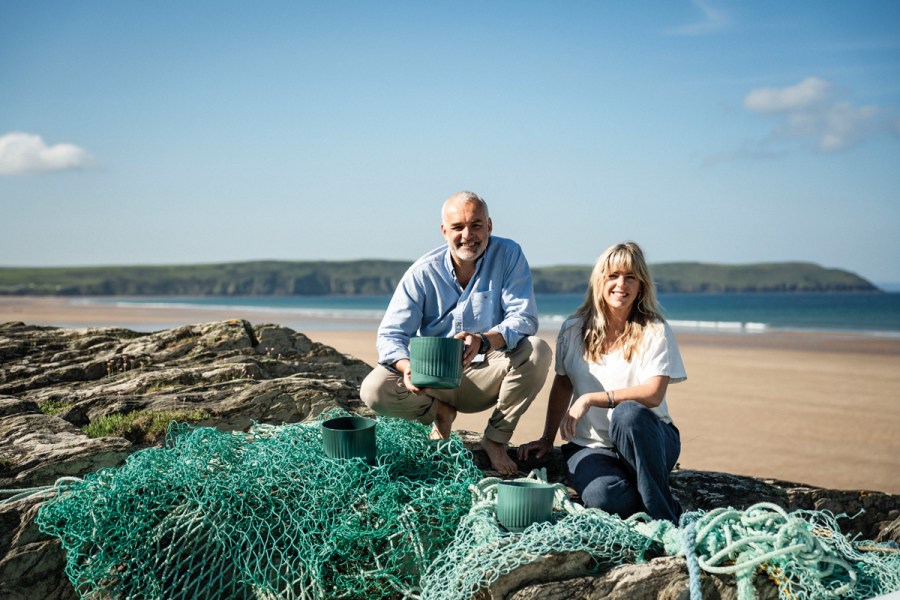
On the rugged shores of North Devon, Tyrone and Carrie Probert are transforming discarded ghost fishing nets into beautiful homewares and building a sustainable life by the sea
‘I swim every morning, even in winter, with an all-female local wild swimming group,’ says Tyrone Probert, smiling at the idea of being the token bloke in a cold-water crew of women known locally as the Mad Rappers of Rapparee Bay. ‘I wouldn’t miss my daily swims for the world,’ he adds. Originally from South Africa and a passionate surfer, Tyrone has a deep connection to the sea, which has inspired a bigger mission.
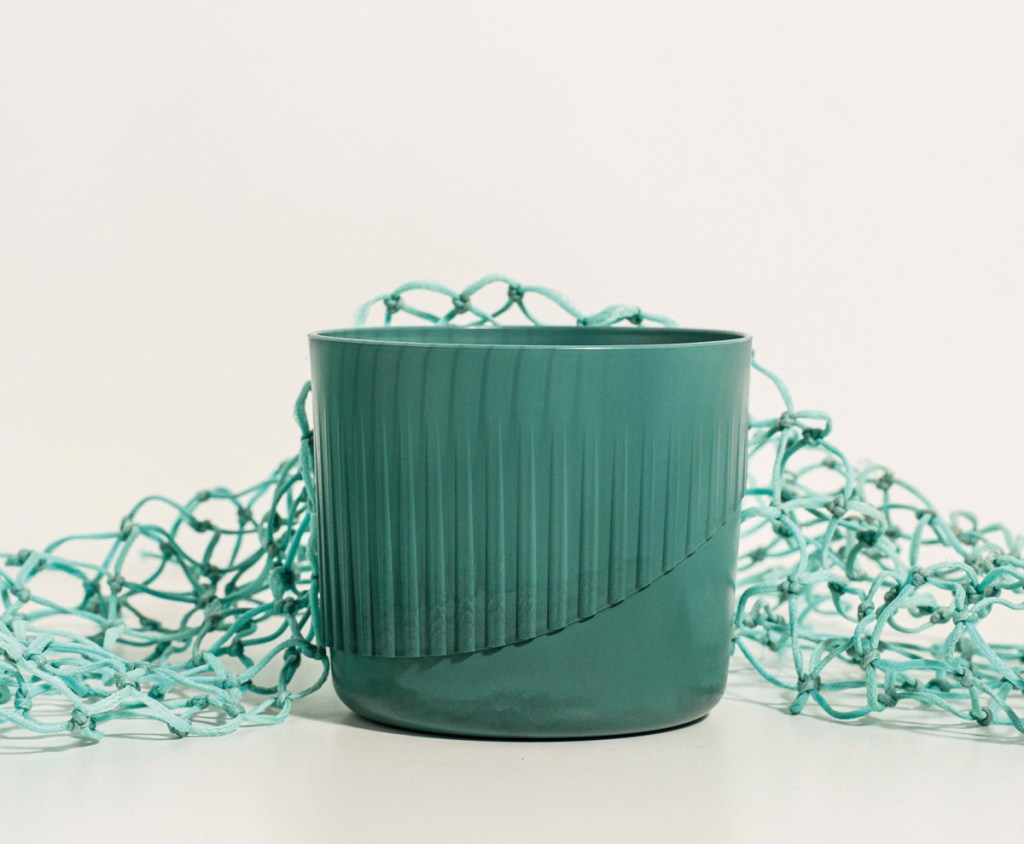
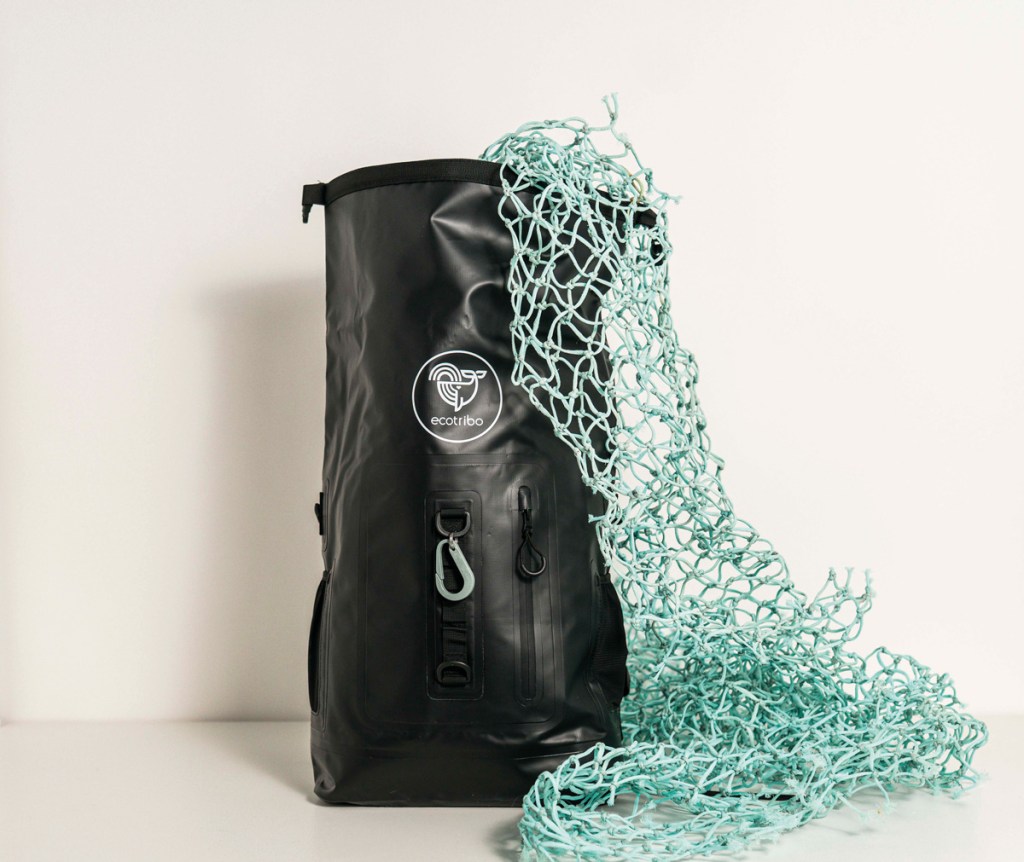
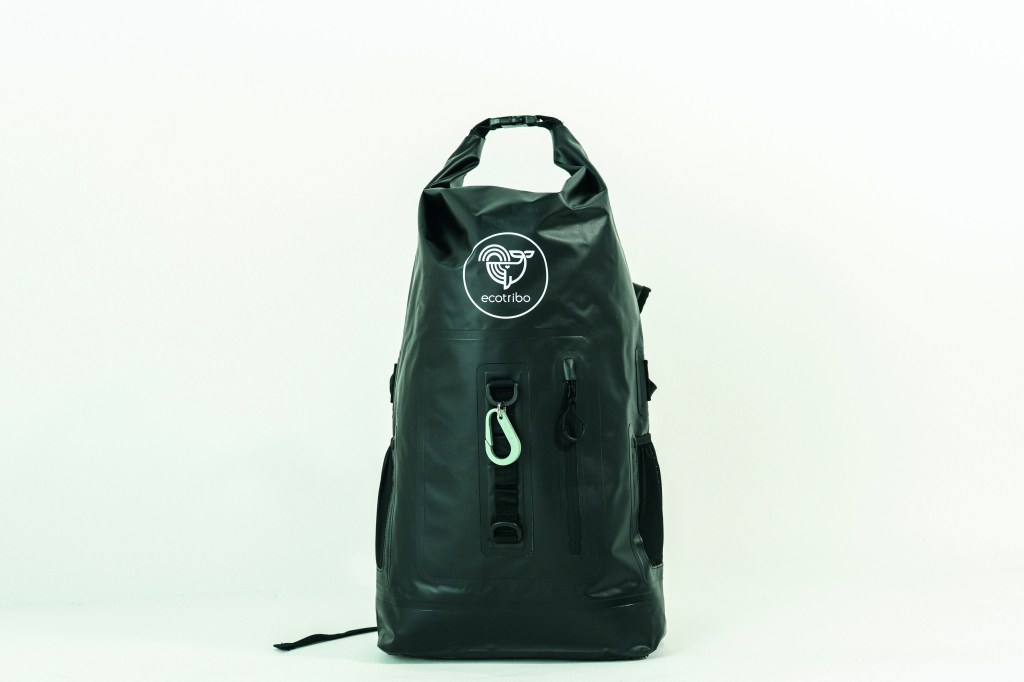
Together with his partner Carrie, Tyrone runs Ecotribo, a Devon-based business turning discarded ghost nets into beautiful, practical and entirely traceable homewares, furniture and lifestyle products. From benches made of recycled ocean plastic to plant pots embedded with the stories of their origins, this is coastal alchemy with a conscience.
A Passion Project
Both Tyrone and Carrie have had a career in creative industries – Tyrone as an art director in advertising and Carrie in television set design. ‘Although we’ve always been happiest building things with our hands,’ Carrie says, ‘this has been a huge leap – from ideas to investing in machinery and building something real.’
That ‘something real’ began as a passion project. ‘We went travelling about 10 years ago,’ says Tyrone. ‘During that time, we did beach cleans with a group called Trash Hero on the Thai islands. We collected 60 bin bags of waste from one island alone – and when we asked what would happen to it, they said, “It’ll just be incinerated.” That was a turning point.’
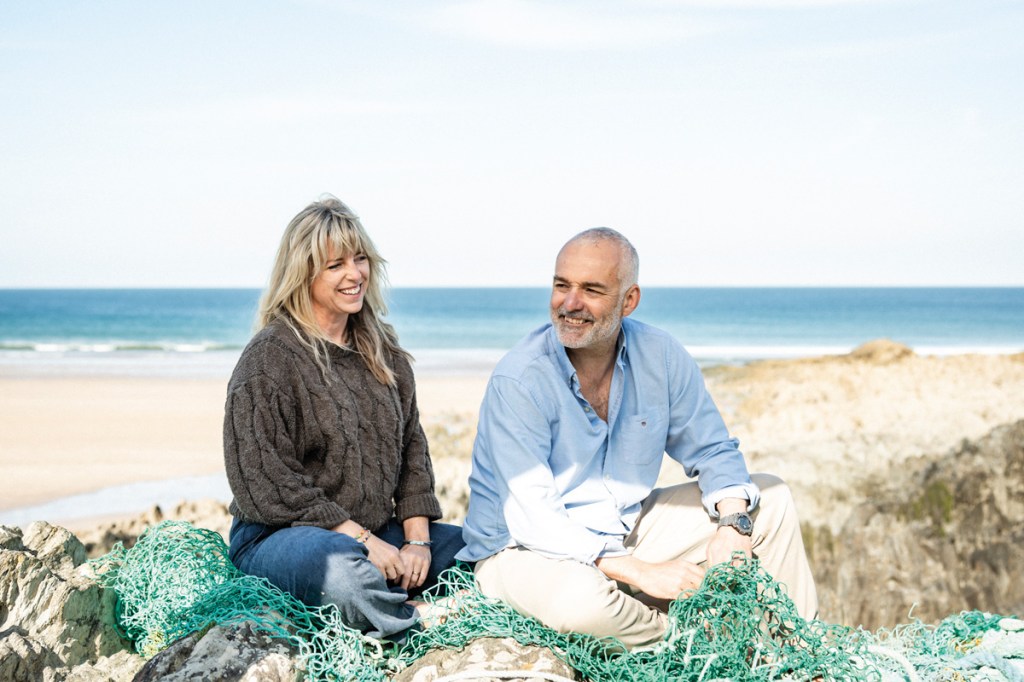
Back at home in the UK, inspired by his travelling beach cleans, Tyrone became fixated on turning marine waste into something useful. Along with Carrie, he started experimenting with small prototypes, mixing materials and creating initial designs. Over time, the couple invested in more sophisticated machinery, researched recycling techniques and developed their business model.
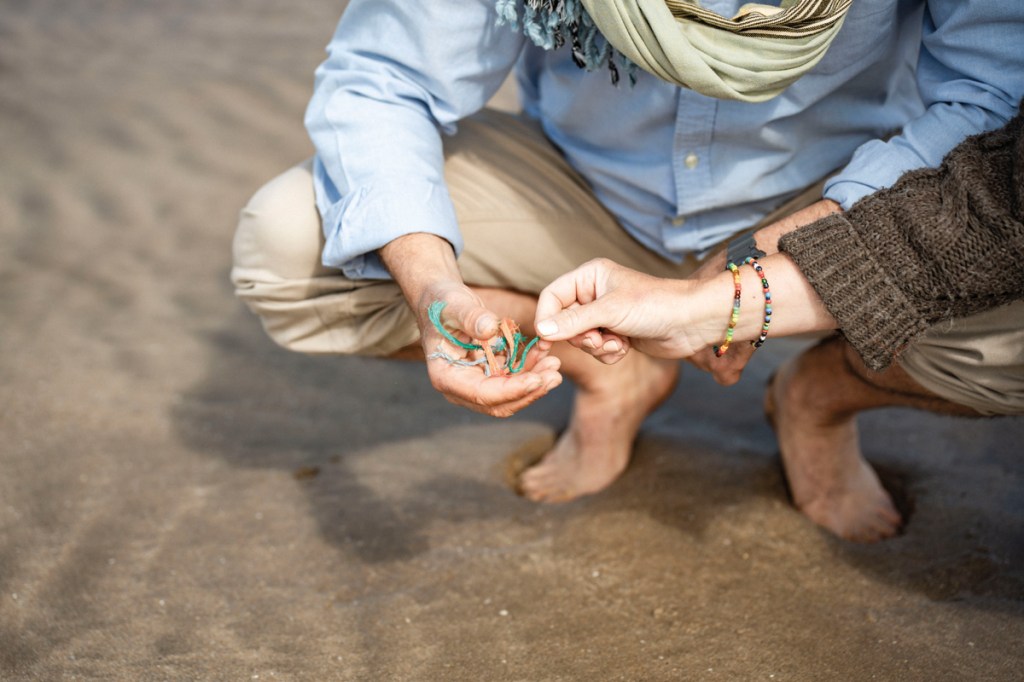
‘We homed in on our idea to focus on recycling ghost nets, but at first, no one wanted to work with them. They’re dirty, full of seaweed and debris and it’s much easier to recycle plastic bottles and say they’re “ocean plastic”. But I wanted to do something with the ghost nets because of the damage they cause to marine wildlife.’
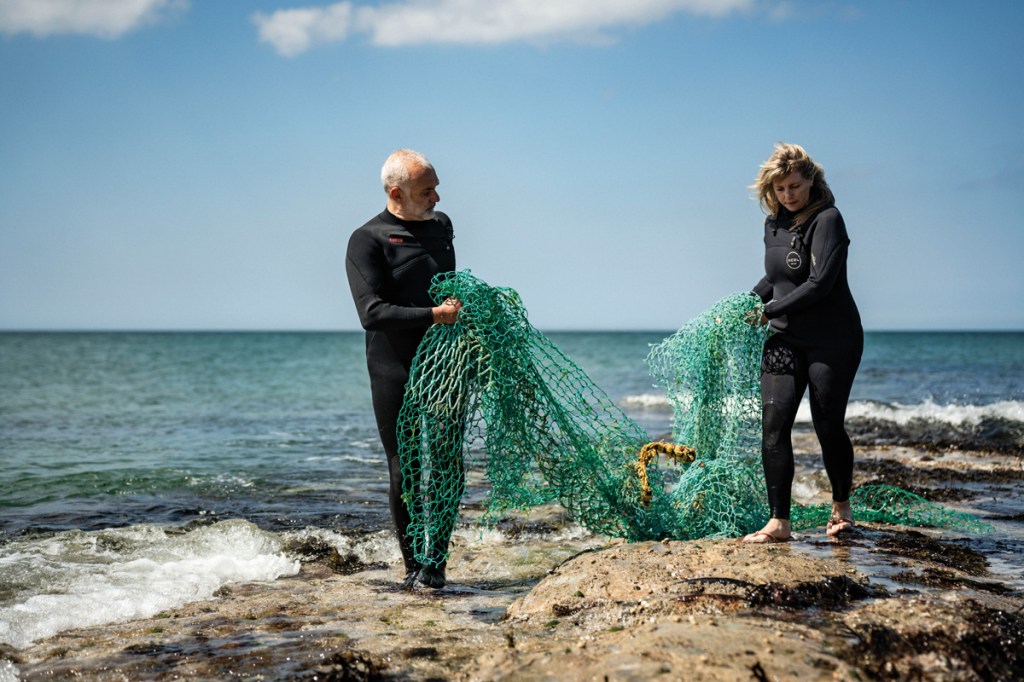
‘Ghost nets are abandoned fishing nets and they’re deadly,’ explains Carrie. They keep ‘fishing’ long after the boat’s gone, catching fish, seals, turtles. Predators follow prey into the net and get trapped too.’
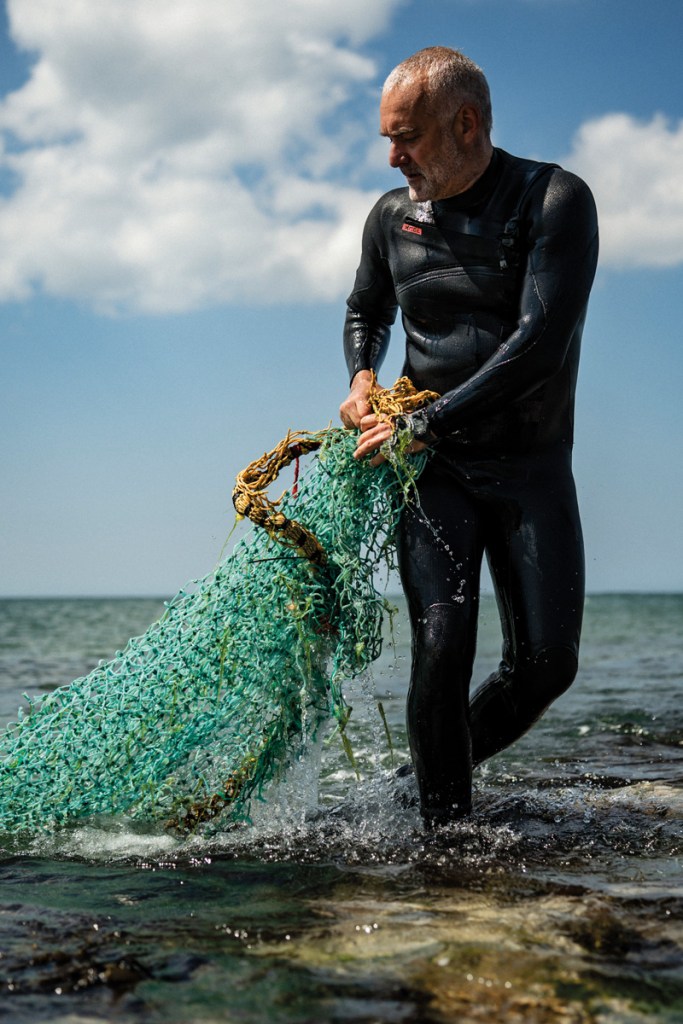
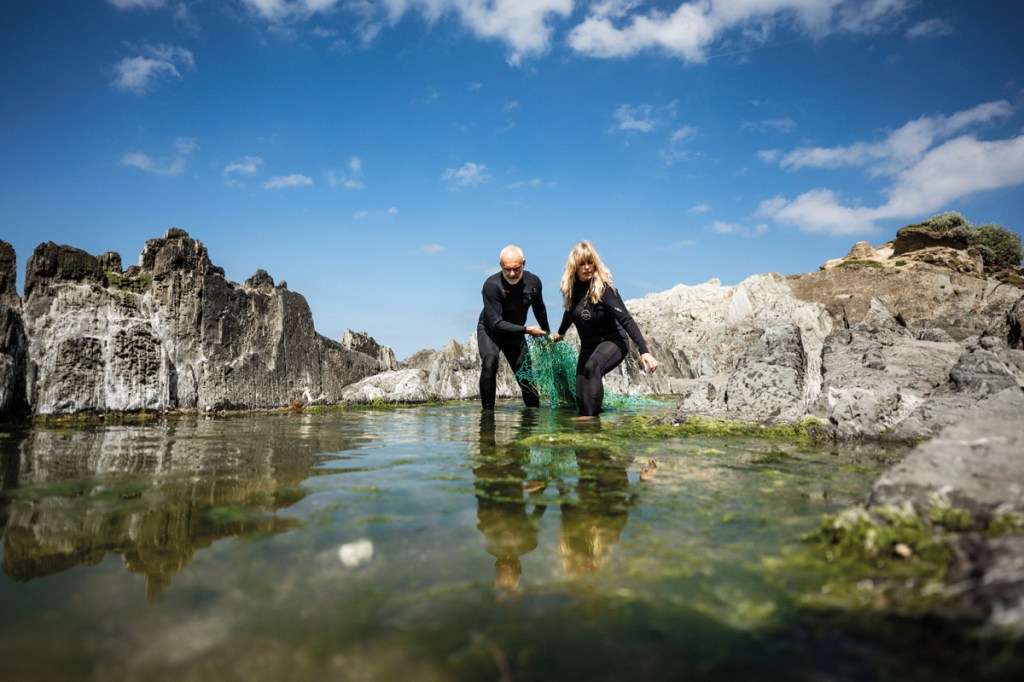
The couple work with a range of coastal partners, including Clean Ocean Sailing in Cornwall, Earth Action North Devon and the Captain Paul Watson Foundation in South Wales, to recover ghost nets from hard-to-reach coves and beaches. For example, Clean Ocean Sailing founder Steve Green sails his boat, built in 1908, to the Isles of Scilly and brings back ghost nets – 5.5 tonnes in one haul alone.
‘Steve uses canoes to access coves where ghost nets get lodged after storms,’ says Carrie. ‘Then it’s a team effort – dragging the nets off the beach, hauling them into the boat. It’s physically tough and the boat ends up stacked with nets. But it’s worth it.’
From Waste to Worth
Back on dry land, the nets are geolocated to the beach where they were found, then processed separately, so that each recycled product has
a traceable story. ‘Each batch of plastic has a QR code on the product,’ Tyrone explains. ‘You can scan it and see where it came from, which team collected it, how we processed it. It’s real recycling, not greenwashing.’
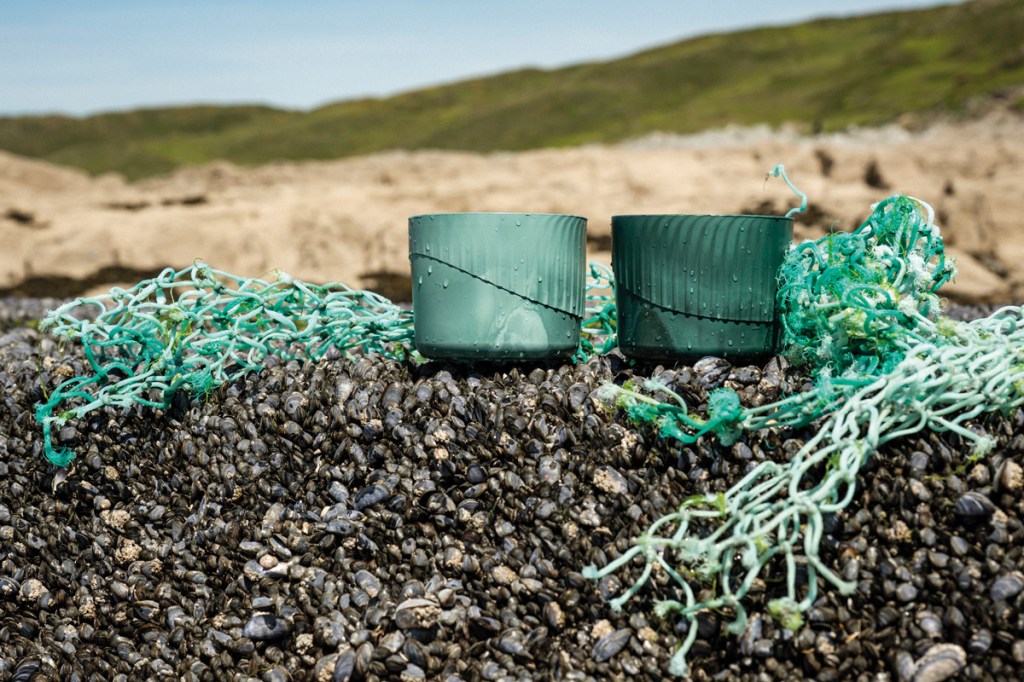
Currently, Ecotribo has two workshops: one in Bristol, powered by solar energy, and a new one in North Devon to handle the shredding and processing of nets, which is not glamorous work. ‘These nets are really tough,’ says Tyrone. ‘We’ve spent thousands on capital equipment. Procssing ghost nets is a real challenge, but I saw it as a resource – a way to create coastal jobs and reduce plastic pollution.’
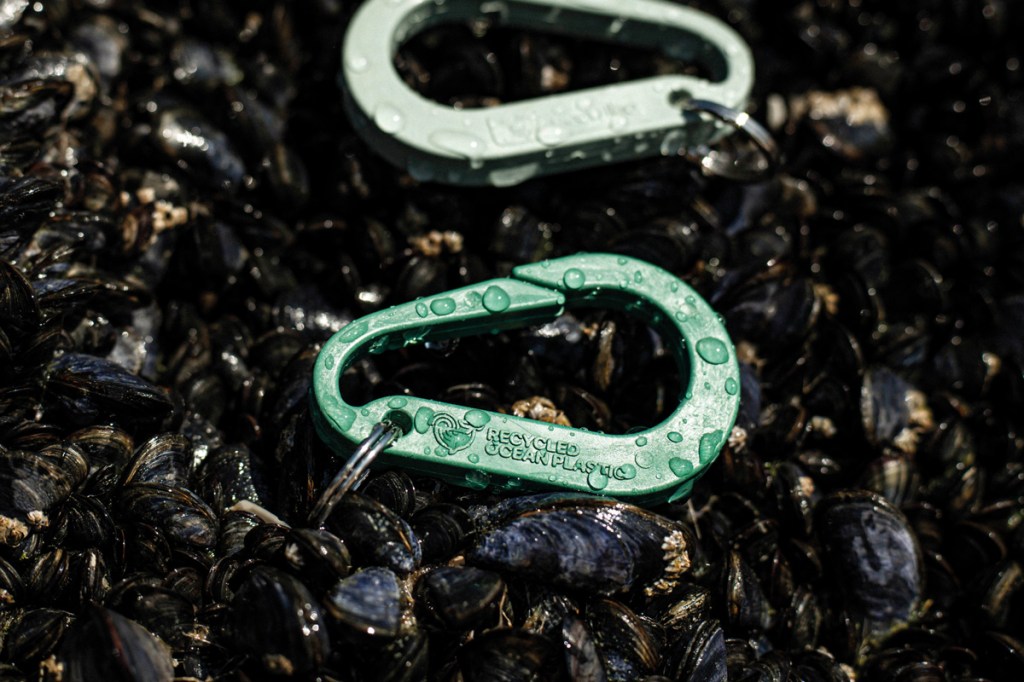
The resulting products include carabiners, plant pots, reusable water bottles and now beams and sheets of recycled plastic being made into park benches, bistro furniture and even lighting. ‘It’s all part of creating a circular system,’ says Carrie. ‘We’re prototyping like mad.’
Processing ghost nets isn’t as simple as sticking them in a shredder. ‘We have to jet wash, scrub and dry them beforehand. It’s labour-intensive and that’s why our products cost more because they’re made from true ocean waste.’
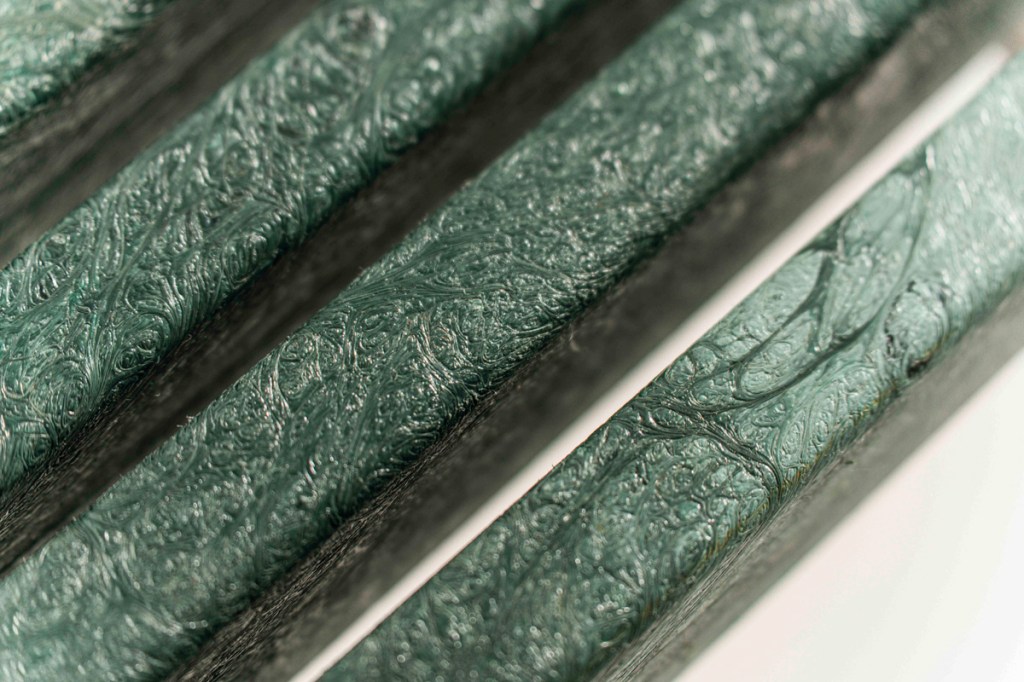
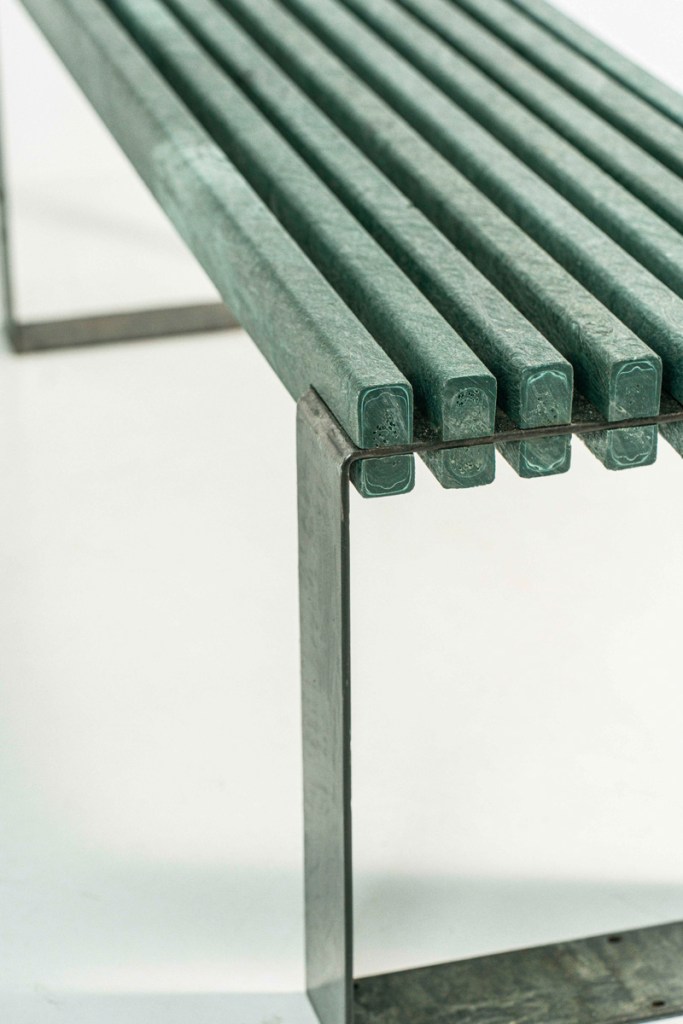
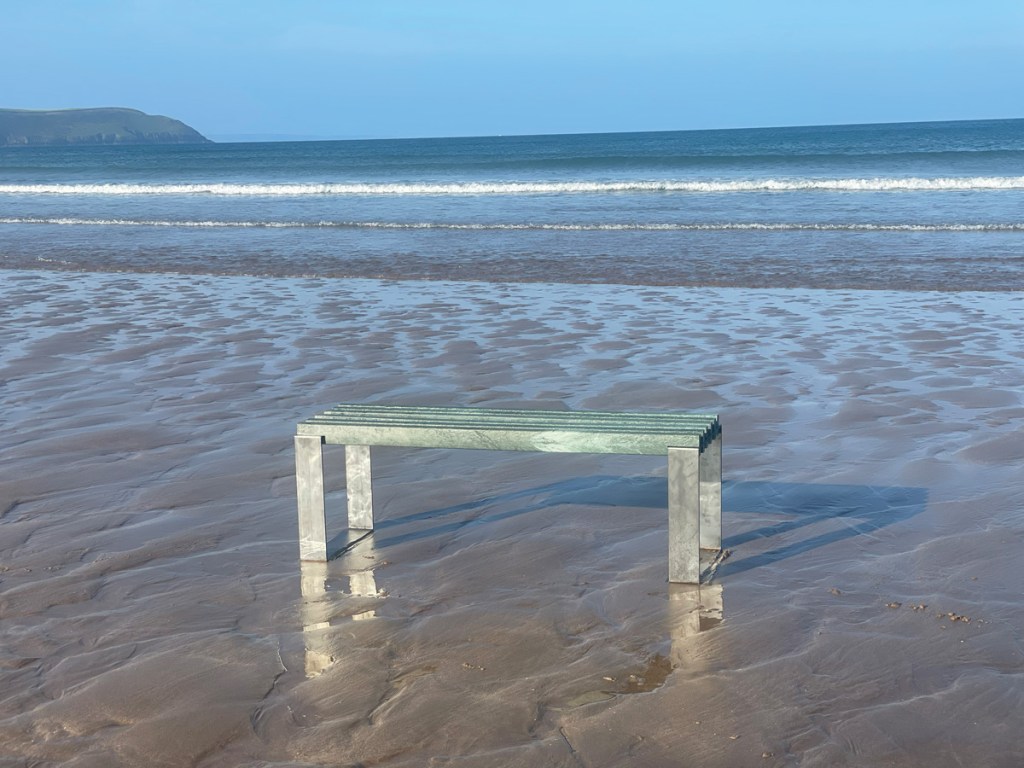
And yet, their ambition isn’t just environmental. ‘We work with charities, we support our partners financially where we can. It’s about creating a business that does good,’ says Tyrone.
A Coastal Calling
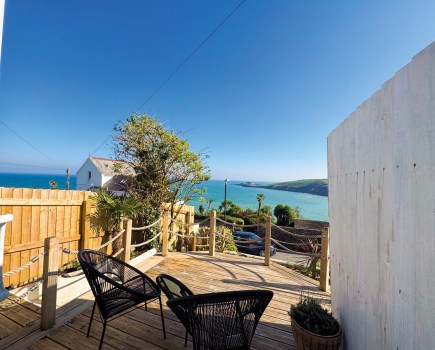
The couple now live overlooking Ilfracombe harbour – a long-held goal made possible by downsizing, selling their house in Bristol and investing everything else into Ecotribo. ‘It’s always been my dream to live by the sea,’ says Tyrone. ‘It’s a blessing. I spent my career in ad agencies, in cities. But I wanted to create a life by the coast and here we are.’
Carrie is equally besotted with their new home. ‘This bit of North Devon, with Exmoor behind us and beaches like Woolacombe and Croyde ahead, it’s magical. We used to come down every weekend. Now we live here.’ Tyrone surfs and Carrie walks the South West Coast Path every weekend. ‘We love it.’
Their business is rooted in the community and the environment and Ecotribo is growing fast. It’s listed with the Eden Project and currently experimenting with new products, from lighting to sheet materials – but the couple’s long-term vision is bigger than just selling products.
‘We want to inspire people,’ says Carrie. ‘We want to show that waste has value, that green jobs are the future and that small businesses can lead the way.’
Tyrone adds, ‘It’s been hard and we’ve put everything into this. But it’s not just a business – it feels like a mission.’ And in a world drowning in plastic, there’s something deeply inspiring and reassuringly down to earth about two people pulling nets from the sea and transforming them into something useful, beautiful and true.
To find out more about Ecotribo and how to support its work, visit ecotribo.com.