
Cornwall-based sculptor Tony Plant explains how decades of walking, surfing and watching the sea have shaped his remarkable temporary drawings in sand
Interview Suzy Walker | Photography Tony Plant, Peter Hoyle
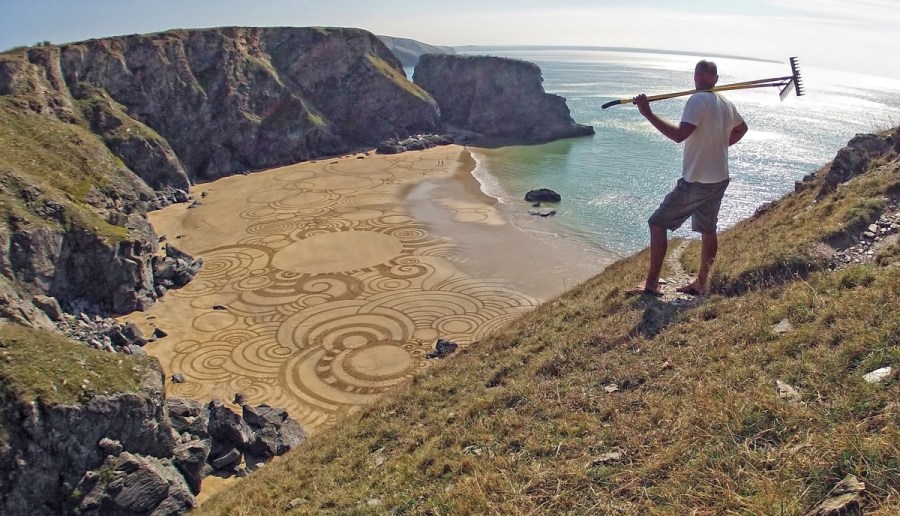
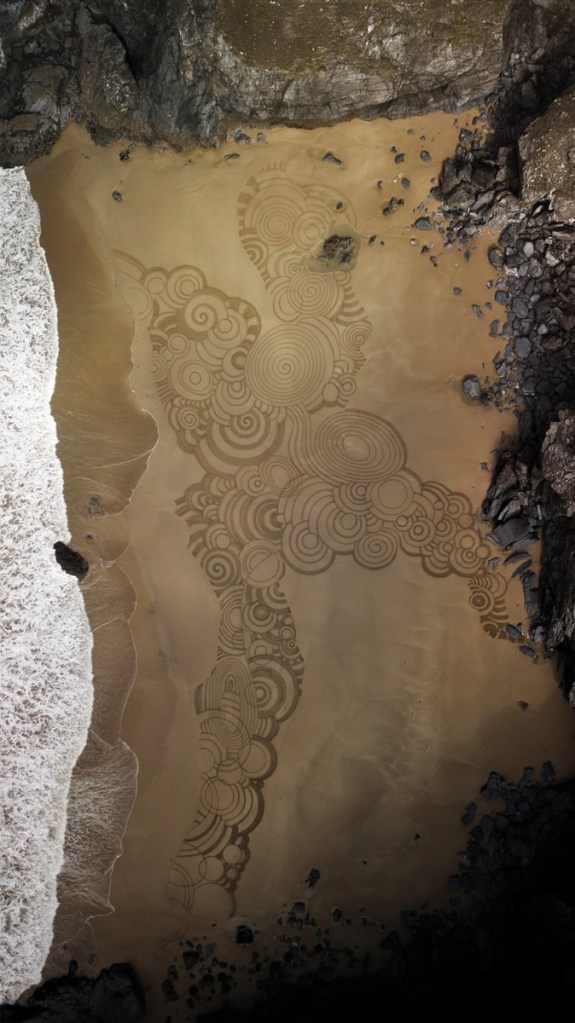
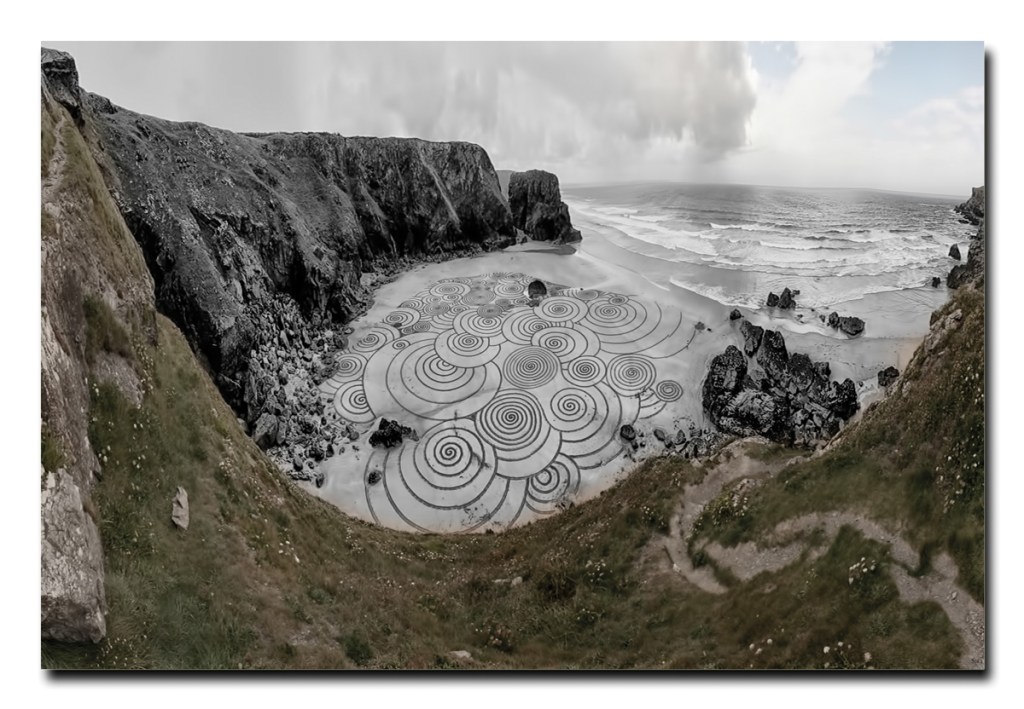
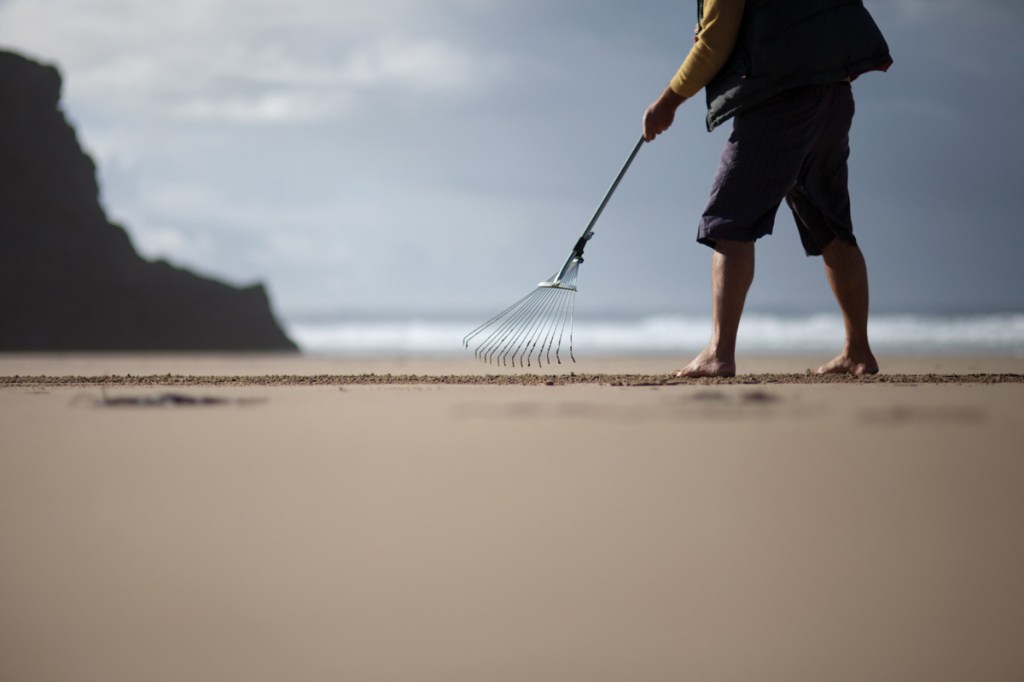
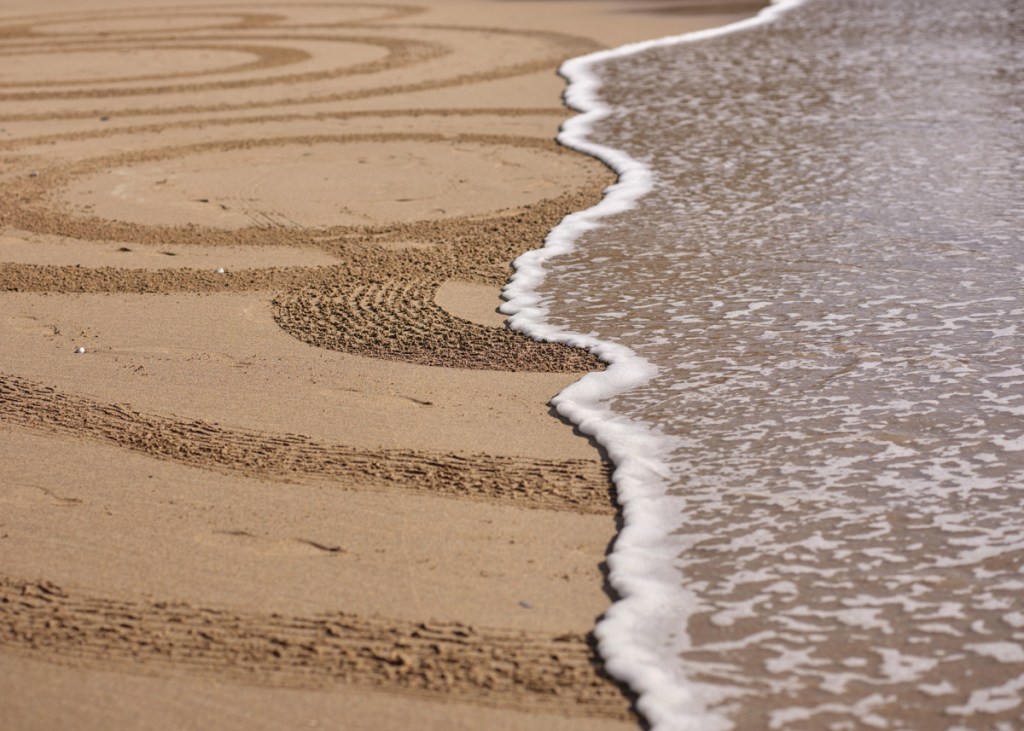
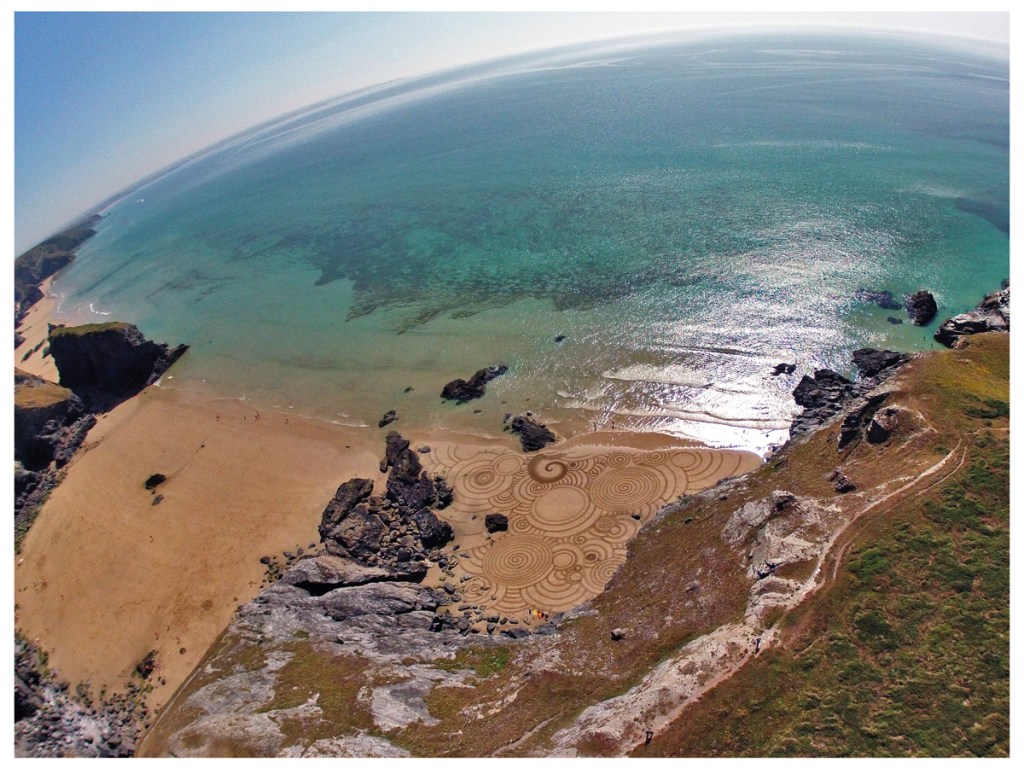
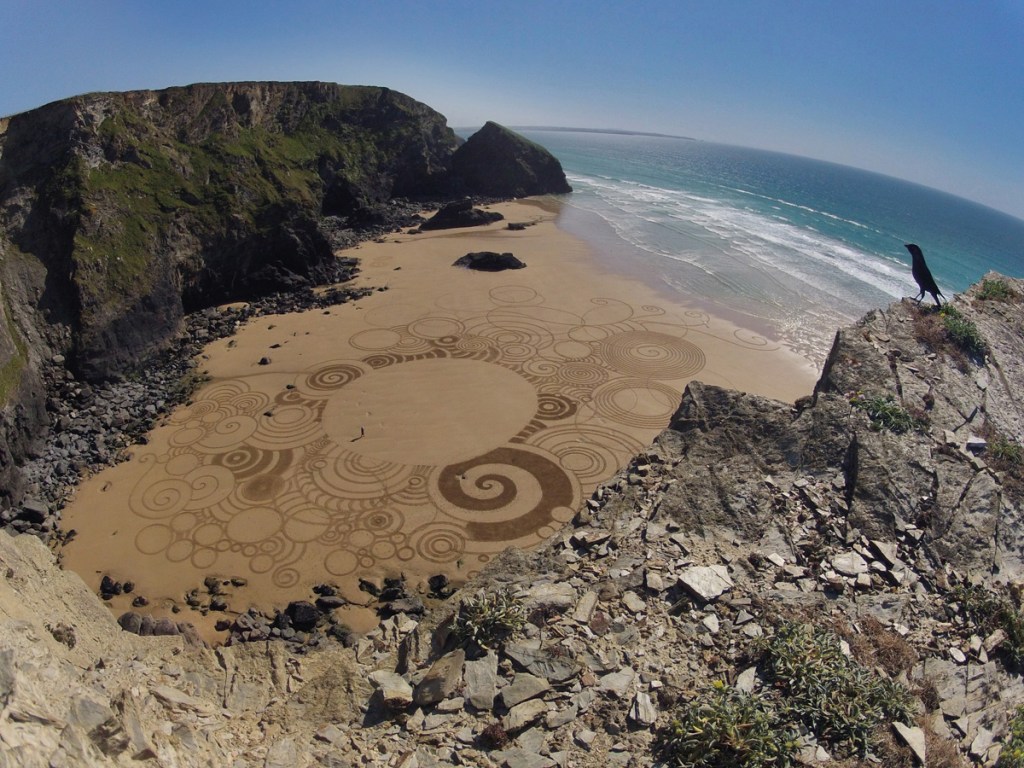
Cornwall-based sculptor Tony Plant has spent decades making large-scale drawings in wet sand between tides – walking lines into the beach during a single tidal window before the sea erases them a few hours later. The works have brought him international renown, not only because of their scale and beauty, but because of the discipline behind them. Each one depends on timing, weather, topography and physical endurance, and each is rooted in a deep knowledge of the coast.
Tony grew up on the south coast of Cornwall and later studied painting at Chelsea School of Art before returning home to raise a family. Although his work has taken him to beaches around the globe, it is still the Cornish coastline that underpins his practice.
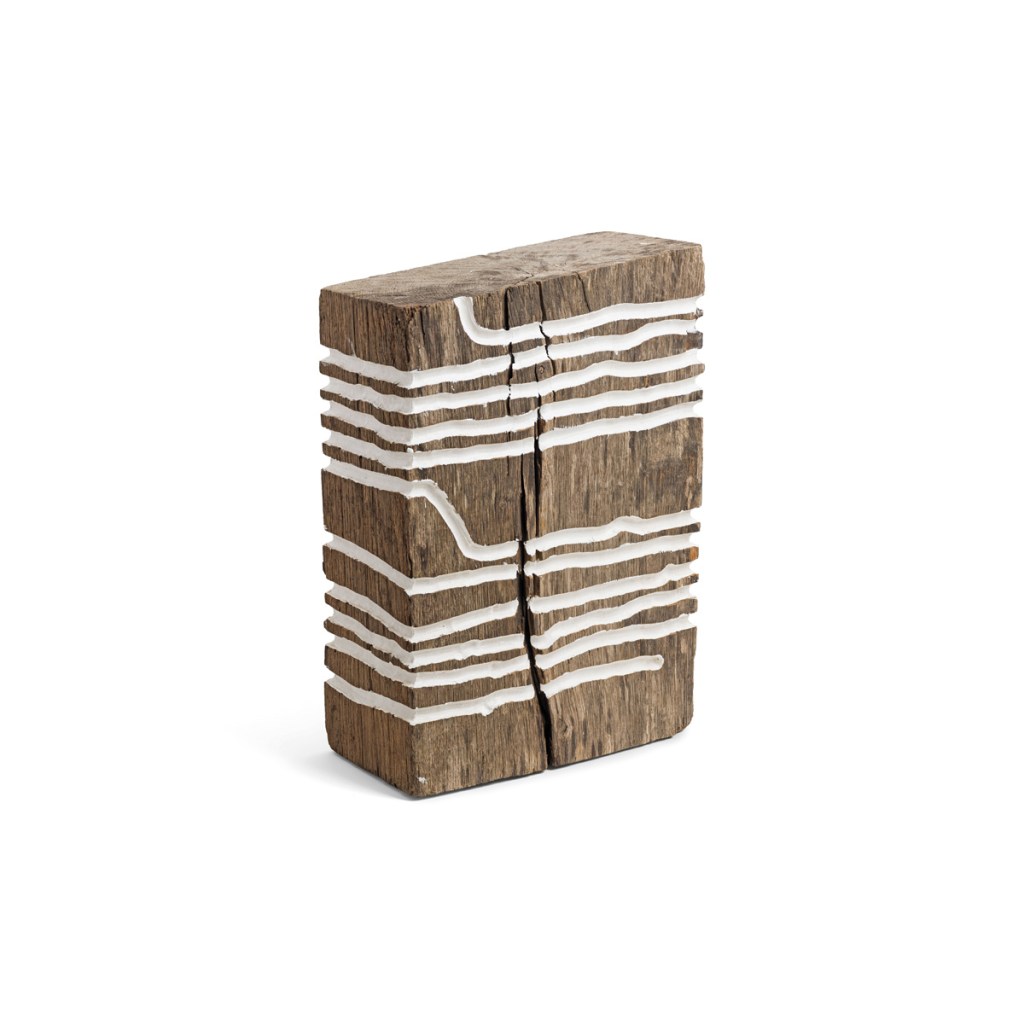
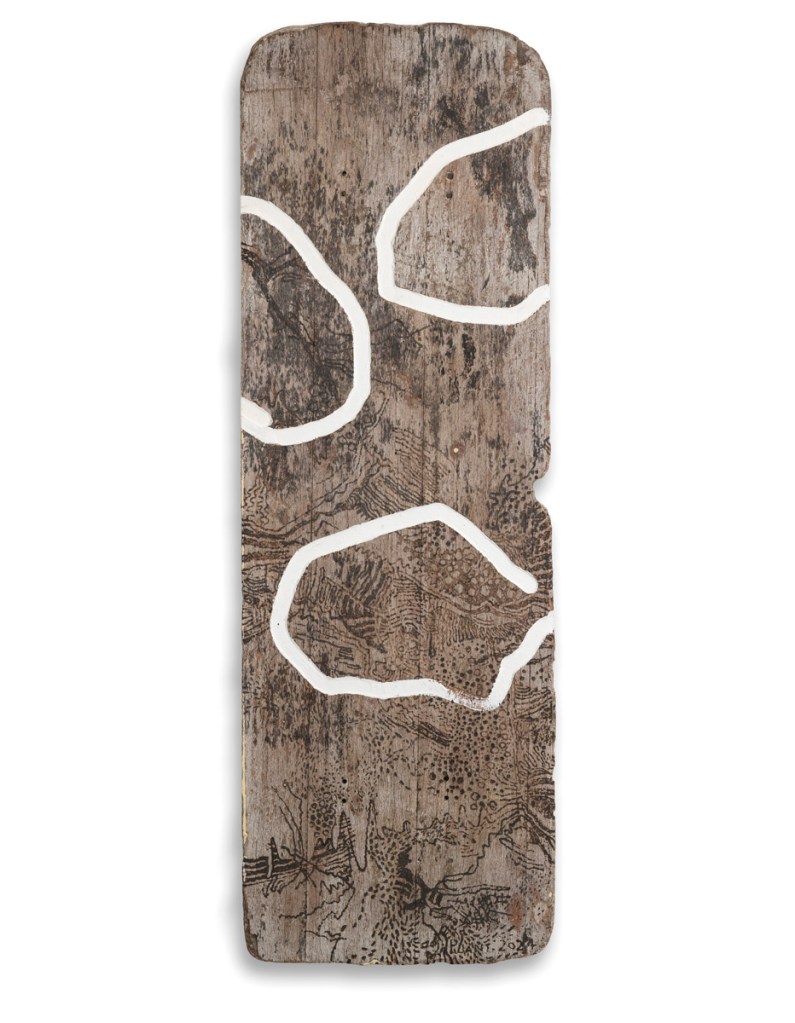
He also creates studio pieces known as Tidal Journals, made from objects he discovers and gathers along the shoreline, all shaped by time and tide.
Here, he talks about childhood, ‘tidal time’, why he returns to the same beaches, and what the sea continues to teach him.
A COASTAL CHILDHOOD
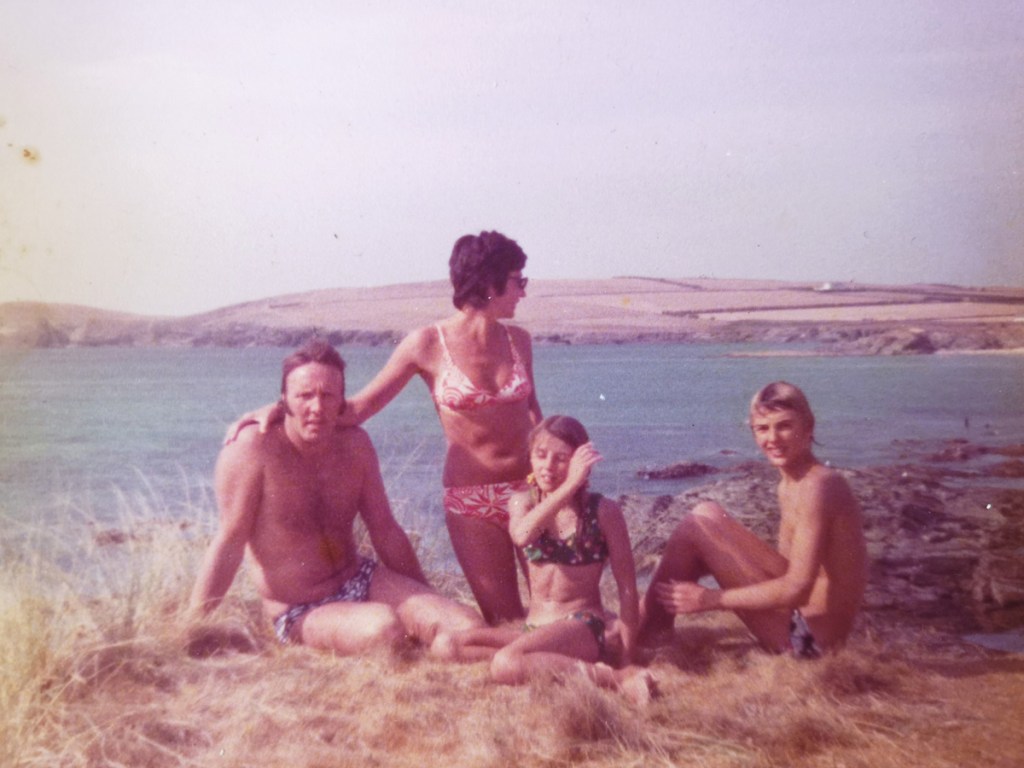
‘I grew up on the south coast of Cornwall, around Gorran Haven, Charlestown and that stretch of coast, so the sea was never something separate from everyday life. It wasn’t a place we visited for special outings or thought of in a romantic way. It was simply where life happened. My dad was a surfer, so from a young age, I was in the water all the time, too. I surfed, swam, played water polo and spent hours on beaches and in harbours. My sister did the same. It was just how we grew up.
When I was a child, those places were very different from how they are now. They were still working harbours, with all the practical details that come with that: ropes, ladders, heavy fixtures for boats, worn surfaces, steep drops and the kind of rough edges children would probably be kept away from now.
For us, though, it was an enormous adventure ground. We climbed walls, scrambled up and down ladders and made our way around harbours and beaches without thinking too much about it. You don’t stand there as a child and think: “This is shaping me.” You only realise later how much it has.
Both my parents were from Newcastle, so when they moved to Cornwall, they left their extended families behind. We ended up being a fairly self-contained unit, a long way from everyone else, and a lot of our life took place around the coast. We wandered along beaches and harbour walls, followed paths around coves and headlands and generally ended up by the sea.
That is why, when people ask how long I’ve been doing this, it is quite difficult to answer. The honest answer is that there wasn’t one obvious beginning. The coast was always there, and I was always looking at it.
In terms of becoming an artist, I left Cornwall and went to Chelsea School of Art in London to study painting, then spent time travelling before returning home. Later, when my wife, Alice, and I had children, we chose to come back to Cornwall and raise our daughters, Maya and Gracie, here. To me, it still felt like the right place to be.
TIDAL TIME
What interests me most in my work is time – and, more specifically, tidal time. That is really at the heart of what I do. I make large-scale temporary drawings on beaches within a single tidal cycle, and one of the things I love about working with the tide is that it never behaves in a neat or symmetrical way. It never returns at exactly the same time or under exactly the same conditions. Every tide resets the beach. That means I can go back to the same place again and again, and yet it is never truly the same place twice.
That is one of the reasons I keep returning to certain beaches. I know them well. In some cases, I have known them since childhood, and now take my own children there. The familiarity matters, but so does the fact that the place is always changing. The tide shifts, the light changes, the weather turns, the sand holds water differently. What looks stable is actually in constant movement.
There is also a very practical side to the work. If you watched me from a clifftop, you might see what looks like a calm, steady drawing unfolding at walking pace. What you would not see is all the planning behind it. I have to think about timing, the height of the tide, the weather, how the sand is draining, how I am going to reach the beach and, crucially, how I am going to get off it again.
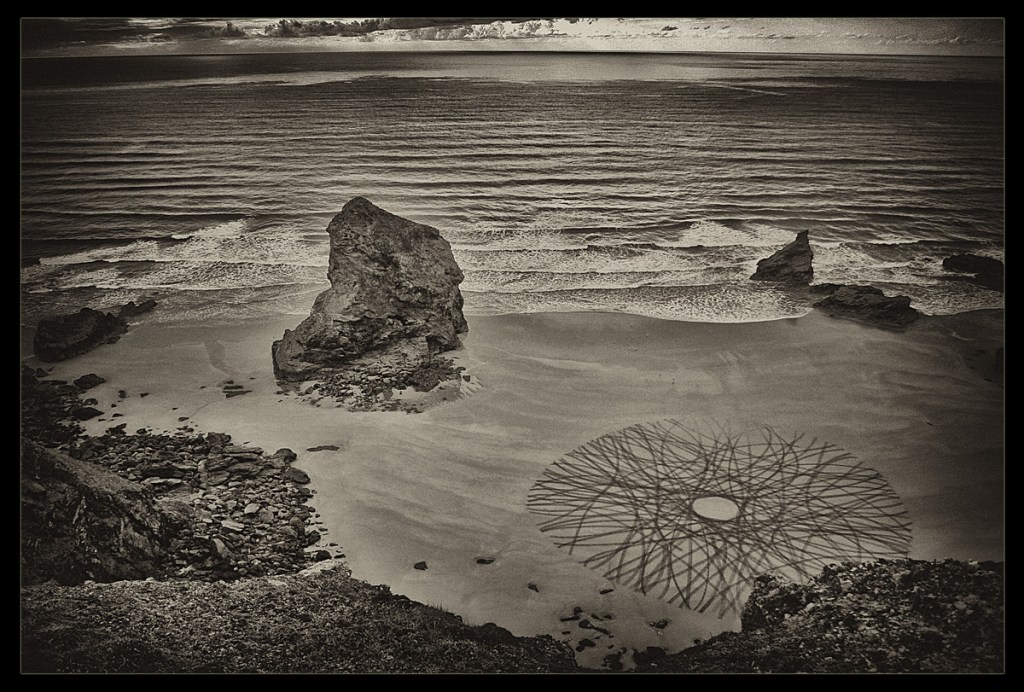
Some of the places I work in are hard to access, and if you get your timing wrong, the consequences are obvious. You might have a long walk in, a steep exit and only a narrow window in which the work can be done at all.
I am not trying to impose an idea onto the landscape. I am trying to work with what the landscape allows. That is an important distinction for me. The drawings are not illustrations of a place; they are the result of it. The weather, the tide, the slope of the beach, the quality of the sand, the amount
of time available, all of that determines what can happen. The work exists because of those limits, not in spite of them.
TEMPORARY ARTWORKS
I am serious about what I do, but I am not precious about the fact that the drawings disappear – I think the fact they disappear is part of what gives them their force. Once I begin, there is no real opportunity to correct anything. The drawing is made in a single continuous action, with no opportunity to correct or return. That means I do not have complete visual control over it while I am making it. I know where I am and I know broadly what I am doing, but I do not fully know what the finished result will look like until it is there.
The horizon is important, too. If you grow up surfing, you get used to reading it all the time, looking for changes, watching for signals, trying to understand what is coming.
I think I do something similar when I am working on a beach. I am looking for structure: slight rises, areas that drain in a particular way, shapes already present in the landscape. If a drawing works, it connects with those existing forms rather than fighting against them. I am trying to guide the eye across the beach in the same way a painter might guide the eye across a canvas.
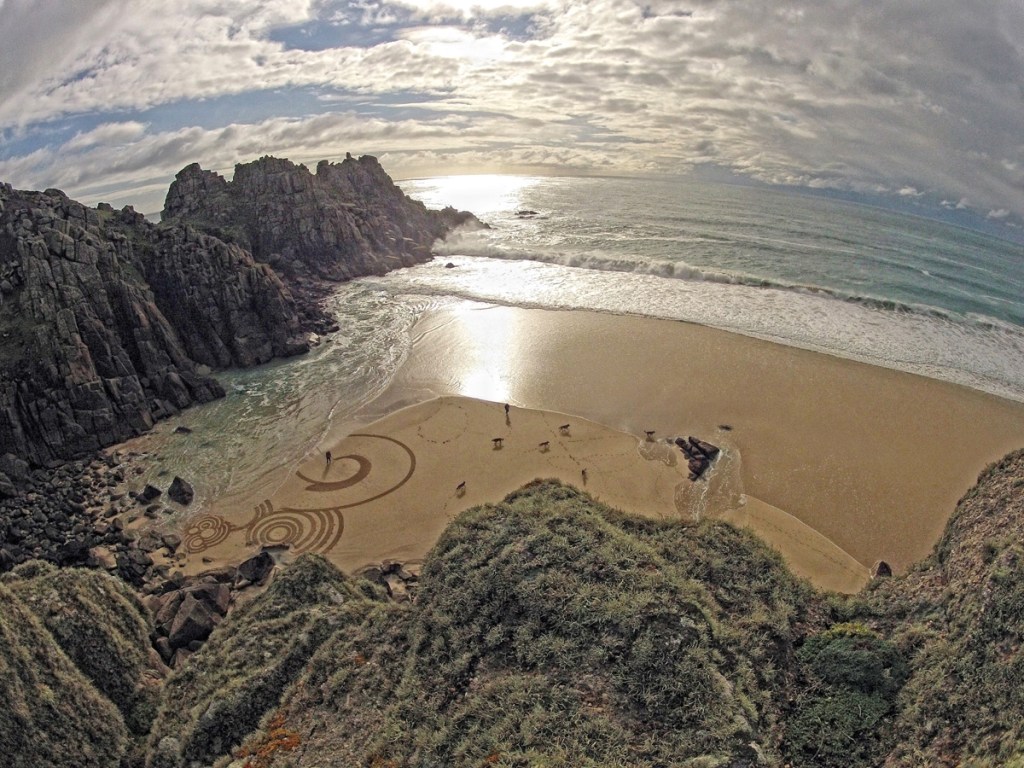
One of the most interesting things about this work, though, has been other people’s responses to it. I meet a lot of walkers and dog walkers, people making their way along the coast path, people who stop because the drawing has interrupted the rhythm of their day.
Very often they start talking, and once they do, they can be extraordinarily open. They tell you why they are there. Sometimes they are grieving and scattering ashes, or they are on long walks for deeply personal reasons. I had not expected that to become part of the work, but it has. The drawing gives people a reason to stop and look.
TIDAL JOURNALS
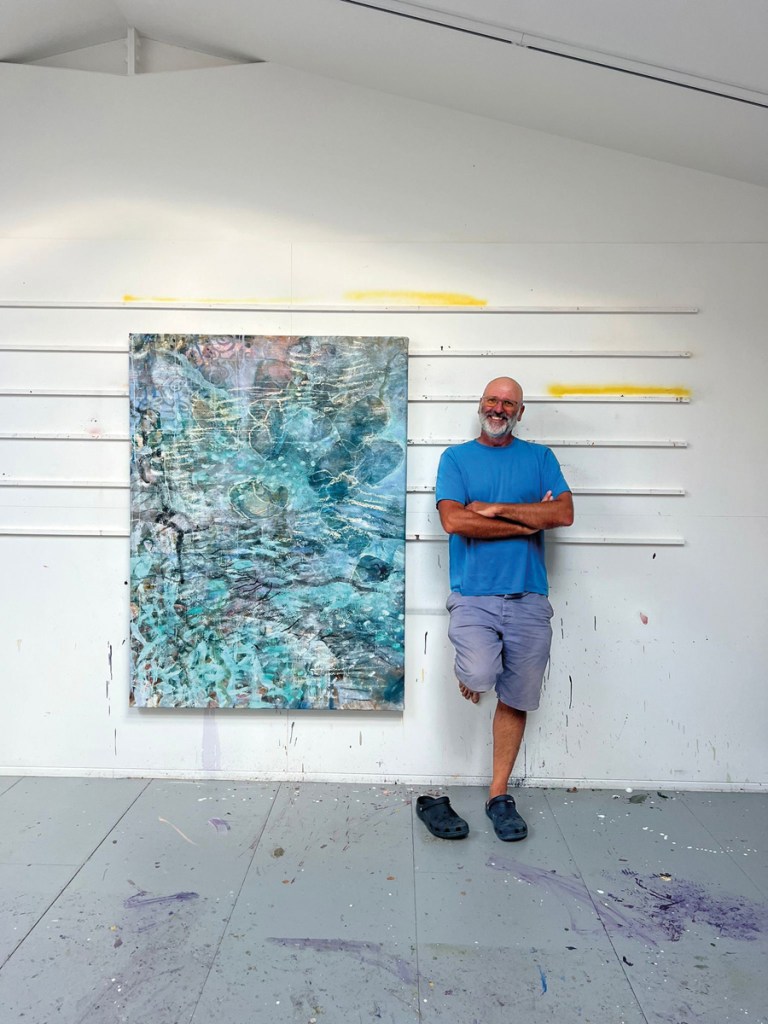
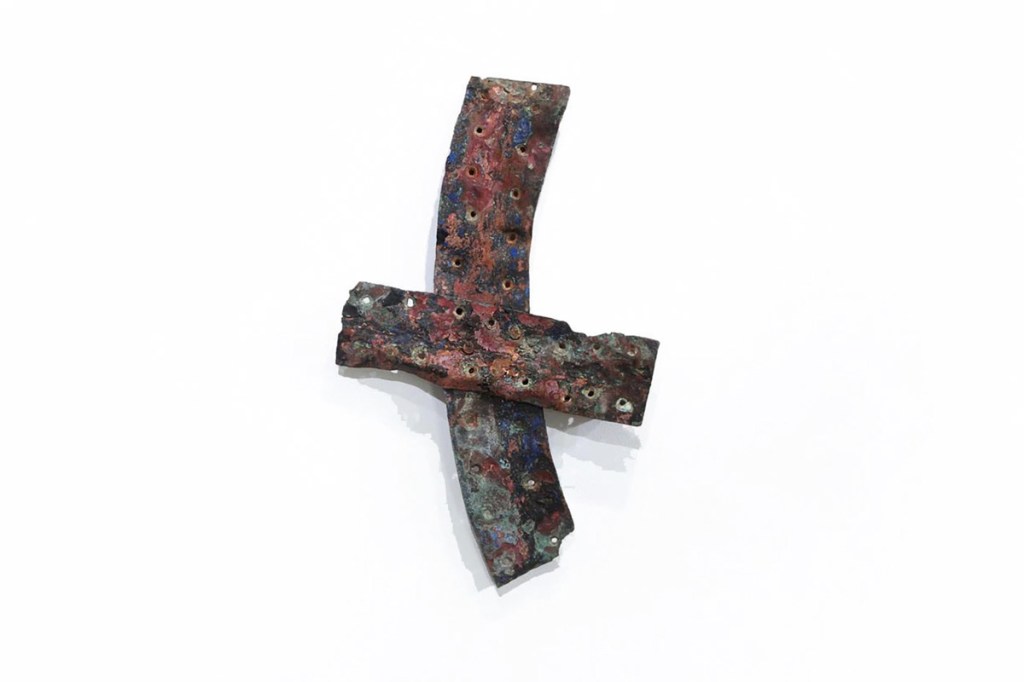
Alongside the beach drawings, I also make work in the studio from things I collect along the shoreline: wood, metal, fragments of boats and other materials marked by weather and use. I call these Tidal Journals. Unlike the drawings, which are erased, these works hold time in material form. Their surfaces have already been shaped by storms, salt, labour and exposure. I bring them back, live with them for a while and then begin assembling them into other forms.
Over the years, the work has taken me beyond Cornwall. I have been invited to make drawings in Australia, Bermuda and other places further afield, which still feels extraordinary to me. But the essential process remains the same wherever I go. I am still looking for a place with its own structure, weather and rhythm. No one really says, draw exactly here. They invite me to come, look and find the place for myself. That seems right, because the work has always depended on responding to what is there rather than arriving with a fixed idea.
Whether I am on a familiar Cornish beach or somewhere on the other side of the world, I am still trying to do the same thing: pay close attention to the place, make something that belongs to it for a few brief hours, and then let the sea take it back.’
To learn more about Tony Plant and his art, go to tonyplant.co.uk.