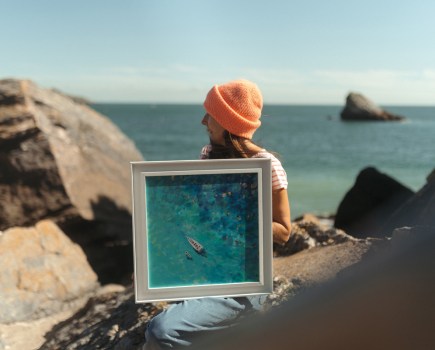

Ceramic artist Lisa Stevens creates intricate hand-sculpted pieces inspired by shorelines, marine life and the fragile beauty of the natural world
Interview: Suzy Walker
‘I have always loved the coast, although perhaps not in the way people expect. I am not someone who wants to swim far out to sea or throw myself into freezing water. What has always drawn me is the shoreline itself, that meeting place between land and sea where there is so much to notice if you are willing to look closely enough. Give me rock pools, shells, fossils, seaweed, cliff paths and strange little treasures washed up by the tide, and I am happy for hours.
I live just outside Bristol, so the sea has always been within reach. The nearest coast is Weston-super-Mare, and I often went to Brean when I was younger, with its long stretch of sand and wide skies. But my strongest memories are from family holidays further afield, especially Lyme Regis and the Isle of Wight. Lyme Regis felt magical to me because it held everything I loved in one place: rock pools, fossils, curious stones, interesting shells and that sense that the landscape was quietly full of secrets. I was never the child desperate to rush into the water. I wanted to crouch down and look, to see what was hidden in the crevices and pools. I still do.
WORKING AT AARDMAN STUDIOS
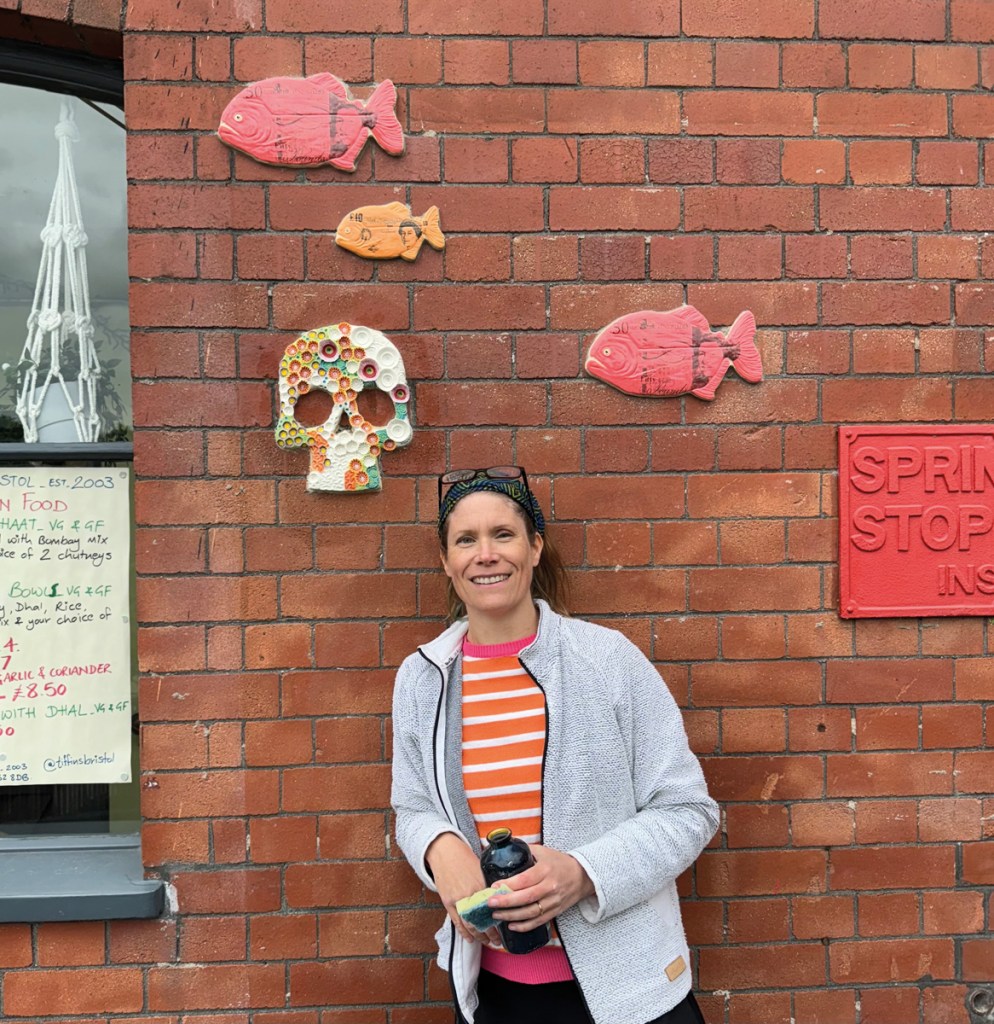
That early fascination with tiny worlds has shaped everything I make. It is one of the reasons I loved working as a sculptor at Aardman Animations for so many years. I spent around a decade there, working on projects including Chicken Run and Wallace & Gromit: The Curse of the Were Rabbit. It was creative, collaborative and often joyful work, but it also suited my instinct for detail, texture and miniature form. I have always been drawn to small things that invite you closer, and that same instinct runs through my ceramics now.
I first started working seriously with clay while I was still at Aardman. After one project ended, we were offered training to help us move forward, and while others chose practical or business courses, I chose ceramics simply because it felt different. What I loved immediately was the freedom. My work at Aardman had required precision and control, often working on one form for months and making the smallest of adjustments. Clay offered the opposite. I could put my hands straight into it, make marks, build texture and follow instinct rather than a plan. That sense of discovery has stayed with me.
When I had my first son, I left Aardman because the hours no longer worked for family life, but I still needed to make things. Creativity has always felt essential to me. I began selling small pieces on Etsy when it was still new, and over time that grew into something more substantial.
LAUNCHING SEAURCHIN
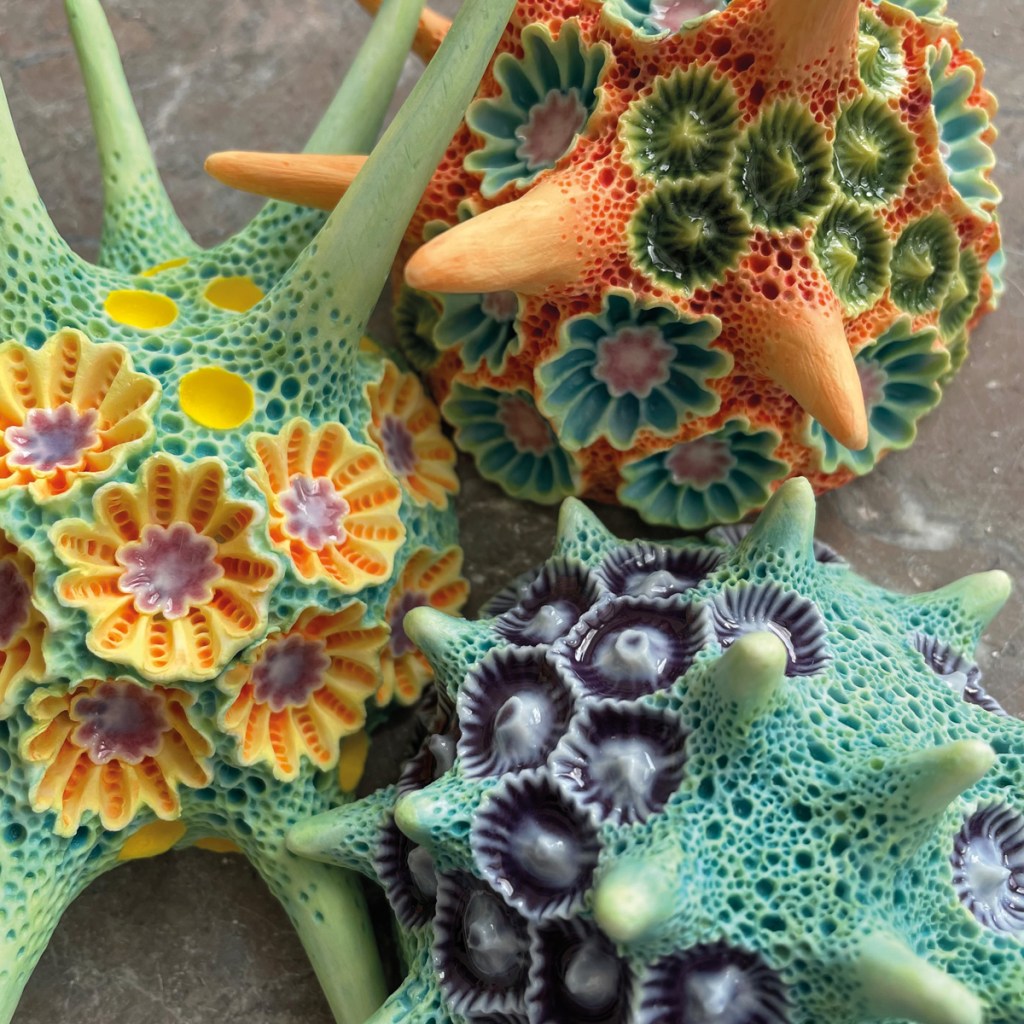
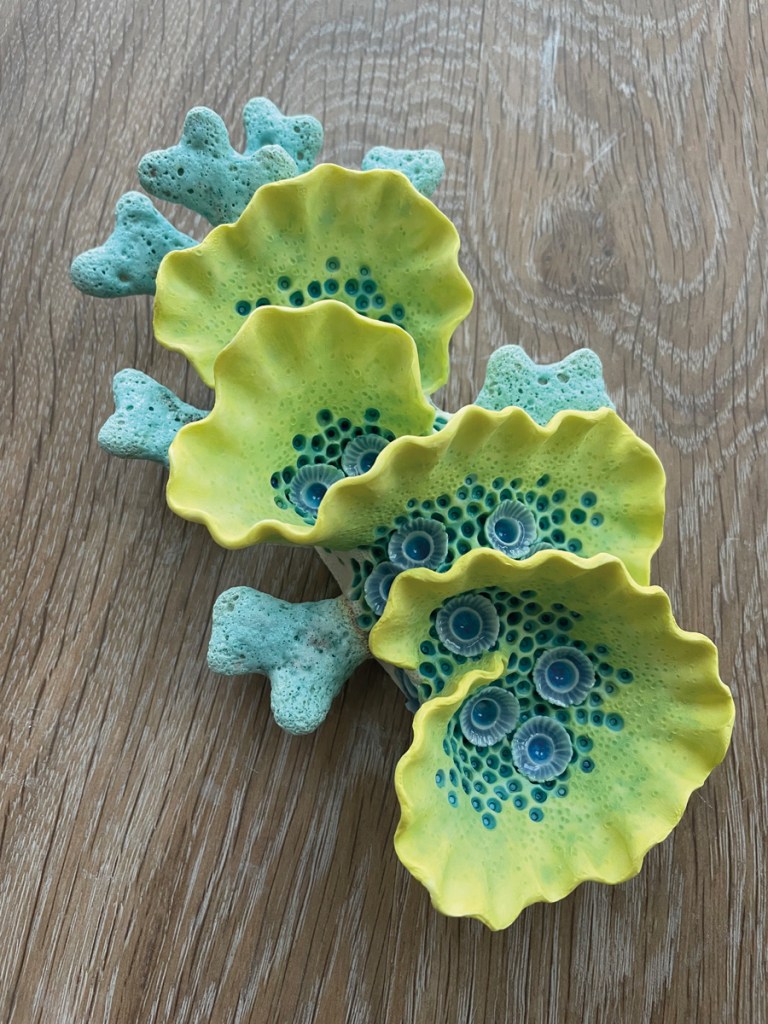
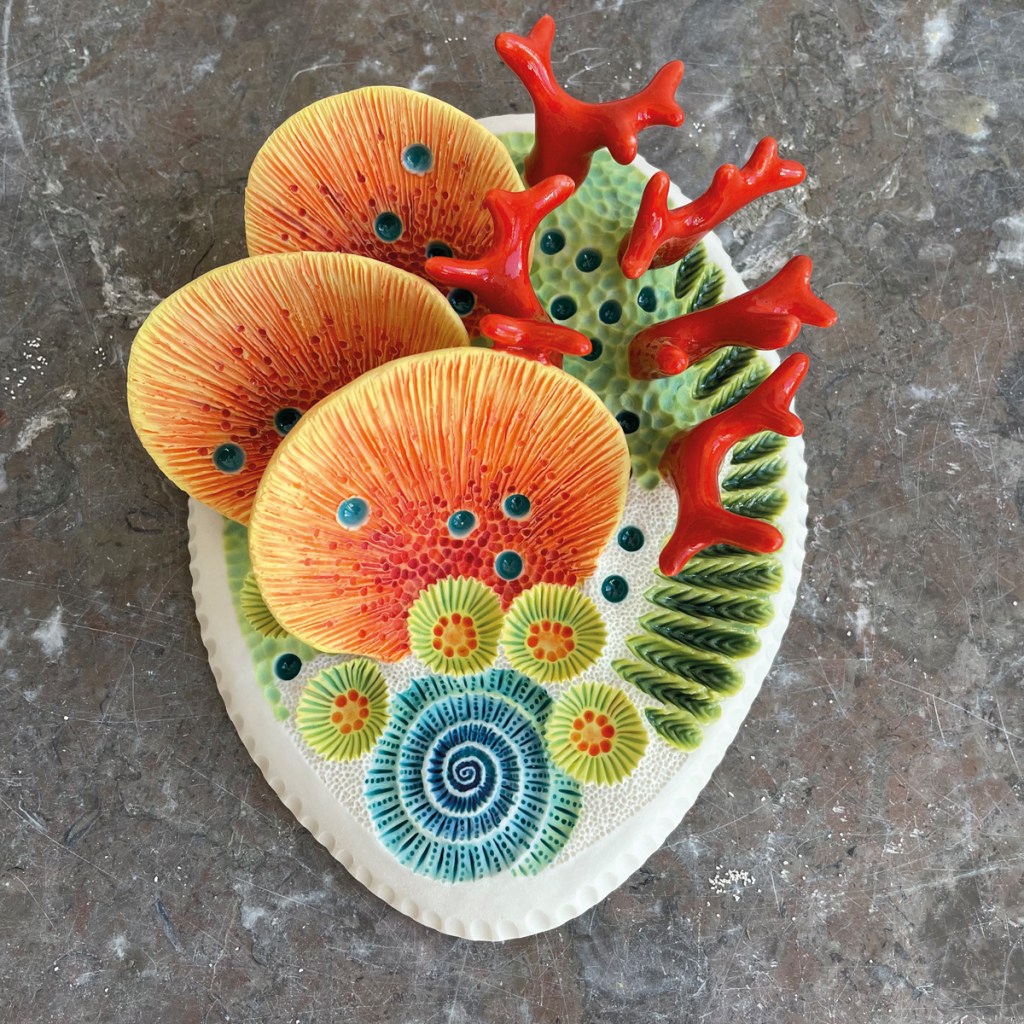
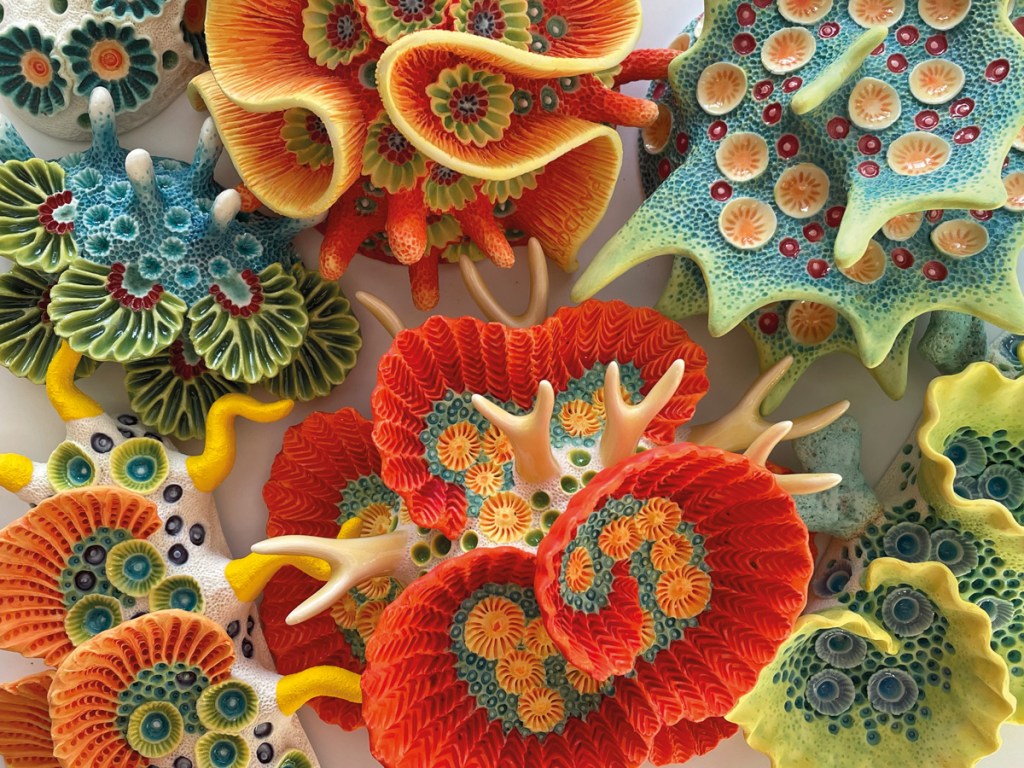
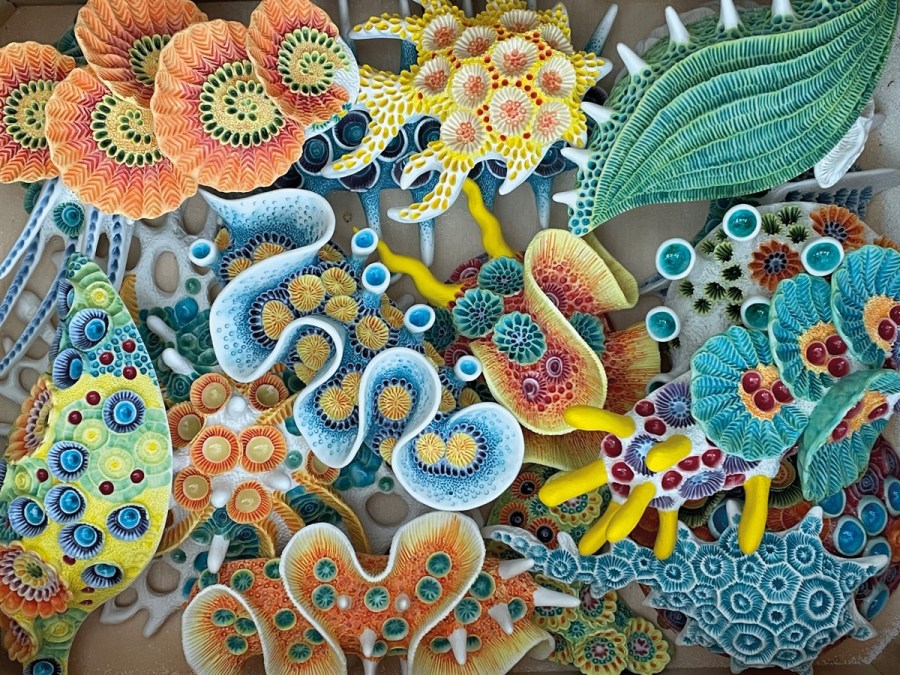
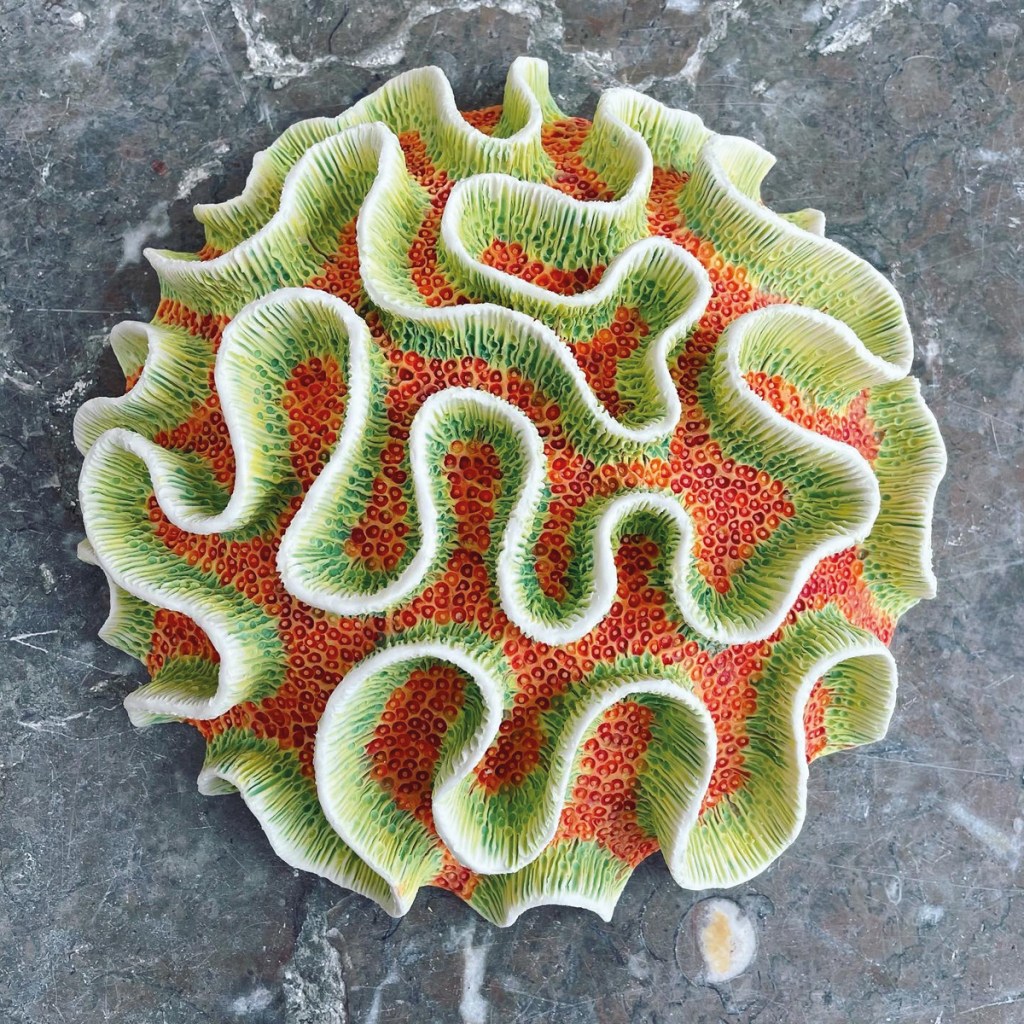
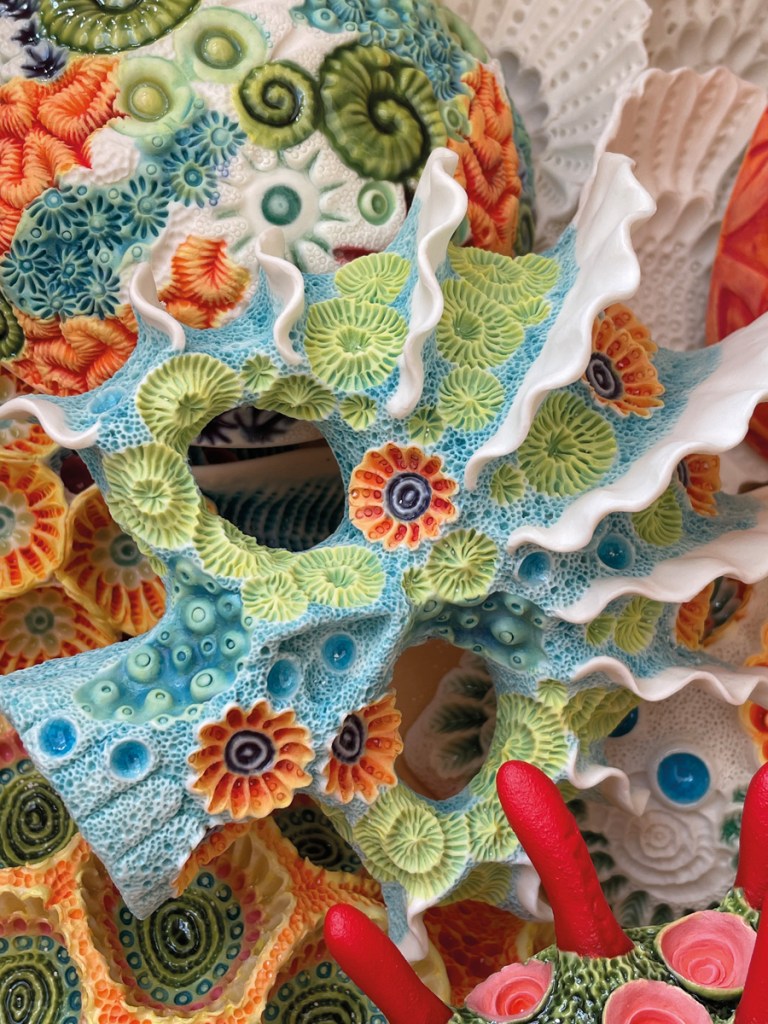
I now work under the name seaurchin, creating small-scale sculptures, bowls, tiles and jewellery from porcelain and black clay, with each piece individually sculpted by hand. My work is deeply influenced by nature, particularly the textures and forms found along the coast and in small, intricate ecosystems. Coral, shells, sea urchins, sea slugs, fossils, driftwood, rocks, lichens and mosses all find their way into what I do.
I sell my work mainly through my own website and Instagram, where I share new pieces as they come out of the kiln. Over time I’ve built up an international audience, with collectors in the UK and the US – in Hawaii and California, particularly in coastal areas where the work seems to really resonate. I also exhibit through selected galleries and artist trails, including recent shows in Brighton, which gives people the chance to see the detail and texture of the pieces in real life as well as online.
I do not work by copying things exactly. I might begin with an idea or a feeling, but once I start, the clay tends to lead. My process is intuitive. I let my hands work and see what appears.
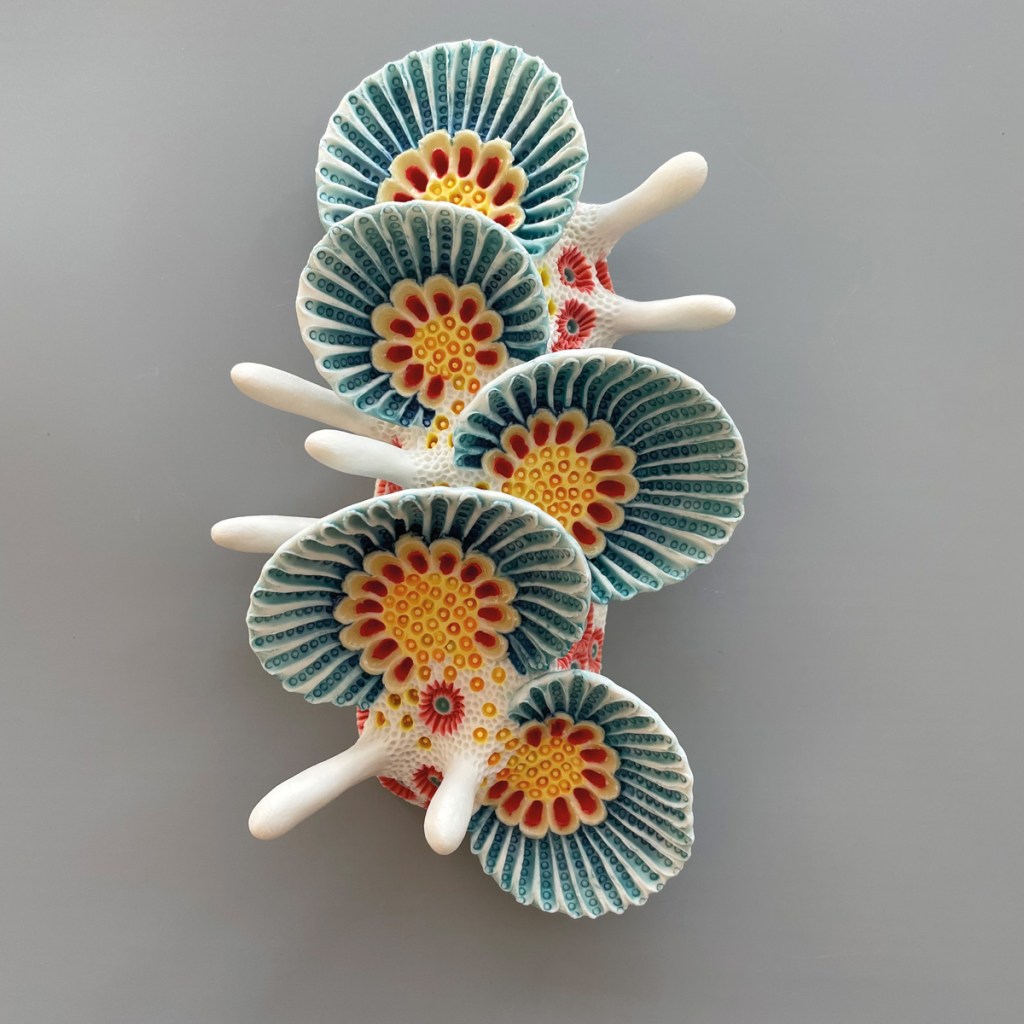
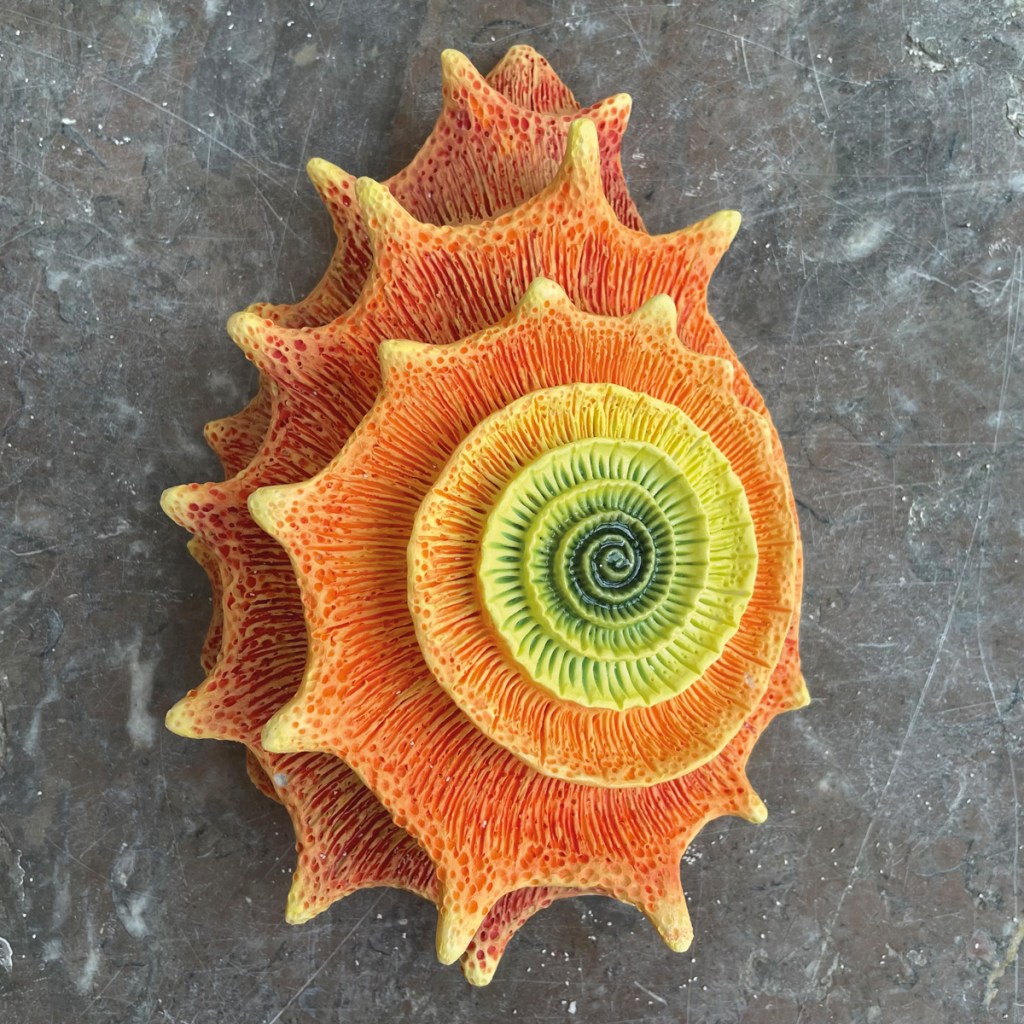
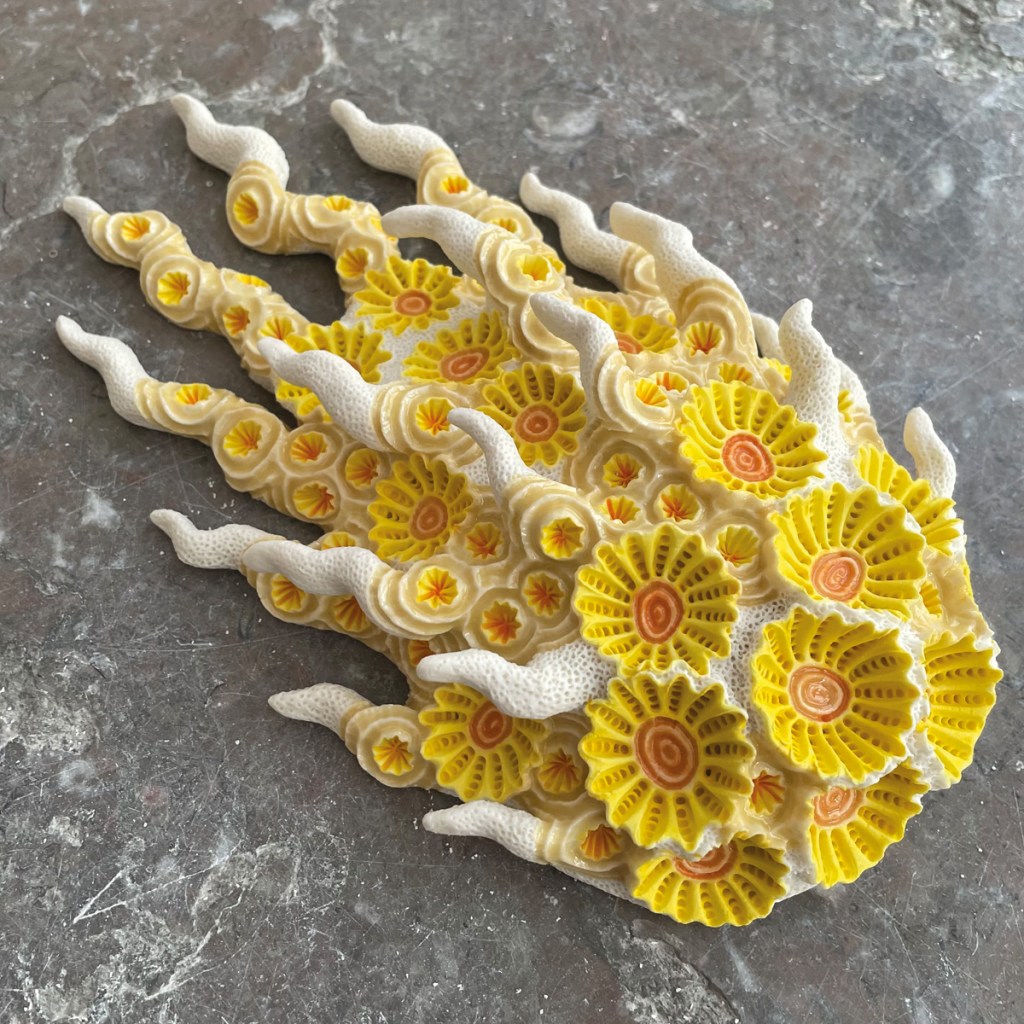
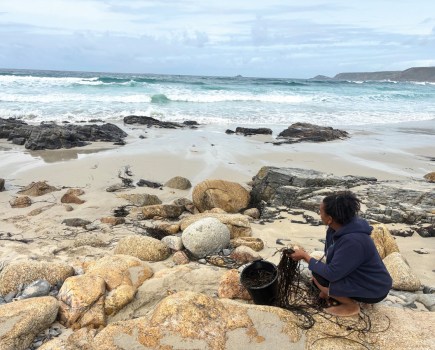
The coast feeds into this in a similar way. I do not go there with a plan. I go to wander, to look, to absorb. I climb over rocks, peer into pools, pick up shells and driftwood, and notice the folds of seaweed and the textures of stone. The shoreline has its own visual language, and it is endlessly rich.
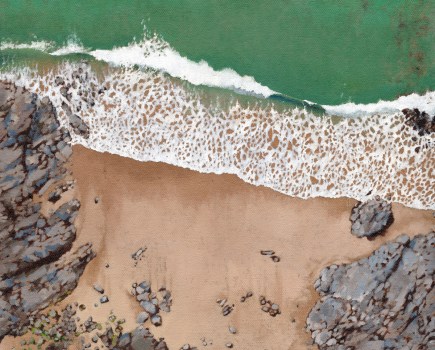
What fascinates me most is the contrast between scale. You can stand on a cliff path and look out into a vast horizon, and then look down into a rock pool and find an entire miniature universe. That movement between the expansive and the intimate is something I find endlessly inspiring, and it shapes how I see and make.
It also explains why I am more interested in the edge of the sea than the sea itself. I only properly learned to swim when I was 36, and although I am comfortable on a boat as long as I can see land, I am drawn to the coastline rather than open water. The shoreline is where everything gathers: plants, textures, movement, life. There is always something to look at.
THE CREATIVE PROCESS
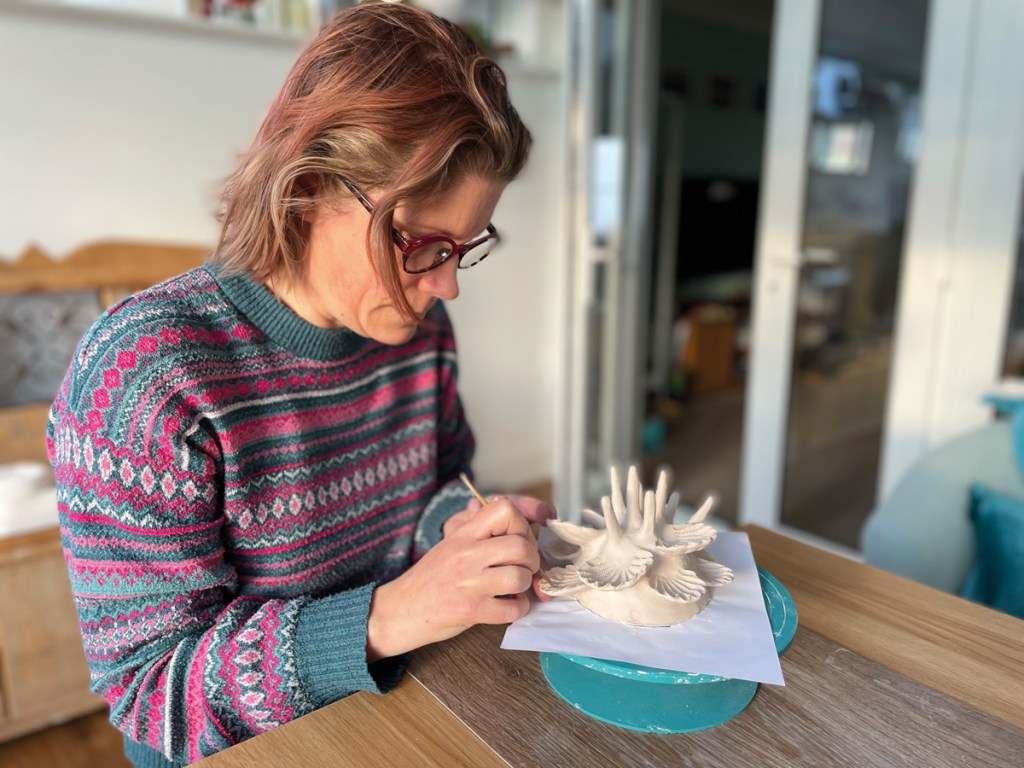
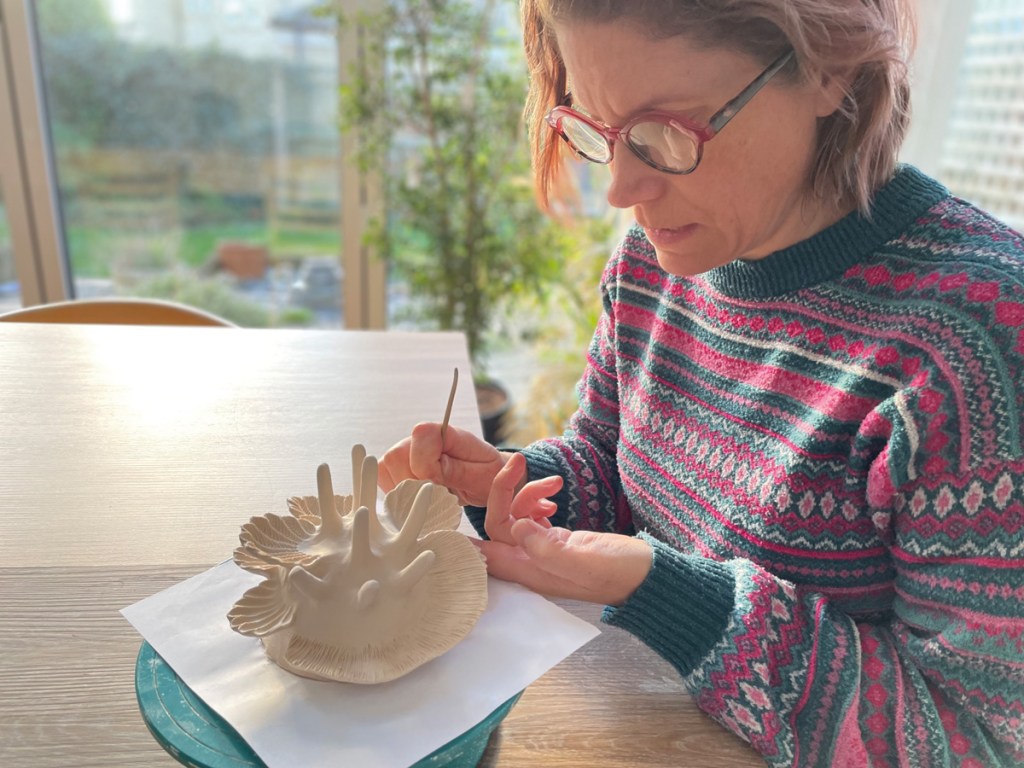
In the studio, I begin with a piece of clay, shaping it with my fingers before building up texture using small tools. Once the piece has dried, it is fired, sanded and then painted with layers of underglaze and glaze so that the colour enhances the detail rather than obscuring it.
Colour is an essential part of my work. I love experimenting, placing tones together and seeing how they interact. Because the surfaces are so textured, I cannot simply dip a piece into glaze, so I have had to learn over time how to build colour in a way that works with the form.
The coast brings not just inspiration but a way of paying attention. It slows me down and reminds me how much there is to see. Even now, with my children grown, a day by the sea still feels absorbing. We can spend hours looking for shells or simply wandering, and it never loses its magic. There is nostalgia in that, but also something deeper. The coast connects me to childhood, to imagination and to nature on both an intimate and expansive scale.
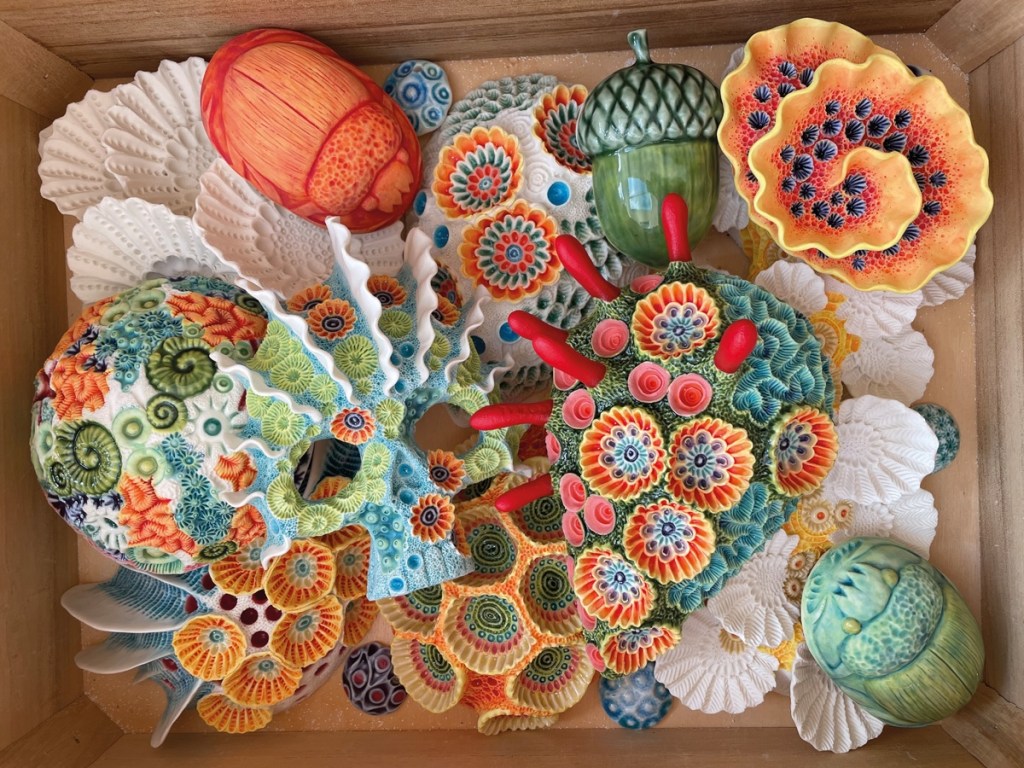
That connection has also led me towards a more activist strand of work. Alongside my sculptural pieces, I have created ceramics that respond to environmental concerns, particularly the fragility of marine ecosystems. Some of my work explores coral bleaching, using colour to move from vivid life to stark white loss. These pieces are a way of expressing both wonder and concern, because while I am inspired by the beauty of the natural world, I am also aware of how vulnerable it is.
This aspect of my work has led to something I am especially excited about, which is being invited to act as a guest judge for the Wildlife Artist of the Year competition, focusing on environmental activism. It feels like a natural extension of what I do, bringing together creativity, observation and a desire to highlight the importance of protecting the natural world.
In the end, the coast gives me more than subject matter. It gives me a way of seeing. It encourages me to look closely, to notice what might otherwise be overlooked, and to find beauty in small, intricate details. It reminds me that the natural world is both extraordinary and fragile, and that paying attention is a form of care. Everything I make begins there, with that quiet act of looking and the desire to hold onto what I find.’
To find out more, visit lisaseaurchin.co.uk and follow Lisa on Instagram at @lisaseaurchin.