
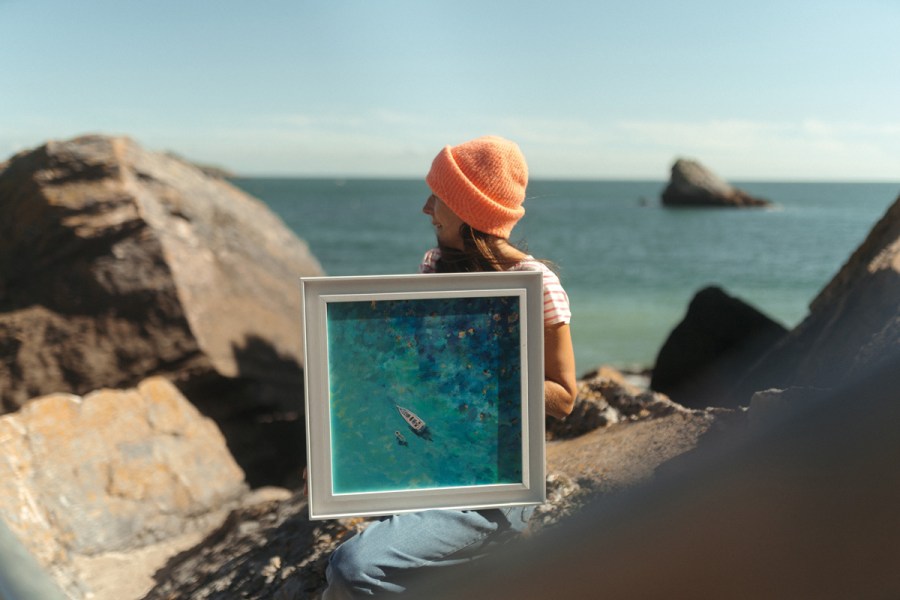
From cold water dips in Teignmouth to painting windblown swimmers in Torquay, artist Carrie Carlberg turns the drama, beauty and light of the Devon coast into luminous seascapes full of life
Interview Suzy Walker
‘I have lived by the sea my whole life. I sometimes joke that I don’t think I’d function properly if I couldn’t smell salt in the air. I grew up in Teignmouth in Devon, about 15 minutes’ walk from the beach. It was one of those slightly feral, wonderfully free childhoods where my brother and I would wake up, pull on yesterday’s clothes and head straight down to the water. We swam constantly. I was a keen sea swimmer from a very young age, even when it was cold, even when no one else was in. Back then, you didn’t see adults swimming much. It wasn’t a movement or a lifestyle at the time, it was just something we did.
If I wasn’t in the water, I was sitting beside it with a sketchpad. I always had one tucked under my arm. My brother drew too, so it felt natural with the sea in front of us, pencils in hand, hours stretching out endlessly. In my memory, it was always sunny, though I’m sure that can’t be true. Even when I briefly moved away to Newcastle and then Whitley Bay, I still found myself living by the water. I don’t think it was ever a conscious decision. I just gravitated back to it.
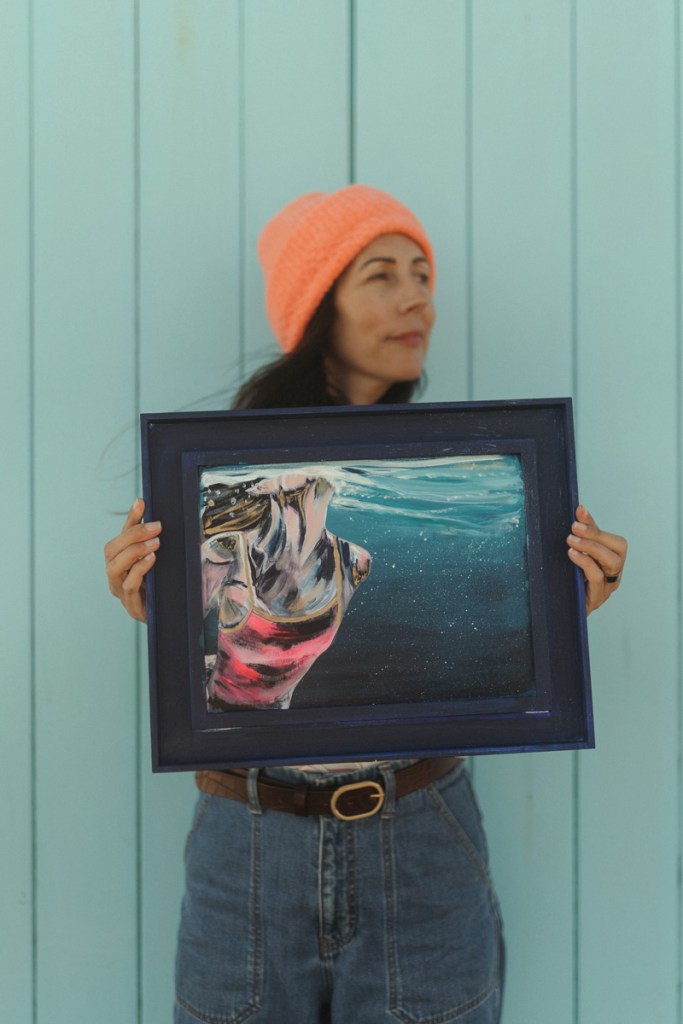
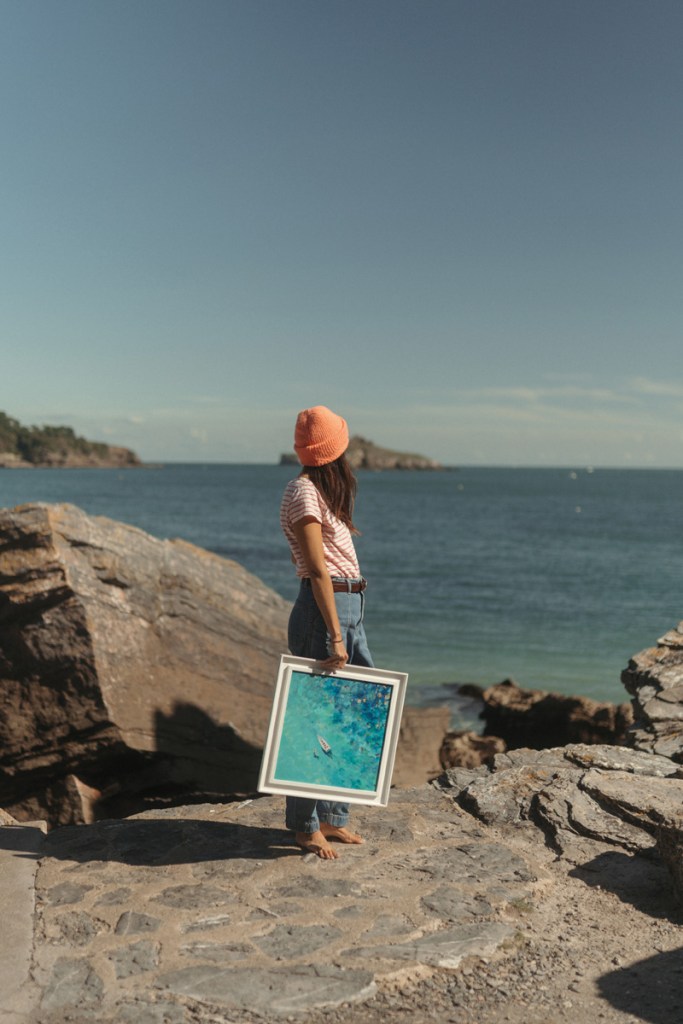
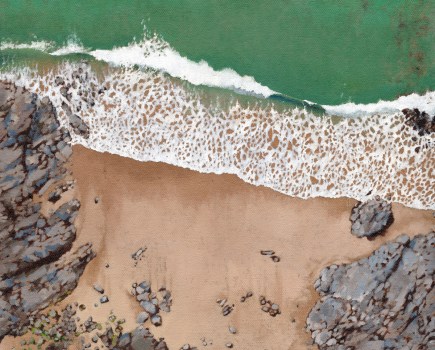
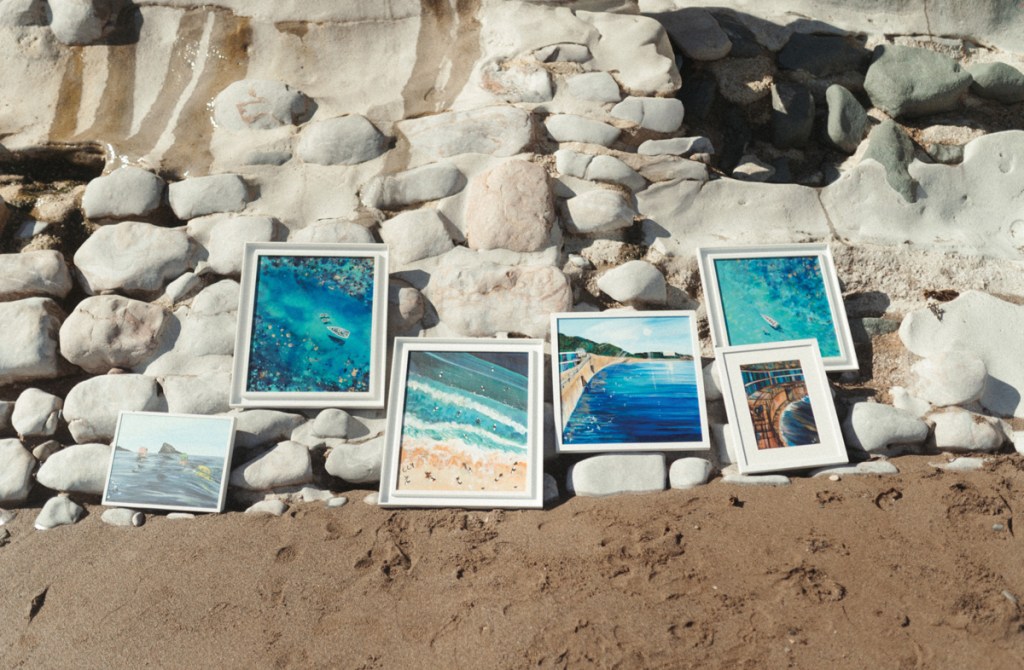
Today, I live and work in Torquay, which I think has one of the most dramatic stretches of coastline in the UK. It’s rugged and rocky, full of hidden coves and crystal-clear water. The South West Coast Path snakes along the cliffs, and from above, you get these extraordinary aerial views of swimmers and paddleboarders. That aerial perspective has become central to my work.
INSPIRATION FOR PAINTING
I paint what I see when I’m walking the cliffs or standing on my paddleboard: the geometry of swimmers in formation, the curves of tide lines, the contrast between sunlit shallows and deep indigo drop-offs. From above, the sea becomes almost abstract, with blocks of colour, texture and movement. I love that viewpoint.
People often say painting water must be incredibly hard – and it is. The sea moves. The light changes constantly. But I think because I’ve spent so many years in it and around it, I understand it instinctively. I know what that cold shock feels like – the fizz of adrenaline, the way colours sharpen after a dip. That physical experience translates directly into my palette and the crisp whites of foam, the electric blues, the sudden flashes of emerald.
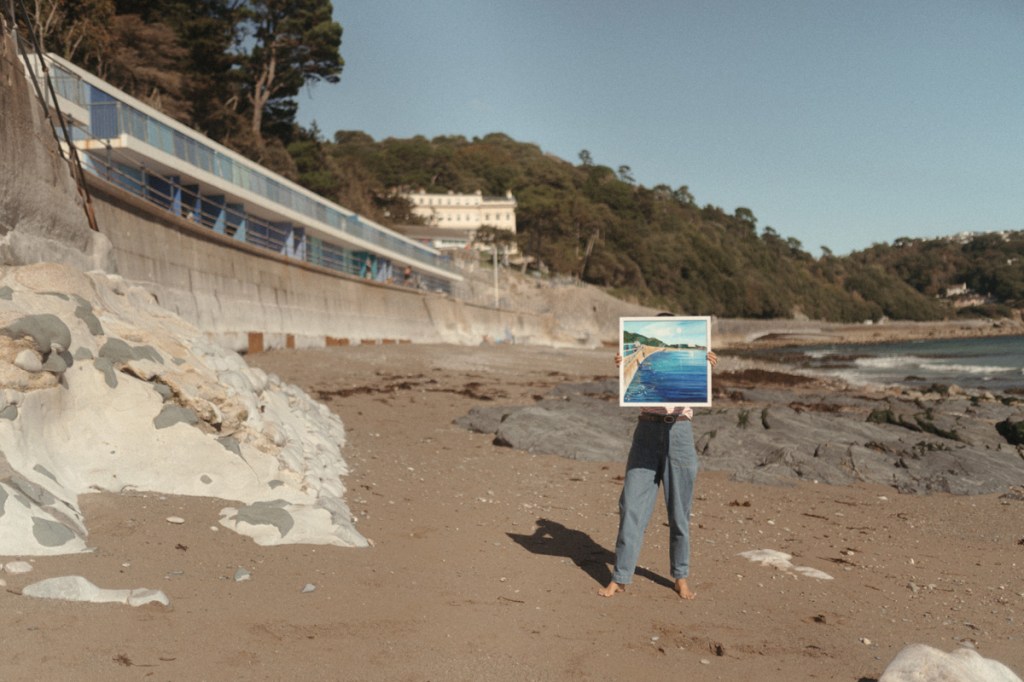
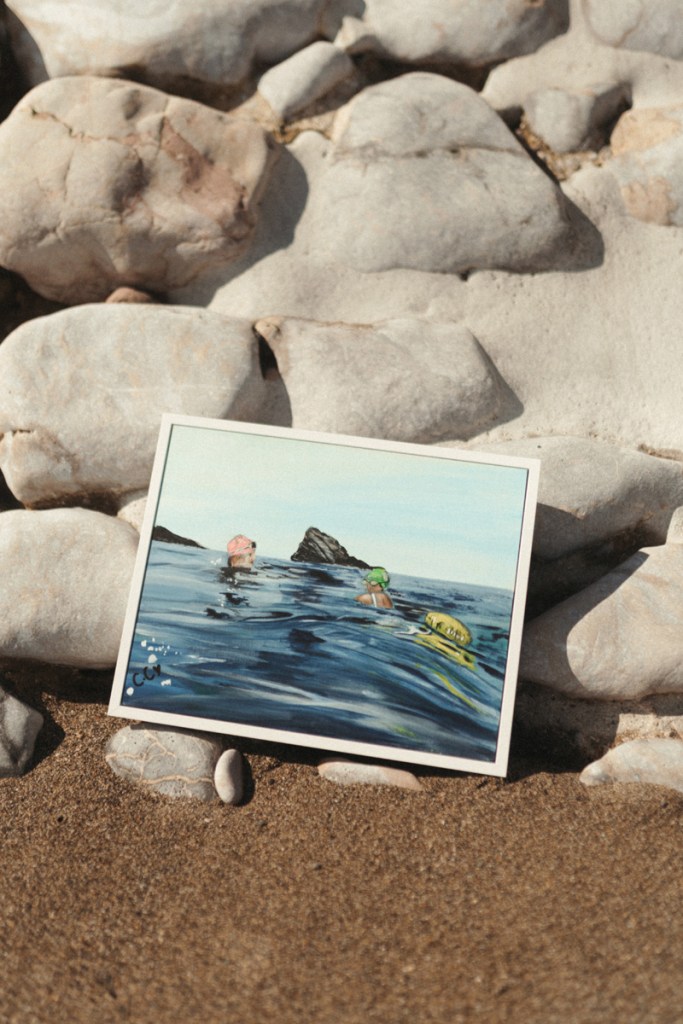
I started painting my wild swimming group in 2020. Like so many people, lockdown shifted something in me. There was this surge of community around sea swimming – people gathering (safely), laughing, supporting each other through cold dips and uncertain times. I painted a scene of my swim group, and something clicked. The response was immediate. People recognised themselves in it – the hunched shoulders, the Dryrobes, the cups of tea clutched in numb hands, the noses glowing pink!
Those “after the swim” moments have become some of my bestsellers. There’s something about that chaotic, windswept ritual – peeling off wetsuits, balancing on one foot in the sand, steam rising from flasks – that feels deeply human. It’s vulnerable and joyful at the same time. We need more laughter in the world, and I love that people smile when they see a familiar scene on one of my cards.
SEASIDE STUDIO
My studio is a tiny beach hut perched dramatically on the cliff edge at Meadfoot Beach. When I open the doors, I’m looking straight out to sea. I could almost throw a stone into the water from where I stand. It’s small, but it’s perfect. I see every mood of the ocean from there – the stillness of early morning, the storm clouds rolling in, sudden flashes of pink and lilac at sunset.
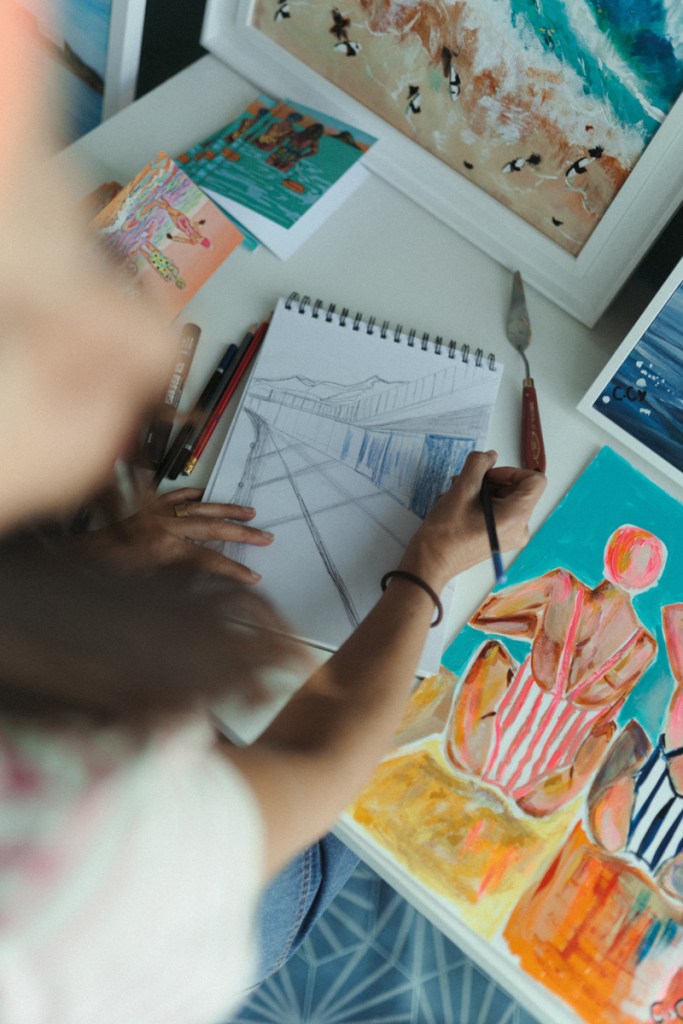
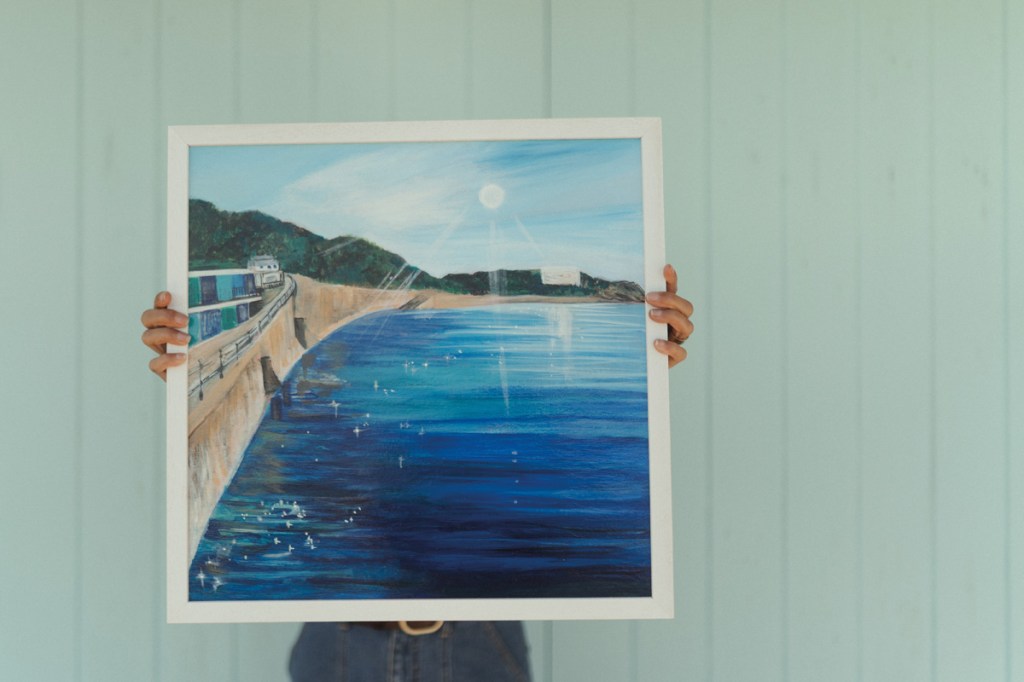
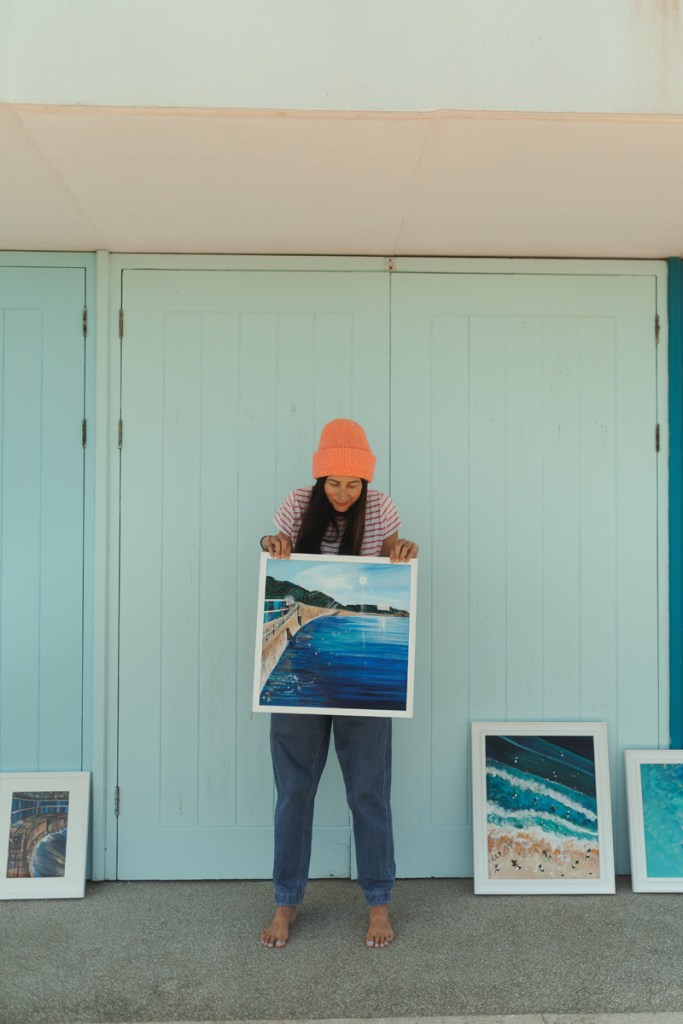
I’m an early riser. I’m up at 6.30am with my two spaniels, walking the coast path while the light is still soft. Often, I’ll have a quick swim before the day properly begins. That cold water clarity is like a reset button. Then I head to the studio and work, usually four days a week, layering paint, building texture with a palette knife, working on several canvases at once.
My process is slow. Most of my larger paintings have at least six layers. I build depth gradually, letting colours settle, adjusting tone, adding movement. The smaller works might be finished in a day, but the big pieces evolve over time. I like offering a range of sizes because I want art to feel accessible. Not everyone can invest in a large canvas, but a smaller original can still bring that coastal energy into someone’s home.
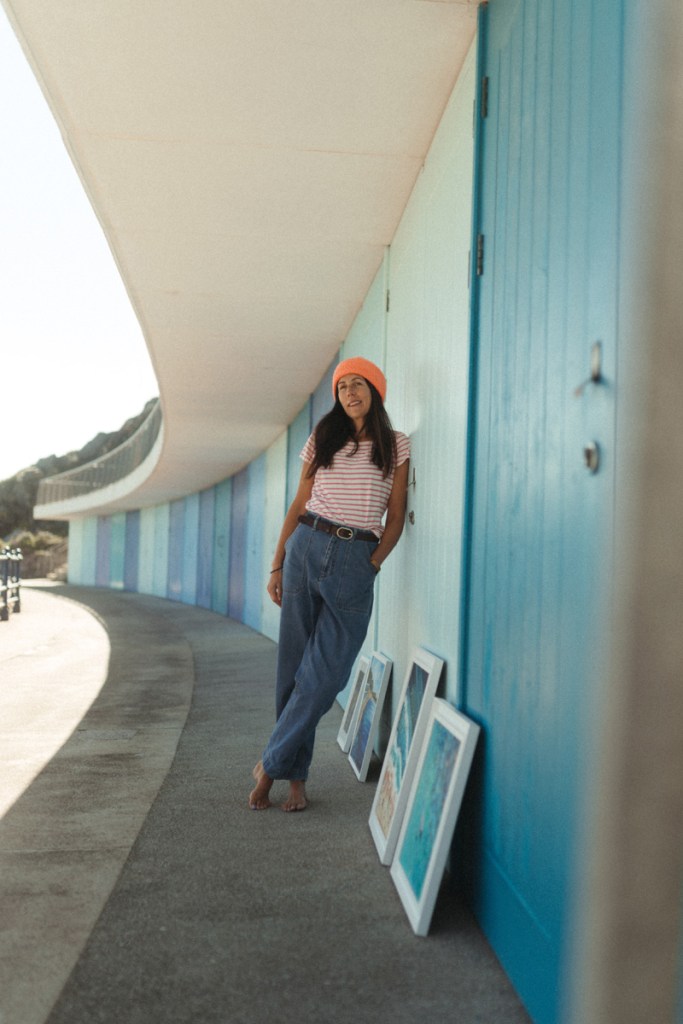
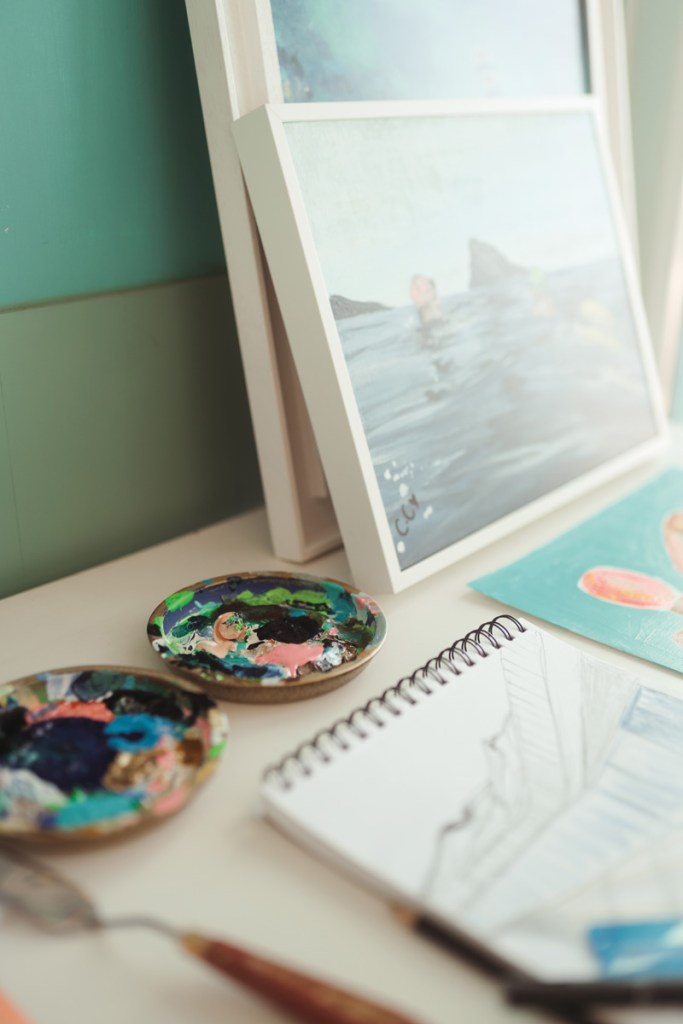
I didn’t go to a fancy art college. I had a brilliant art teacher at school who always told me I’d have to do something creative for a living. I didn’t listen at first, as I trained as a dental nurse and kept up my qualifications “just in case”. But after my boys – now 18 and 15 – were born, I began selling small cards and gift tags locally. During lockdown, I built an online business almost by accident, and slowly, steadily, I shifted into painting full-time.
It’s been 18 years of graft. It’s not an overnight success. It’s learning business skills when your brain would rather just mix colours. It’s approaching galleries and hearing “no” as well as “yes”. But once someone buys your work for the first time, your confidence shifts. You realise maybe you can do this.
THE IMPORTANCE OF THE SEA
Devon’s coastline changes dramatically through the seasons. Summer brings that Mediterranean clarity – water so transparent you can see the seabed from your paddleboard. But I’m equally inspired by winter: steel-grey skies, churning waves, the raw honesty of it. The sea is never static. That’s what keeps me painting.
Living by the sea brings perspective. It humbles you. It steadies you. It reminds you that moods pass – yours and the ocean’s. When people hang one of my paintings in their home, I hope they feel that sense of connection.
The coast is where I feel most myself, whether I’m diving under a winter wave, walking the cliff path with muddy dogs, or standing in my beach hut studio, watching the light shift again. If I couldn’t swim for a month, I think I’d feel untethered. The sea feeds everything I do. It sharpens my eye, clears my mind and fills my sketchbook before I’ve even opened it.
Some people chase inspiration – I just walk down to the water.’
For more information, go to wildartbycarrie.uk and follow Carrie on Instagram @wildartbycarrie_.