
Architect Stuart Cameron reveals how he and his family built Blackthorn Bothy by hand on the remote Argyll coast
Photography Paul Tyagi
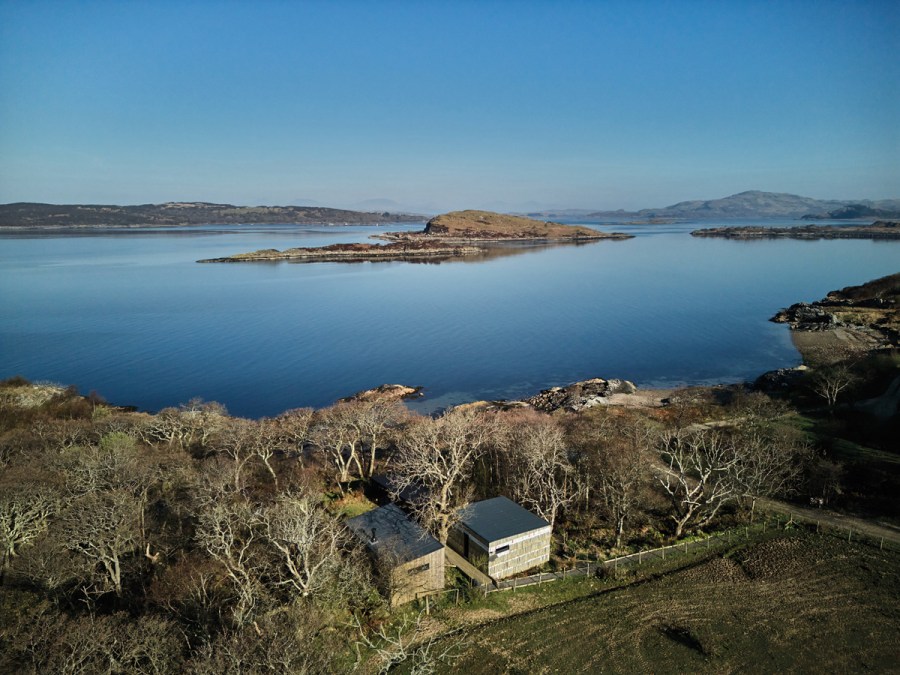
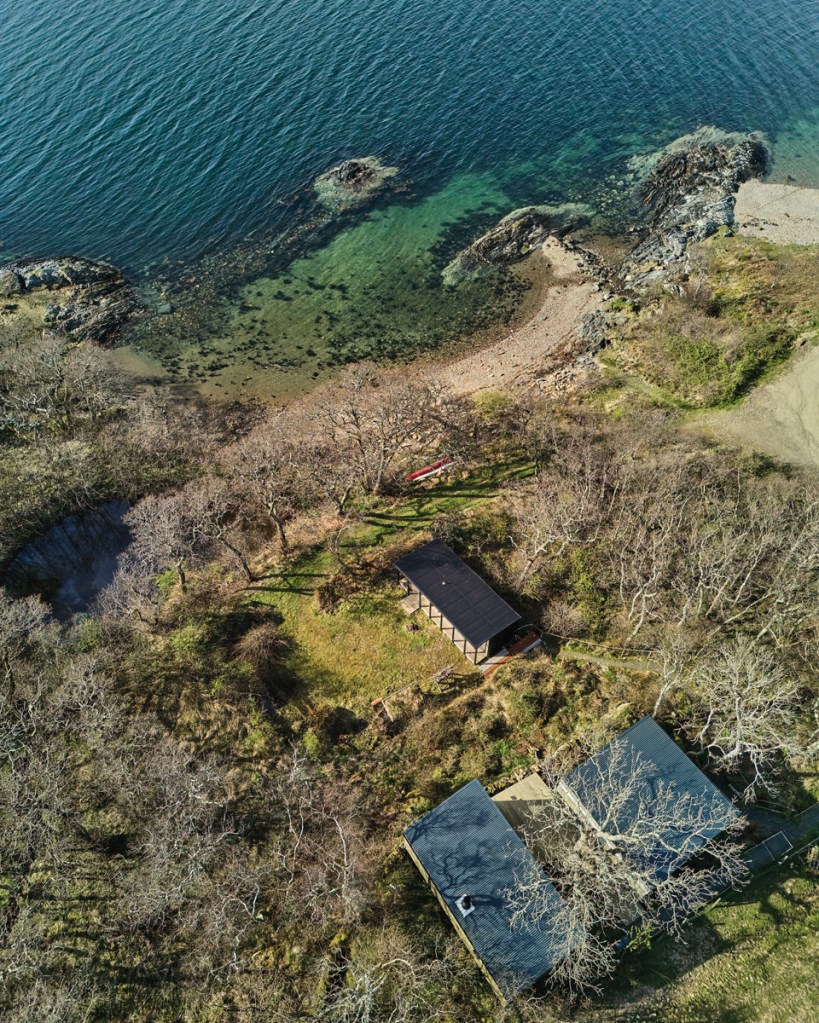
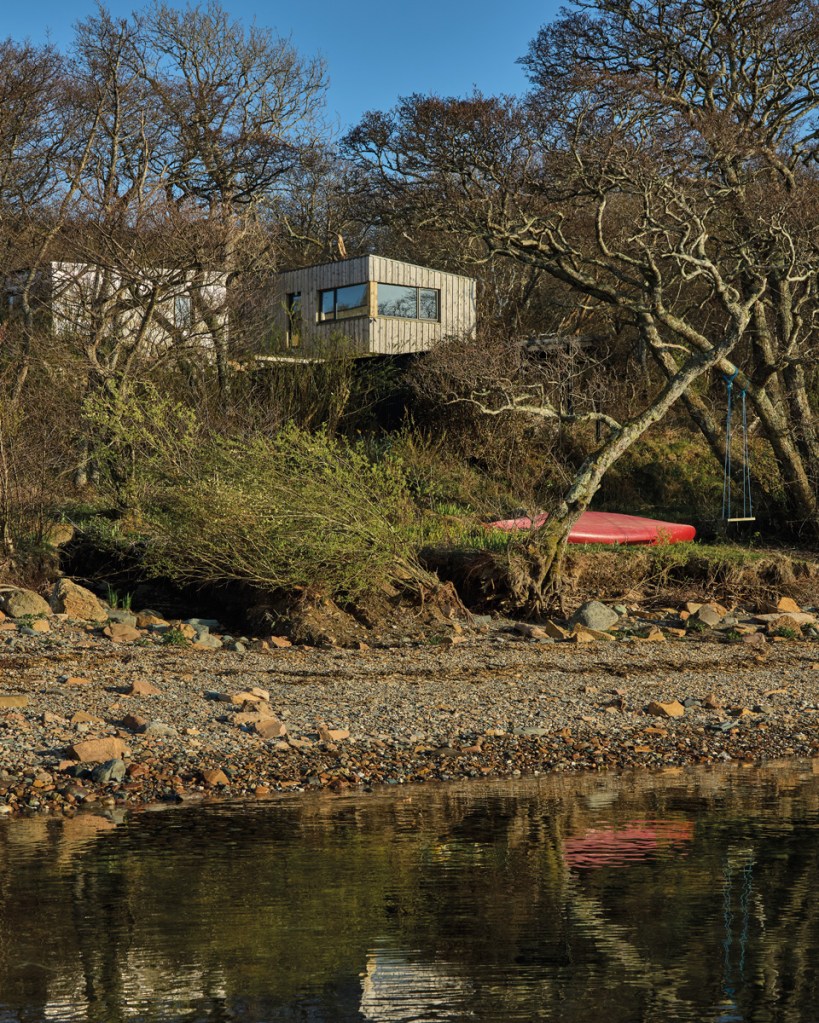
We’ve always been drawn to the sea. The bothies we’ve built sit right there, by a little bay on the Lunga Estate in Argyll. From the Tatty Shed – the lowest of the three – you’re about 6 metres from the water. On a windy high tide, the sea is crashing right against the land. When it’s clear, you sometimes get the Northern Lights.
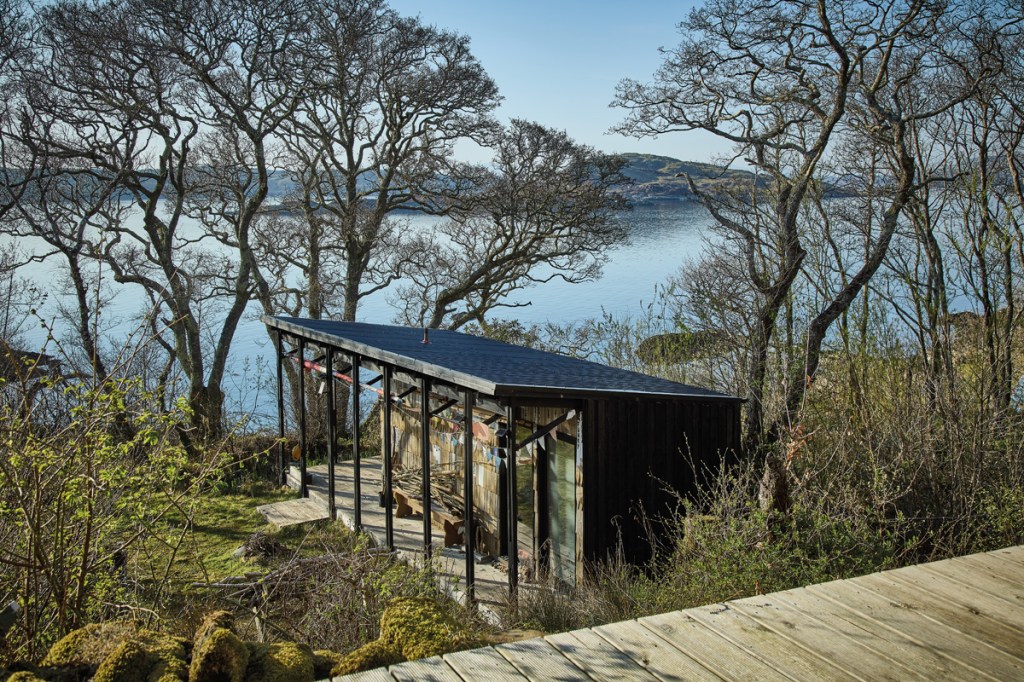
During Covid, we took out a 25-year lease on a bit of land from the Lunga Estate. Miranda – my wife and partner at Cameron Webster – and I built on this with our family: my sister-in-law, her husband, my brother-in-law and his wife. A proper family affair. Between us, we’ve got five kids, now 22, 18, 16, 15 and one. The whole point was to have an adventure and to build something with our own hands, by the sea, that we could use together.
Over the years, we’d done a few projects in that area, so we knew the landowner. We’d asked him a while back if there was any land we could lease, and eventually he said yes. The idea was to make a small, simple bothy – something we could put up ourselves, without heavy machinery. Everything’s built by hand – no power tools, just hand tools. We’re architects, not builders, so it was always going to be a bit rudimentary, but that’s what we wanted. Not something precious. Just strong, practical and built for use.
LOCAL MISCHIEF
We started with the Tatty Shed – the lower bothy, down by the pond. That pond has a great bit of history: it’s man-made, originally used for illegal distilling. Back in the day, when people discharged waste from their stills into the sea, the taxman could spot it from the air, because it changed the water’s colour. So they made these ponds inland, emptied them at night when no one could see. I like that bit of local mischief.
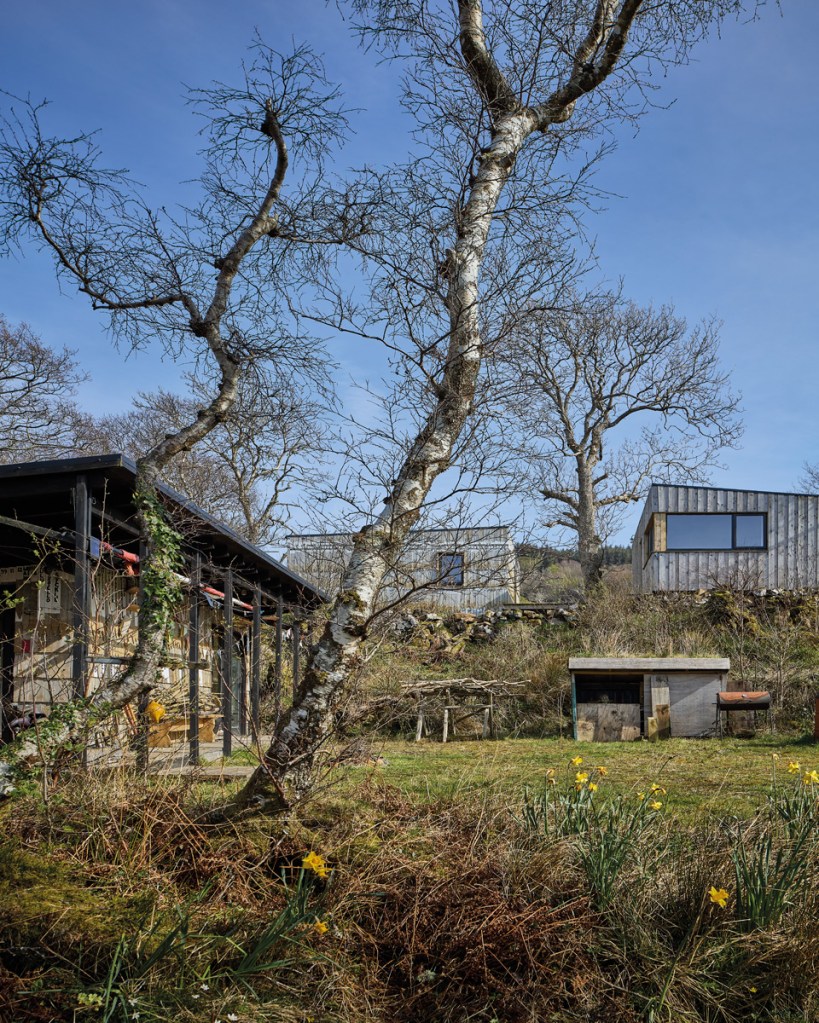
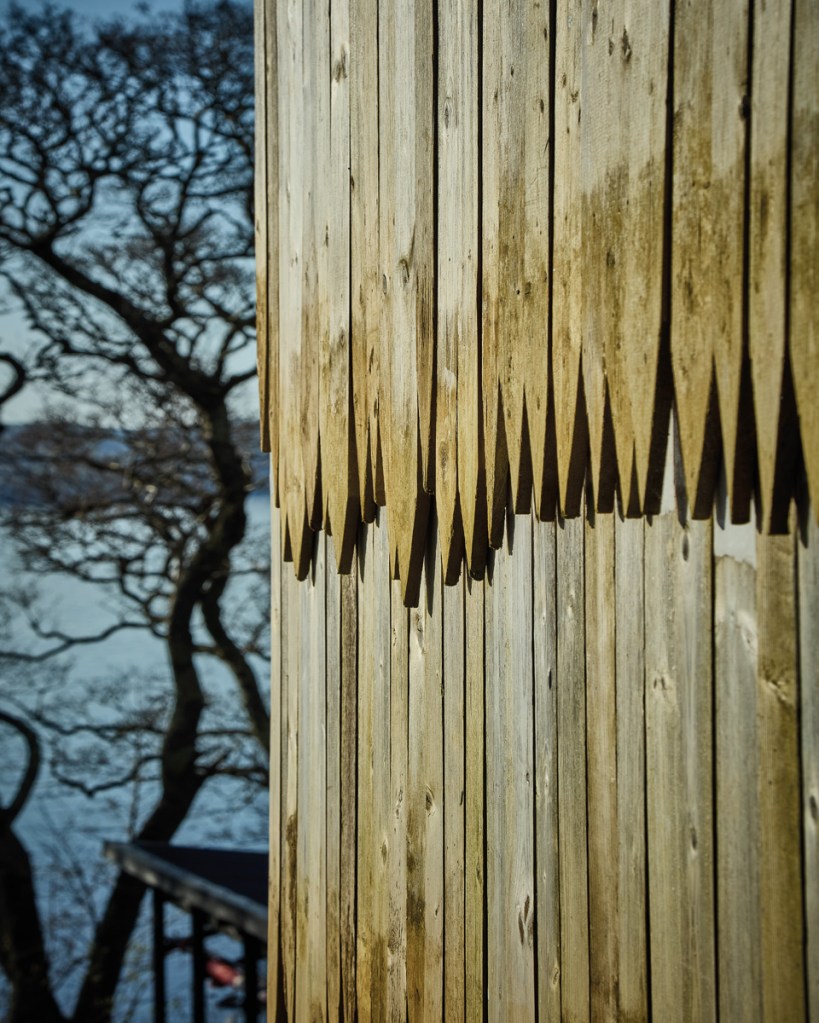
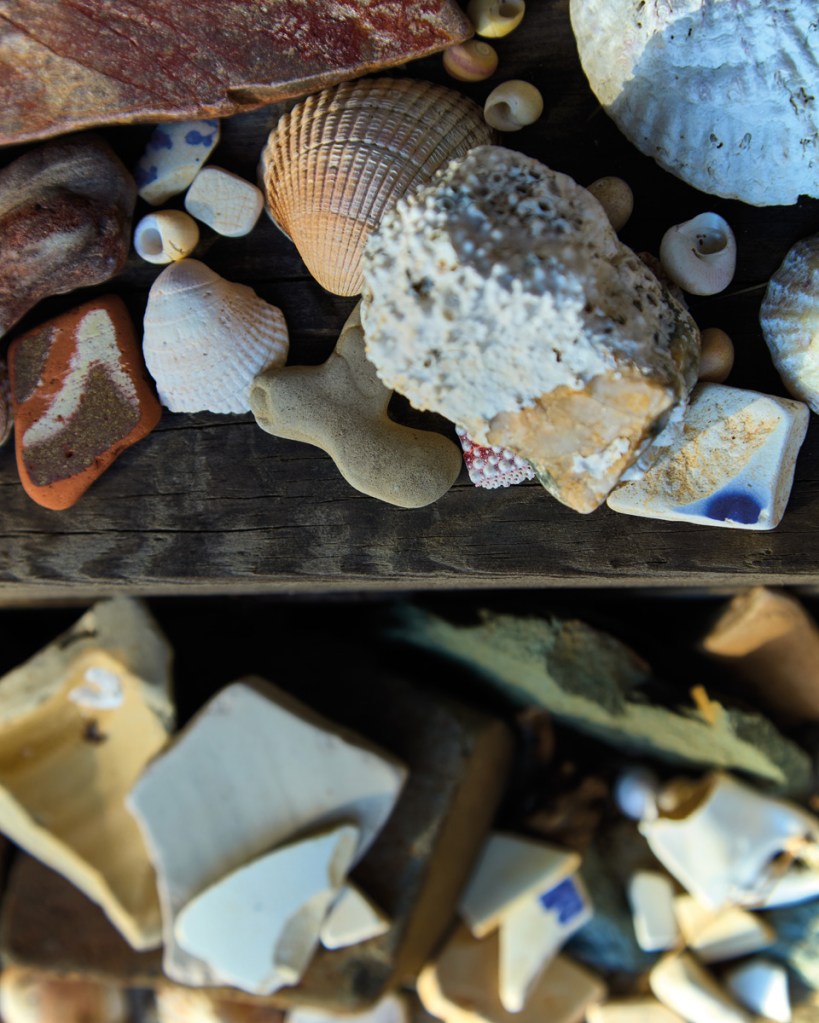
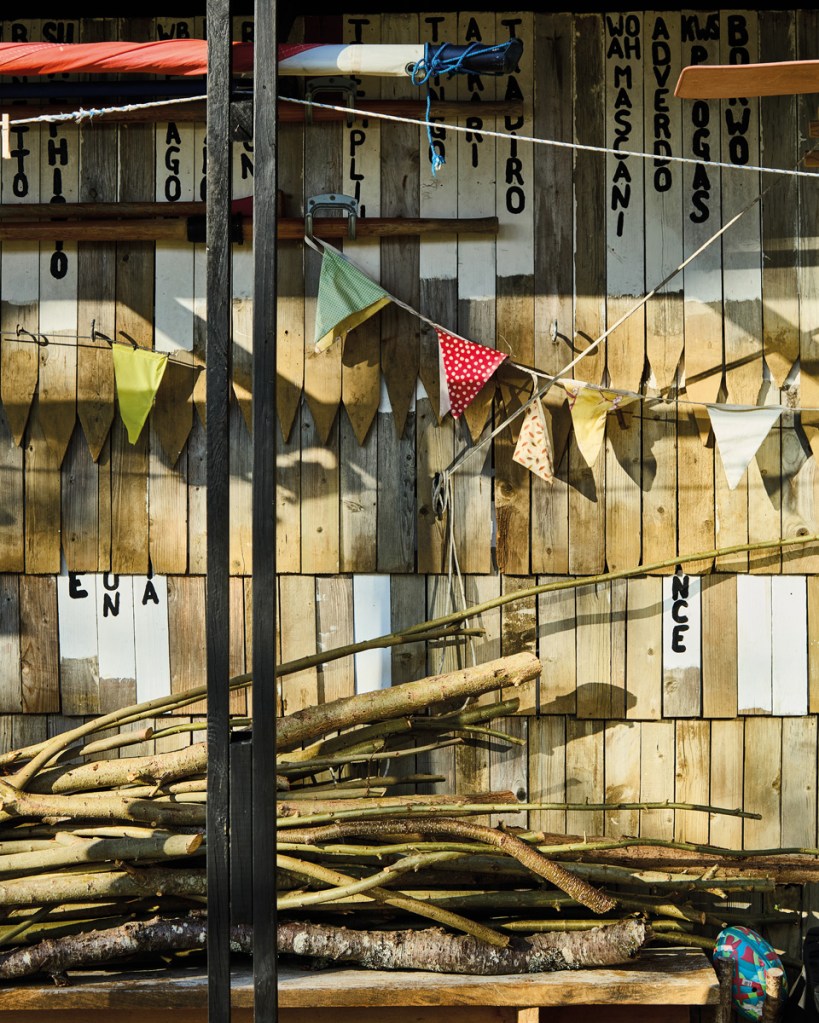
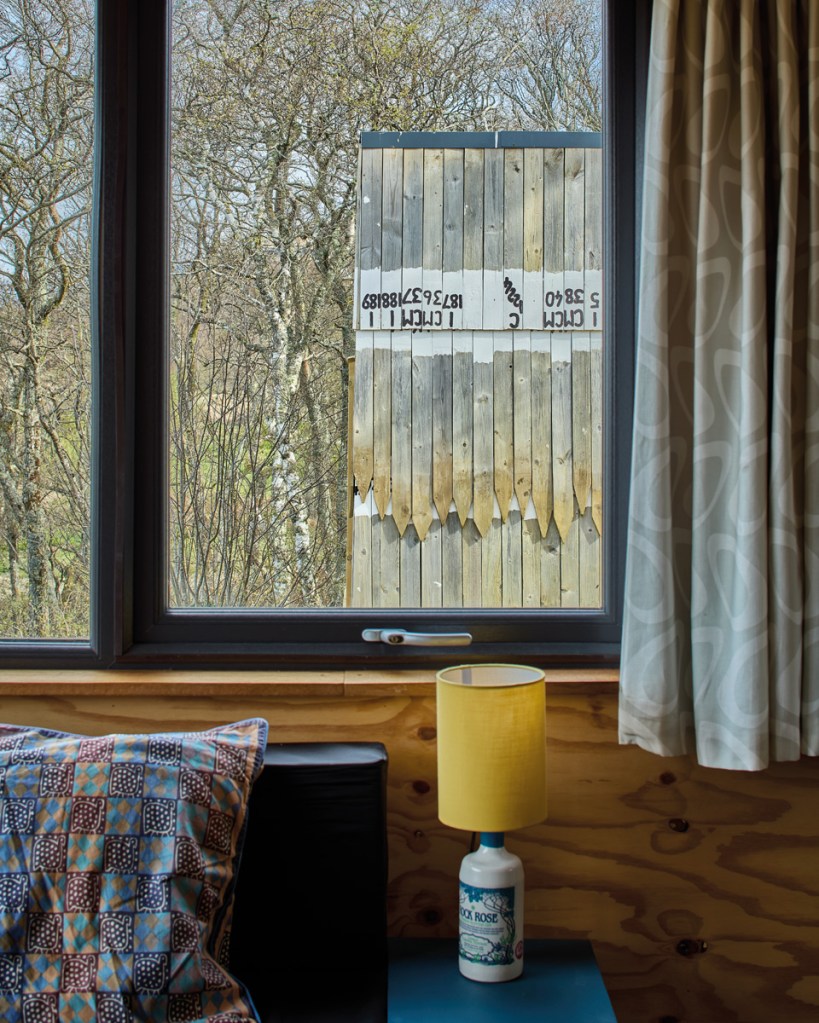
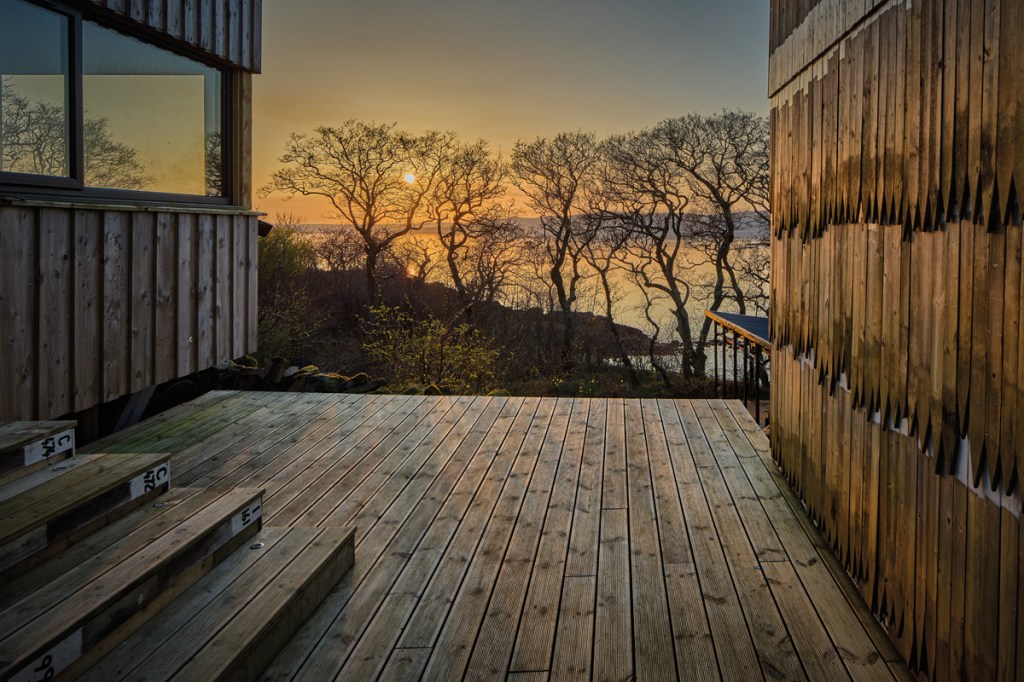
The Tatty Shed sits on individual concrete blocks laid on rock – no foundations, just rock. Everything else is timber. We used recycled materials wherever we could. My sister-in-law and brother-in-law work for SASA, the Scottish Agricultural Science Agency, in Edinburgh. When they switched from wooden pegs to plastic for marking crops, we salvaged thousands of those wooden pegs and used them for cladding. The floor joists came from
an old pub in Glasgow. We’ve even reused windows and doors from other jobs.
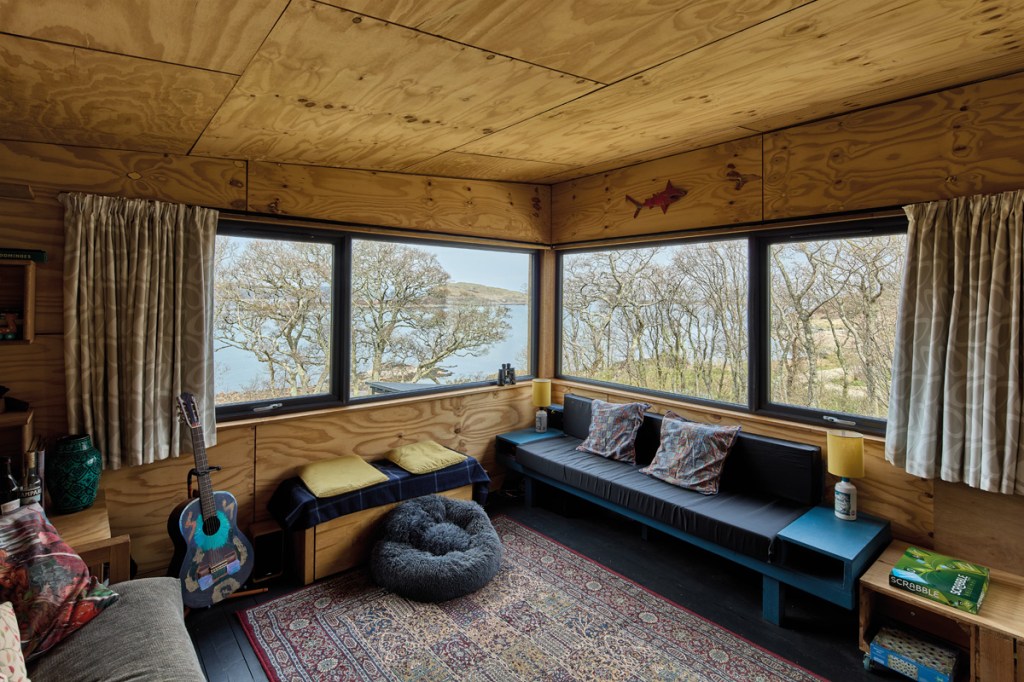
We lived out of that little shed for about a year before we started the two upper bothies – one for sleeping and one for living. Covid interrupted things, but over two or three years, we got them built, slowly. Each one’s slightly different. The sleeping bothy’s got four bunks and two double beds – so it can sleep eight. The living bothy has the main stove. Altogether, we can sleep about 13 of us now.
A LOVE OF SEA SWIMMING
It’s not about perfection – it’s about being by the sea, together. You go swimming, get wet, hose yourself down against the wall, hang your towel on a nail. It’s meant to be used and weathered. The sea air does its thing. The storms have tested it – we’ve had trees down, the wind battering the roofs, but they’ve stood up well.
We’re all big on swimming. Cold water, wild water – that’s Miranda’s thing, and the kids love it. Doesn’t matter what time of year. I’m less keen in January, but I’ll get in when it’s warmer. The bay’s right there, so we’re always in and out. We’ve got two little sailing boats – proper small ones the kids can handle – and an old engine boat. There’s a lot of paddling about between the islands, beach fires, swimming, rugby ball throwing, the lot. It’s the best kind of chaos. Next spring, we’re planning to build a small sauna by the Tatty Shed, so you can come out of the sea and straight into the heat. That’ll be the next family project.
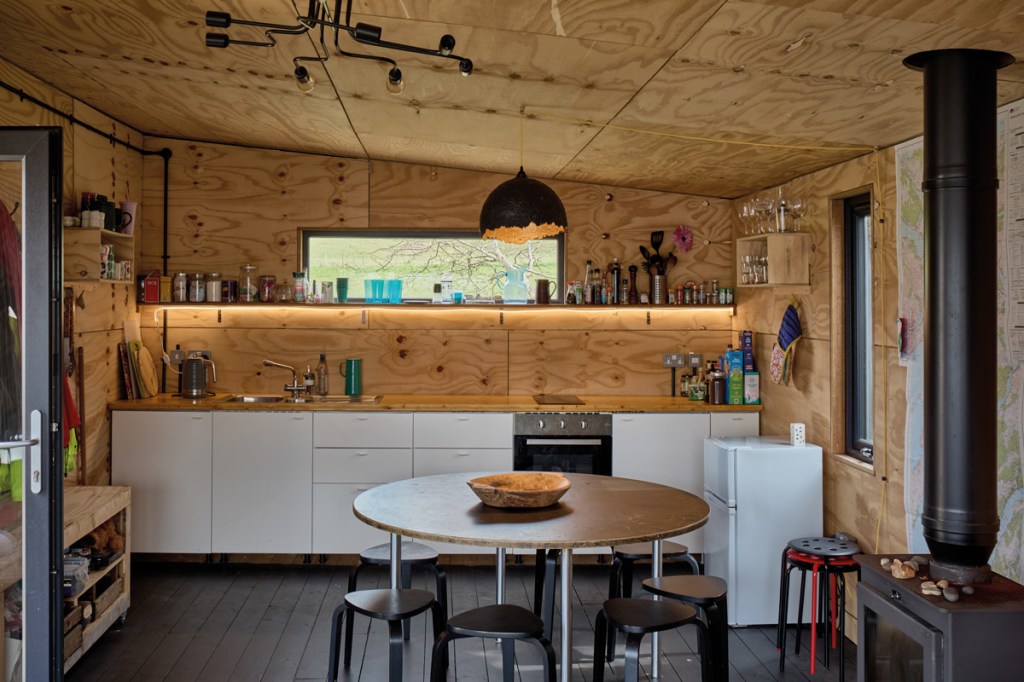
When we’re all there, it’s full-on family life. Miranda might be coming up from a swim, someone’s cooking fish in the outdoor kitchen, the kids are hanging out in the trees or chopping wood. We’ve got no Wi-Fi, no internet, but we do have power. The teenagers probably still sneak 4G, but mostly they’re outside – building fires, fixing things, or sitting by the water. It’s the sort of place where you just lose track of time.
Argyll itself is extraordinary. What drew us here was the coast – it’s wild, but there’s a calmness to it, too. Big tidal swings, little islands dotted everywhere. The main road isn’t near the sea here, which makes it even better – no traffic noise. To get to Lunga, you turn off and drive about 10 minutes down a single track through trees until you reach the shore. The sea just opens out in front of you. That feeling never gets old.
We’ve got history with this stretch of coast. When Miranda and I were at Glasgow School of Art, our professor, Andy MacMillan, had a cottage nearby called Shore Cottage. He taught us a lot about building in tune with the land and the site. So when we later picked up projects around here – at Tayvallich and Craignish – it felt like coming full circle.
It’s about three hours from Glasgow, which is far enough that your brain starts to switch off on the drive. We call it the ‘Argyll Rot Effect’. You get there and you just stop. You breathe differently.
WILD WEATHER
The weather can be wild. In the big storms earlier this year, we lost three trees and spent a day clearing them. You’re reminded quickly how exposed it all is. But the bothies are sturdy and we’ve built them to take it. I always trust them in the wind. You’re aware the sea will keep reclaiming the land – maybe not in my lifetime, but eventually. But that’s what I love about it, that sense of living right on the edge, where you can feel the weather and hear the tide.
We don’t rent the bothies out – it’s purely for family and friends. It’s not fancy – no spa,no screens, no fuss. Just the sea, the sky, the trees and a few handmade buildings holding their own against the elements.
I’m 53 now, and I suppose you start thinking about what the next 15 years will look like. For us, it’s this – more time here, maybe longer stretches, but still with a foot in Glasgow. I wouldn’t call it a second home; it’s more like a place to reset. A reminder of what matters.
End of the week, we pack up, drive west, dump our bags, light the stove and just stop. You can hear the waves from bed. It’s that simple. You sleep better, breathe better.
The sea does that to you.
To find out more about Stuart’s architecture practice, visit cameronwebster.com.