
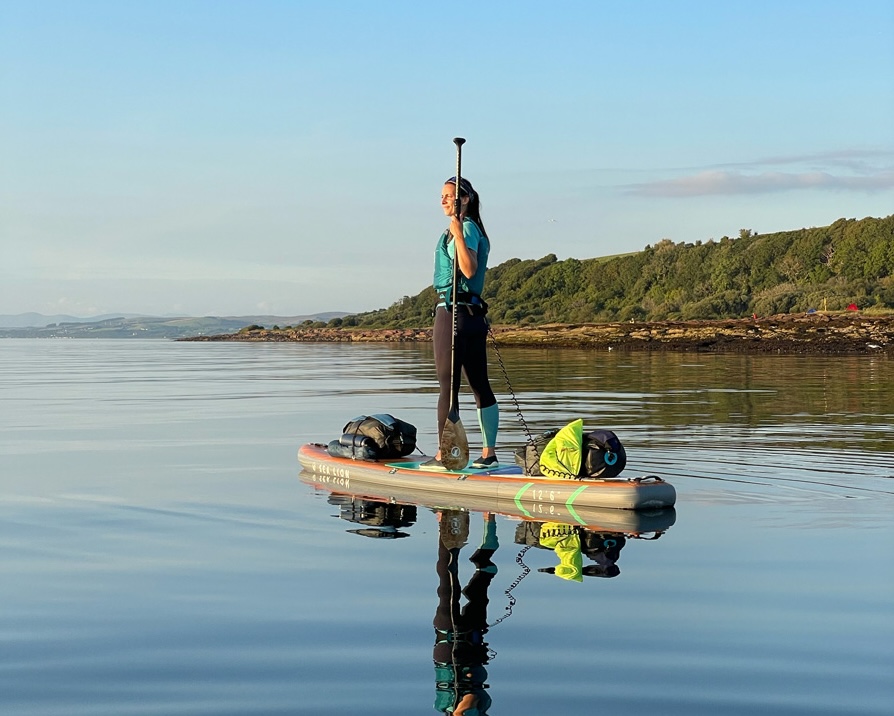
Paddleboarder and author Jo Moseley shows how this popular sport can not only keep you fit but also benefit your mental health
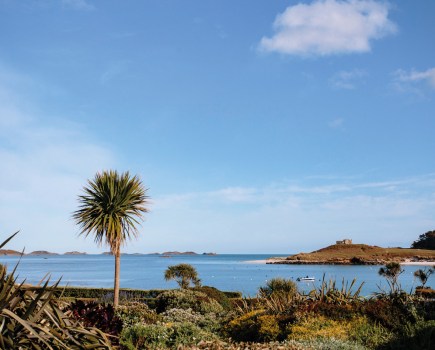
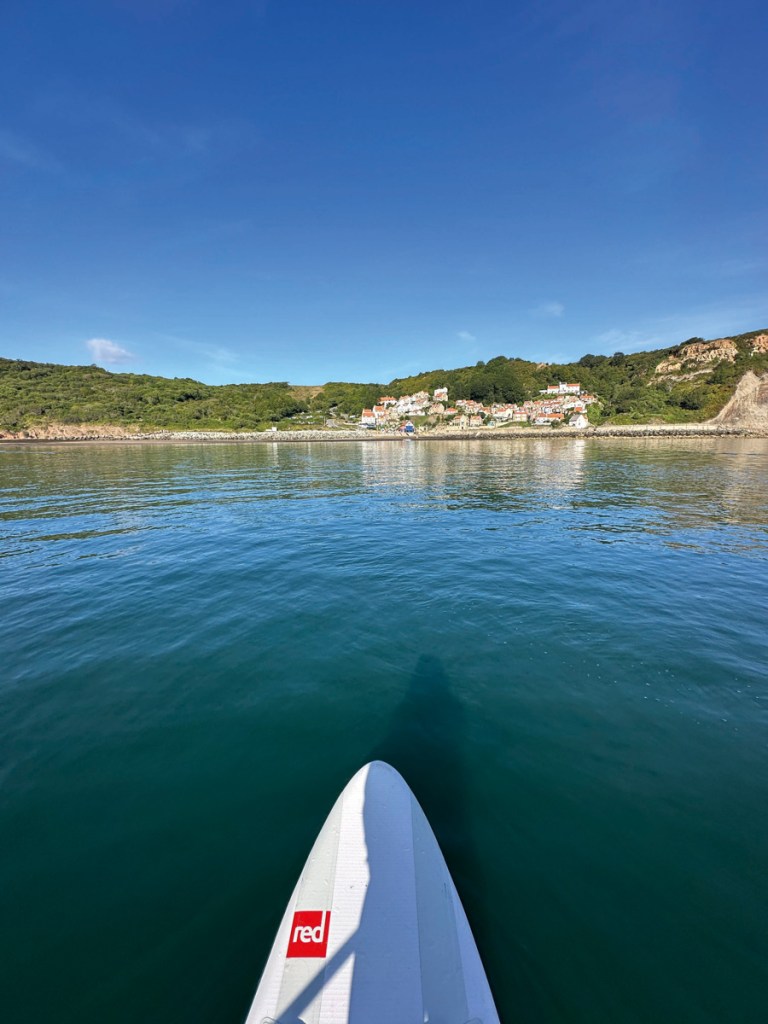
It’s an early spring morning at Runswick Bay on the North Yorkshire coast and I am standing on my paddleboard looking at the village I’ve loved since first coming here as a little girl in the 1970s. Red-roofed cottages cling higgledy-piggledy to the cliff face. To my left is the Runswick Bay Beach and Sailing Club, and to my right is the old Coastguard’s whitewashed thatched cottage. Smoke rises gently from Whitby Wellbeing’s horsebox sauna and a group of women laugh as they run from its warmth into the chilly North Sea. I say a quiet ‘thank you’ – a tiny ritual formed over almost 10 years of SUP (stand up paddleboarding) and an acknowledgement of how such adventures on the water have enhanced my physical, mental, social and emotional wellbeing.
From the uplifting moment of feeling ‘like a warrior, not a worrier’ during my initial lesson on Derwentwater in the Lake District in September 2016, to becoming the first woman to paddleboard 162 miles coast to coast along the Leeds & Liverpool Canal in August 2019, SUP has changed my life for the better, personally and professionally.
I knew from travelling the country to research my first two books, Stand Up Paddleboarding in Great Britain – Beautiful Places to Paddleboard in England, Scotland & Wales and Stand Up Paddleboarding in the Lake District – Beautiful Places to Paddleboard in Cumbria, that I was not alone.
Along coastal routes and lakes, canals and rivers, paddlers told me about how SUP has had a positive impact on their lives.
THE WELLNESS BENEFITS OF SUP
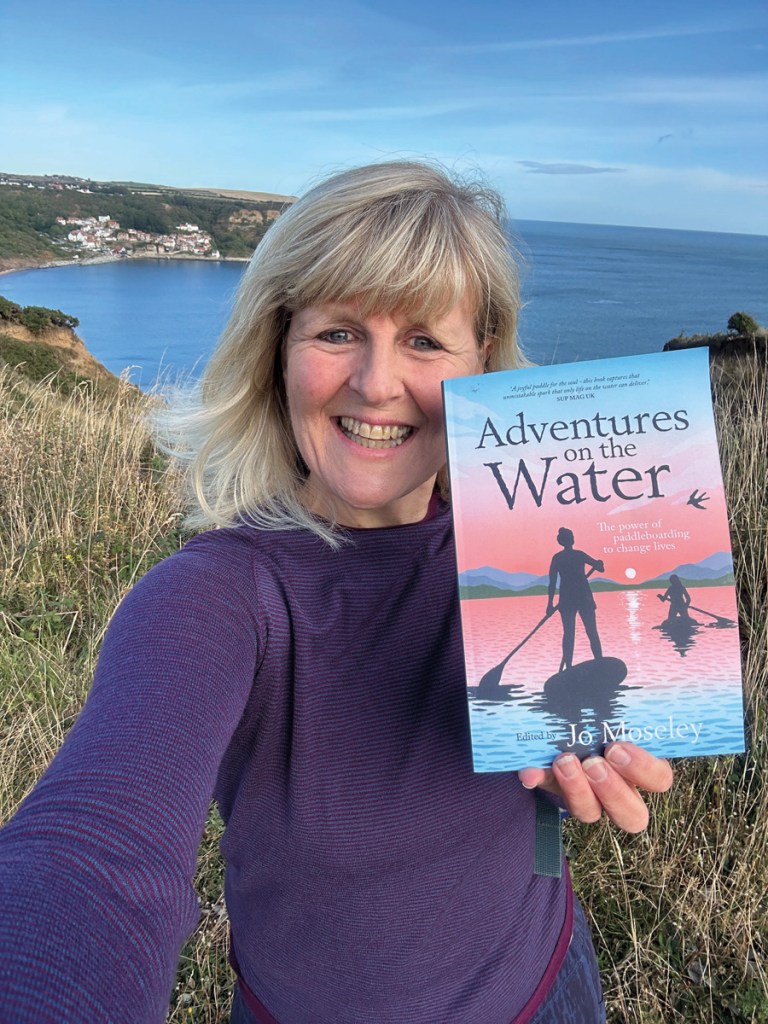
In my latest book, Adventures on the Water – The Power of Paddleboarding to Change Lives, I researched the wellbeing benefits of SUP and asked 27 inspiring paddlers to write a personal essay on how the sport had changed their lives.
Paddleboarder and Occupational Therapist Sara Jayne Kennedy also kindly shared her University of Cumbria study Exploration of the occupation of stand-up paddleboarding and its impact on mental health and well-being with me.
Her findings showed people experienced enhanced social relationships and reduced stress levels and were better able to manage mental health symptoms.
Likewise, the paddleboard brand Red Equipment commissioned a citizen science project exploring the benefits of SUP with 200 participants over 18 months in conjunction with Blue Health Coach Lizzi Larbalestier. From the results, Lizzi concluded that paddleboarding made the paddlers 30% happier, with the top three motivators being: enjoying scenery; improving health and taking exercise; and relaxing, unwinding and letting off steam.
The impact of the water on our stress is best summed up by a good friend of mine, Craig Jackson, SUP Shropshire founder and Operational Fire Officer in the Shropshire Fire and Rescue Service. He says that as soon as he is on the water, the stress just seems to float away.
This is a great example of the Blue Mind Theory coined by the late Wallace J Nichols in his 2014 book Blue Mind: How Water Makes You Happier, More Connected and Better At What You Do. Blue Mind, he said, is the ‘mildly meditative state people fall into when they are near, in, under or on water’.
Nichols shared scientific studies, including fMRI scans, showing how proximity to water can lead to decreased stress and anxiety, increased feelings of wellbeing and lower breathing and heart rates.
This sense of wellbeing is something Leeanne Mackay feels, too. In her essay for my new book, she shares that being out on her paddleboard is her safe space and solace, a place to feel connected to herself and grounded in moments of uncertainty. Growing up, Leeanne said she had felt lost and ‘never good enough’.
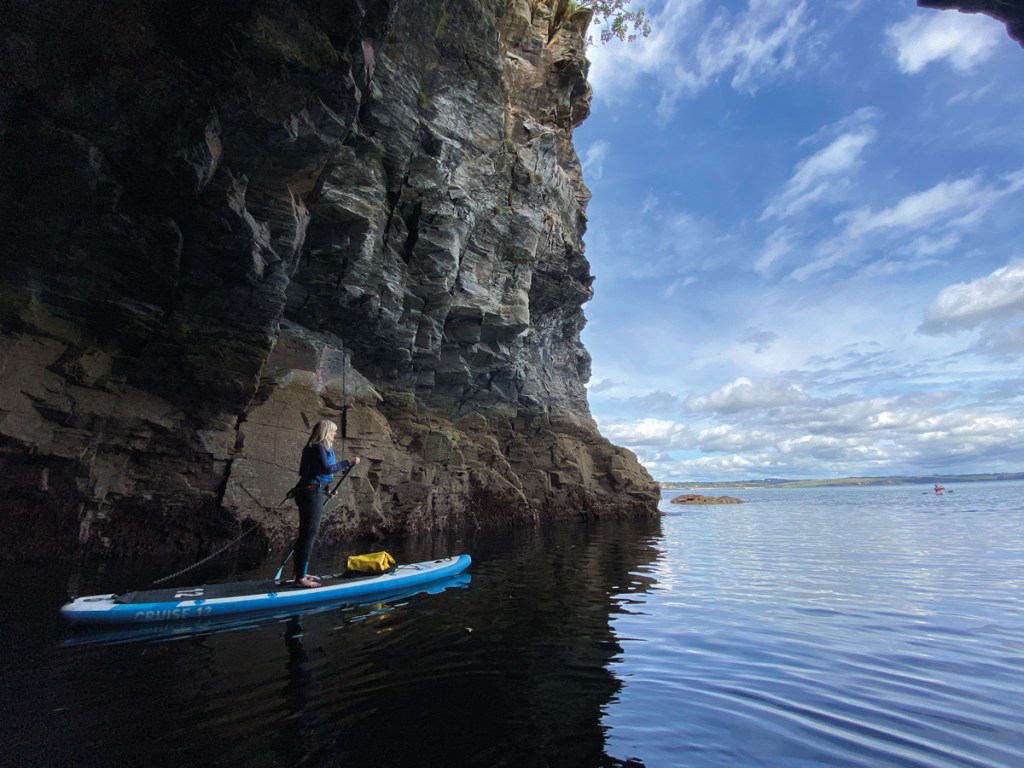
Learning to SUP in New Zealand and then exploring Scotland’s lochs and coastline, gave her ‘a blissful comfort’ she had never known before. Becoming an instructor allowed her the opportunity to find her superpower to show others ‘their own route to water wellness’.
Leeanne went on to co-found Blue Space Highland, a charity offering paddleboarding, swimming, beach art and yoga – and the results have been impressive. Participants have told her they arrived feeling stressed, sleepless and nervous and left feeling calm, inspired and positive.
‘I have found an inner peace that keeps me so grounded,’ Leeanne wrote in her essay, ‘and will strive to connect more individuals with this calming sense of joy in blue space.’
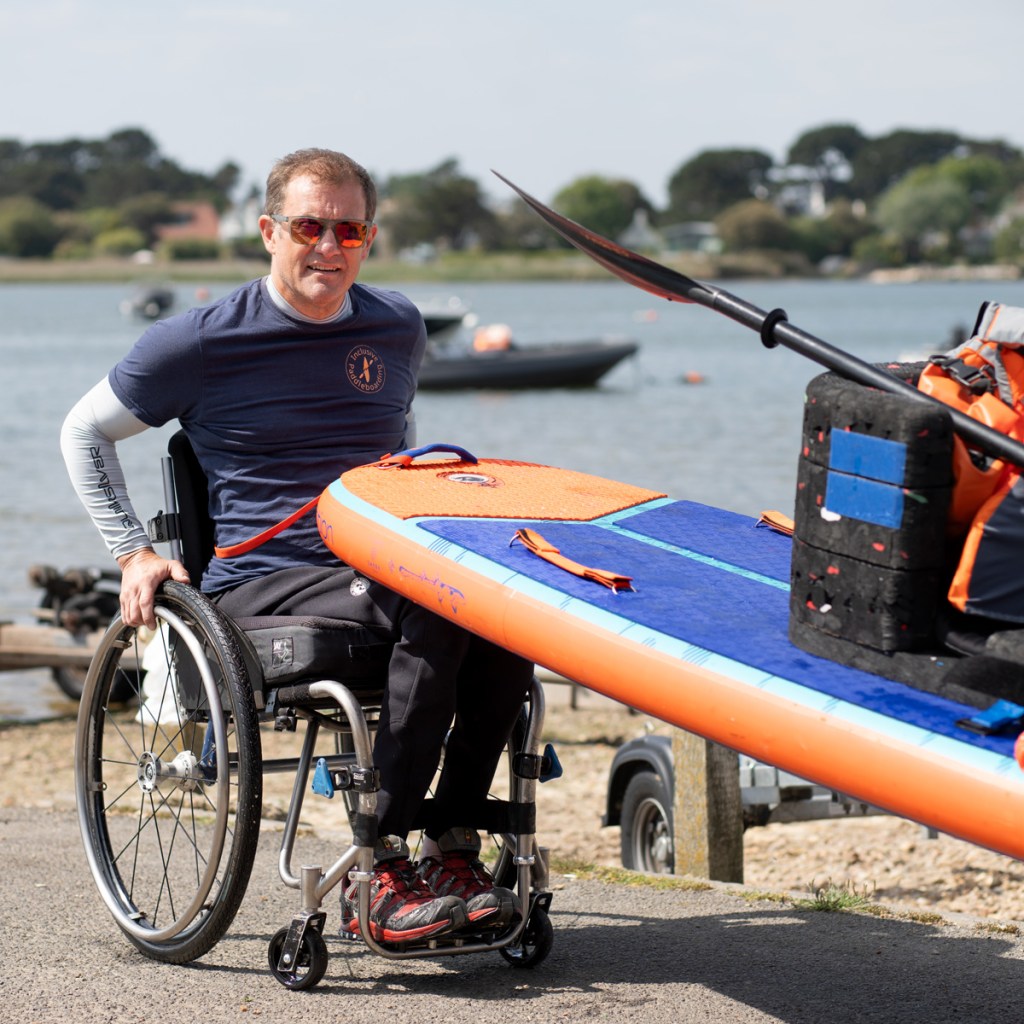
INDEPENDENCE ON THE WATER
For Will Behenna in Dorset, paddleboarding offered an independence on the water that he had not experienced for decades, after a cycling accident he had in 1988, at the age of 16, left him paralysed from the chest down.
Although he had been able to reconnect with sea kayaking and sailing, he had never been able to do it alone and craved going solo. In 2021, he discovered paddleboarding and the welcoming and accommodating SUP community. ‘I couldn’t quite believe it,’ he shares.
‘I soon realised I had found my tribe.’
Will began designing seats that would allow him to paddleboard without help. In June 2023, he went to the water’s edge and manoeuvred himself onto his board from his wheelchair, on which he left a note: ‘I am an experienced paddleboarder, please do not move my wheelchair, I will be back in an hour. Enjoy your day.’
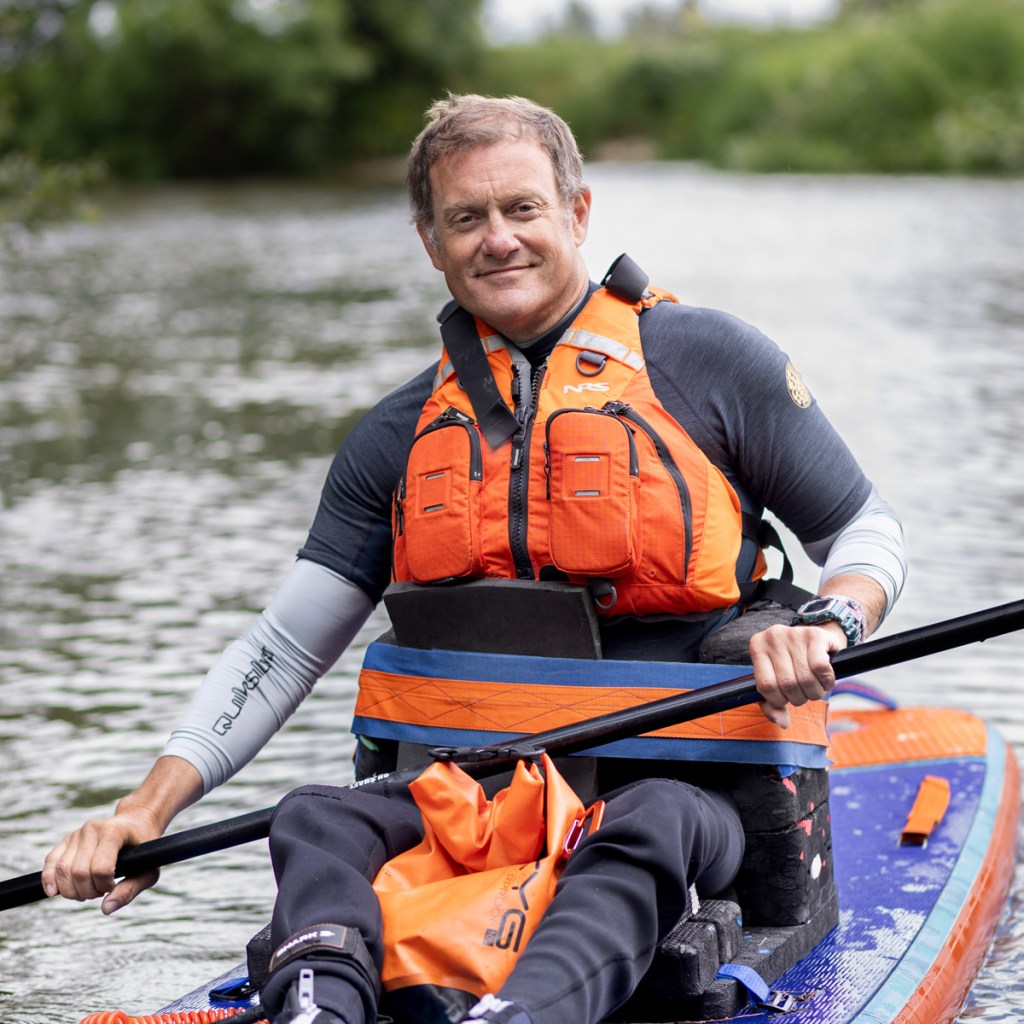
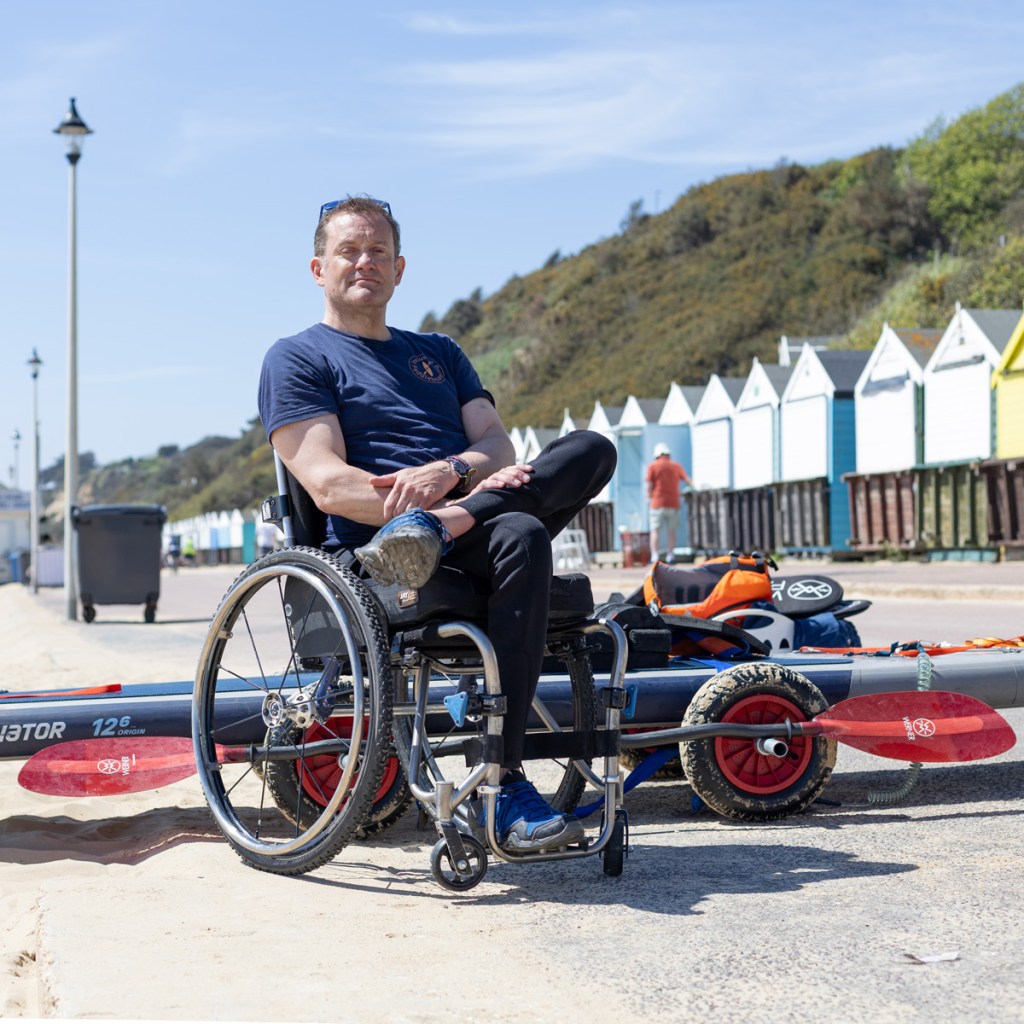
On the water, Will absorbed his surroundings – the silent flow of the water, trees dancing in the wind, the clouds gliding overhead. ‘Then it dawned on me,’ he writes, ‘I had waited a lifetime for this moment and here I was making it happen. A sense of tranquillity washing over me.’
Will founded Inclusive Paddleboarding and is committed to helping others with disabilities get out onto the water, designing a range of kneeling seats and paddling systems. He is also campaigning to improve beach access for people for whom it is currently not possible.
‘Paddleboarding has given me so much in such a short time,’ writes Will. ‘A place of calm, the opportunity to see the world from a different perspective. I will continue to find innovative solutions that enable and empower everyone to feel what I feel.’
A WAY THROUGH GRIEF
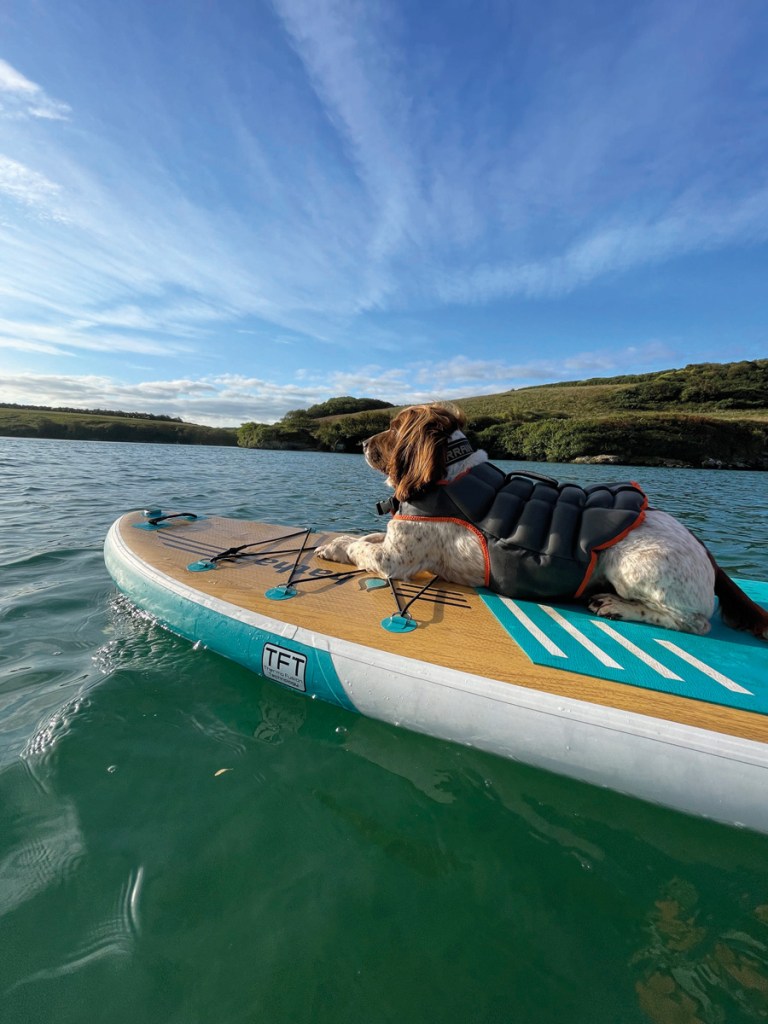
In Cornwall, marine biologist Steph Barnicoat paddles with her dog Percy and describes her favourite days, ‘when we can be on the water all day together with the sea breeze on our faces’. Caring for her mum while also working put great stress on Steph and, combined with the grief after her mum died, she ‘fell into a pit of depression’. Then, one day, she ‘dragged herself out’ to paddleboard. As soon as she got out onto the water, ‘I was so thankful, I cried!’ She adds: ‘I wasn’t out of my depression, but I knew it was a start.’
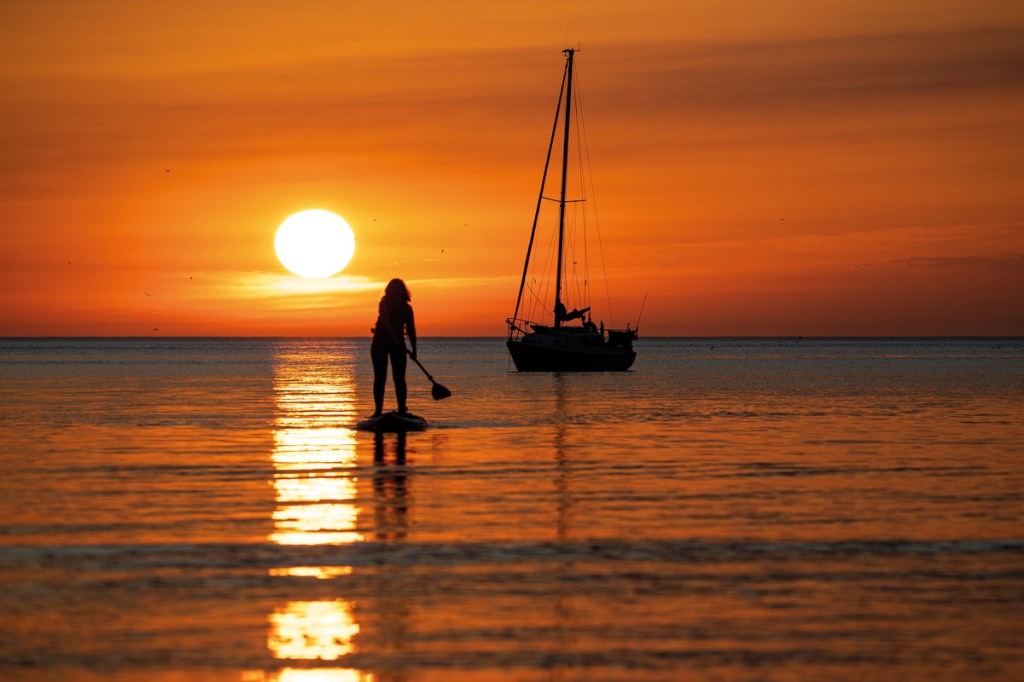
Having experienced the benefits of SUP for her mental health and wellbeing, in 2024, Steph began running mindful SUP sessions for the charity Seaful, founded by Cal Major, and its inspiring, empowering Vitamin Sea Project. The goal is to connect individuals to waterways for mental health benefits and to nurture stewardship of our oceans.
‘Paddleboarding truly has had a positive ripple effect in my life and my career,’ Steph says. ‘I honestly can’t imagine any of that progress without my connection to the ocean creating positivity in my life.’
These are just a few of the incredible paddlers who have kindly shared how paddleboarding has enhanced their lives as part of my research for my latest book. They have also generously included tips, favourite kit, snacks and locations with us, too. We have stories about SUP yoga, racing, paddling as a family, lakes, rivers, lochs and canals.
If you’re wondering if SUP is for you, why not book a lesson and discover the same joy, achievement and peace for yourself? As Leeanne Mackay says: ‘Paddleboarding will change your life if you let it!’
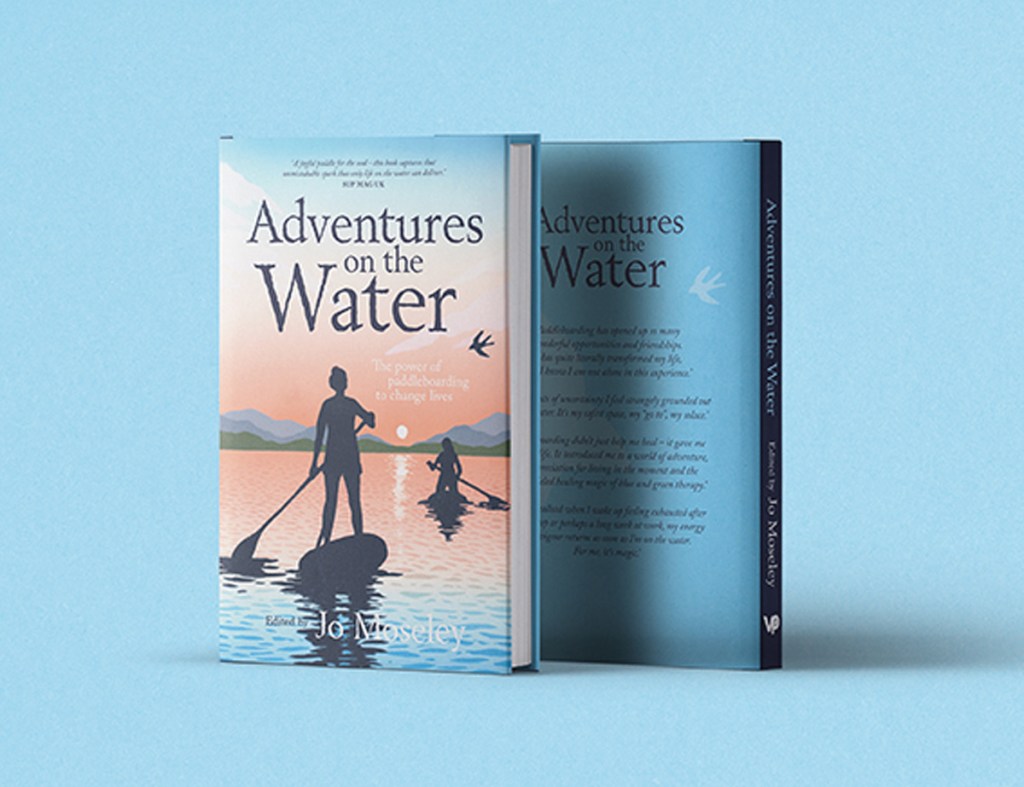
Adventures on the Water – The Power of Paddleboarding to Change Lives by Jo Moseley is available now (Vertebrate Publishing £14.95, adventurebooks.com). Visit Jo’s website at jomoseley.com and follow her on Instagram @jomoseley.